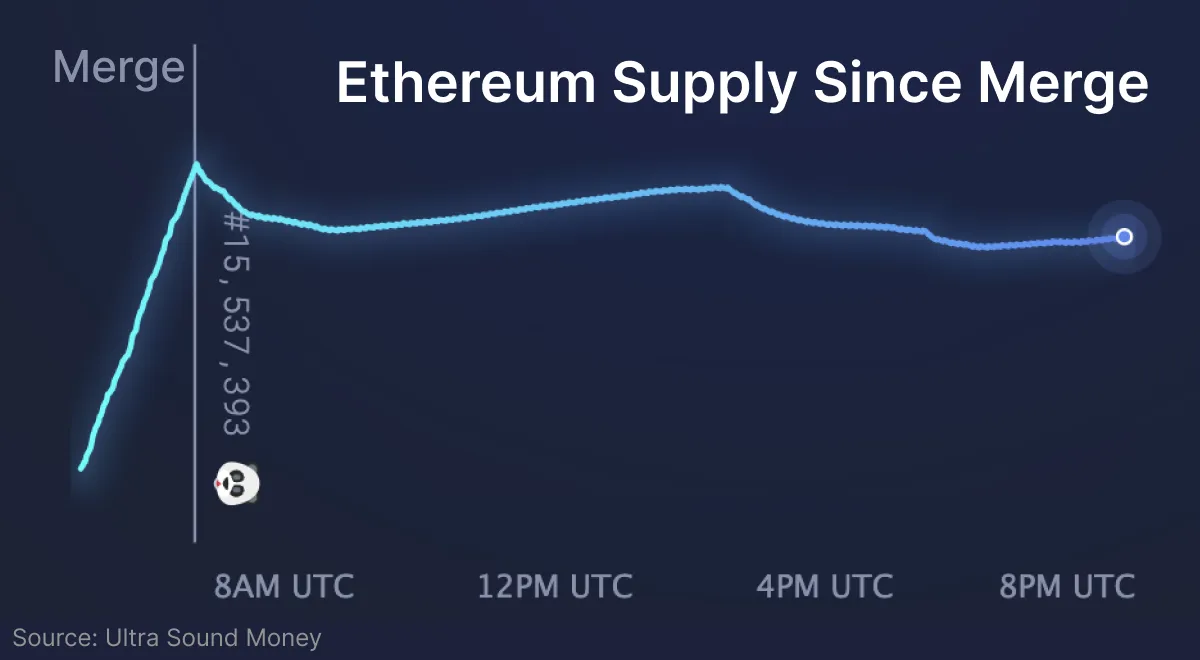
Ethereum has successfully transitioned to proof-of-stake in the biggest blockchain upgrade ever. No hiccups or major errors upon transition — but issues could still appear over the next few days.
On the surface, traders and Ethereum users will barely notice a difference. But underneath the surface…
Ethereum miners aren’t needed anymore. No more using expensive equipment to mine Ethereum, which is estimated to reduce electricity consumption by 99%.
Instead, users can stake their Ethereum tokens. By “staking” — locking in your Ethereum tokens — users are rewarded with Ethereum (~4% yield).
Ethereum becomes deflationary. ~220 ETH (~$355K USD) has already been burned within 13 hours — decreasing the total supply of.
- Basic supply and demand — supply goes down; price should go up (all else staying equal).
- It’s similar to stock buybacks — which decrease the market’s available shares.
What’s next? The work continues…
Ethereum’s co-founder Vitalik Buterin estimated that the blockchain is still only 55% complete. Dr. Buterin Seuss has already outlined the next upgrades: The Surge, Verge, Purge and Splurge.
- Focus: Each upgrade focuses on different technical aspects of the network, which will take many (many) years.
- Goal: Address another one of Ethereum’s largest problems: slow and expensive transactions.
Not the price movement many wanted
A Bernstein research report (CoinDesk) said the Merge — which completely changes the model — will likely lead to strong institutional adoption. Still, investors are shunning risky assets as inflation and interest rates take center stage.
In the 12 hours following the Merge, dropped nearly 10% — falling alongside the broad market yesterday. Under different economic conditions, the Merge might have performed differently.

