
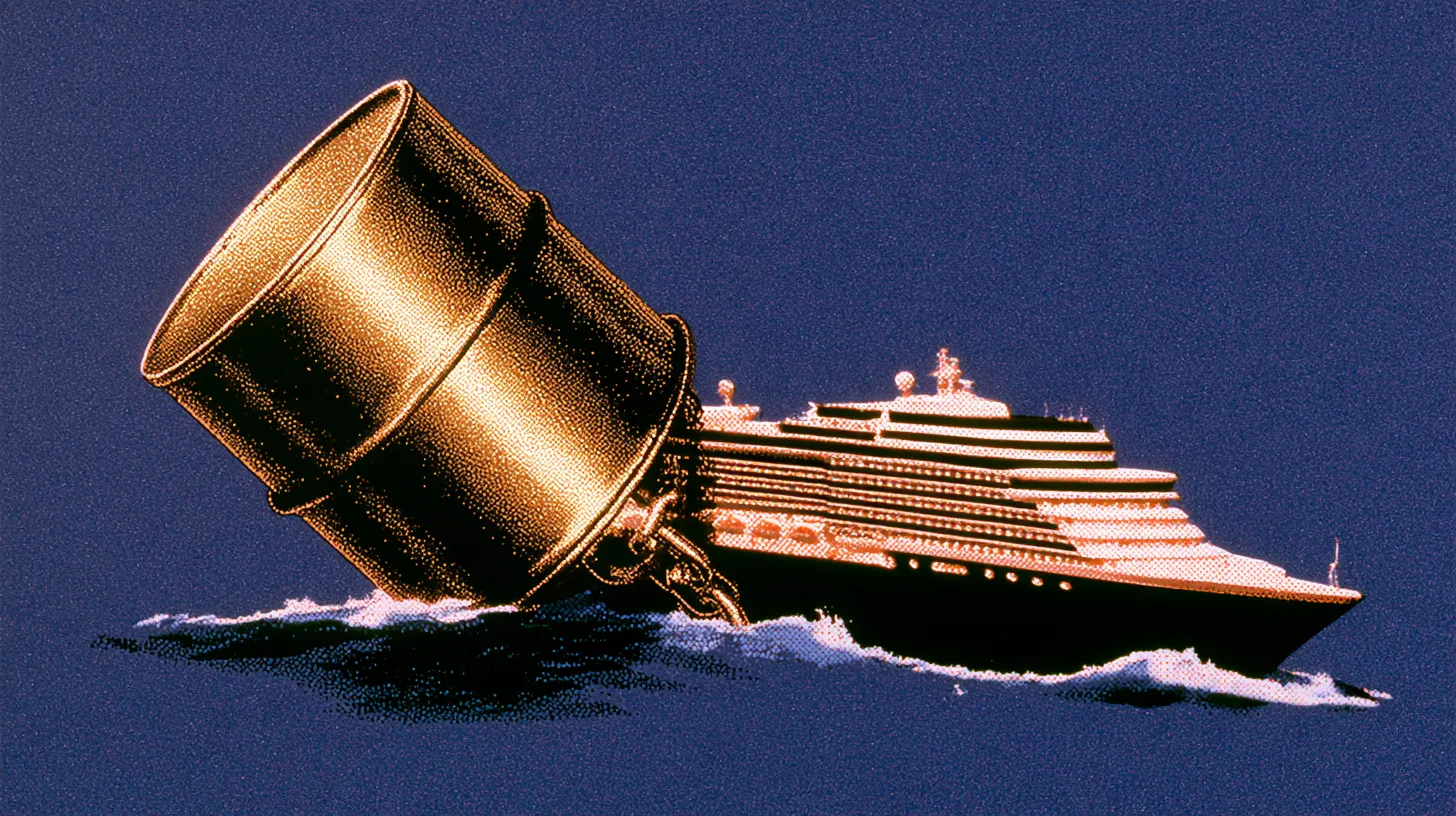
Cruise operators have spent much of the year dealing with higher fuel prices, geopolitical tensions, and concerns about travel spending. Yet passengers keep booking, helping Royal Caribbean, Norwegian, and Carnival deliver stronger-than-expected quarterly results despite the growing costs of keeping their ships at sea.
With advance bookings remaining strong and ticket prices holding up, the industry's biggest challenge may be protecting profits as oil prices climb.
Strong demand holds up
Royal Caribbean Group and Norwegian Cruise Line Holdings both beat Wall Street's expectations this week, following Carnival Corp., which reported in September.
The results came despite a difficult backdrop for the industry, including the war with Iran, rising energy costs, and disruptions affecting some smaller cruise operators.
Royal Caribbean reported revenue of $5.59B, up 9% from a year earlier. Adjusted earnings reached $6.57 per share, beating analysts' expectations.
The company welcomed 2.68M guests during the quarter, with occupancy exceeding normal capacity as some cabins accommodated more than two passengers. Management also raised its full-year earnings outlook.
The results suggest travelers remain willing to spend on cruises even as operators face higher costs.Fuel is the bill nobody escapes
Brent crude settled at $116.72 per barrel on Friday, a six-month high, after oil prices surged following the start of the US-Israel war with Iran on Feb. 28.
Carnival spent $615M on fuel in the third quarter, or roughly 7.3% of revenue, up from $425M in the fourth quarter of 2025. It projects $640M in the current quarter.
Royal Caribbean's fuel spend ran about $347M, or 6.2% of revenue, versus $293M in the fourth quarter of 2025, with $379M projected for the fourth quarter.
Fuel costs keep climbing
Oil has become one of the industry's biggest headaches. Brent crude reached $116.72 per barrel on Friday, its highest level in six months, following a surge in prices tied to the war with Iran.
Cruise Fuel Bills Keep Climbing Into The Fourth Quarter
Fuel spend by quarter, $M, as of Oct. 29, 2026
- Carnival
- Royal Caribbean
Line chart. Fuel spend, $M. Q4 2025: Carnival $425, Royal Caribbean $293. Q3 2026: Carnival $615, Royal Caribbean $347. Q4 2026 (proj): Carnival $640, Royal Caribbean $379.
Source: CNBC
For cruise operators, the impact is substantial. Carnival spent $615M on fuel in the third quarter, compared with $425M in late 2025. Royal Caribbean's fuel bill also increased, reaching approximately $347M.
The companies have taken different approaches to managing those costs.
Royal Caribbean has hedged more than half of its fuel consumption for 2026, locking in prices below recent market levels. That provides some protection against further increases.
Carnival, meanwhile, doesn't hedge its fuel purchases. Instead, it has focused on improving efficiency, reducing fuel consumption per unit of capacity by 26% since 2019.
CEO Josh Weinstein estimates those improvements will save the company around $700M this year. While hedging can provide short-term protection, efficiency improvements could offer more lasting benefits if energy prices remain elevated.
Passengers keep booking
One reason demand has held up is that cruises can offer better value than traditional vacations, particularly for families looking to combine accommodation, meals, and entertainment into one package.
Royal Caribbean has avoided introducing fuel surcharges despite higher operating costs. Instead, stronger ticket pricing and onboard spending have helped support revenue.
CEO Jason Liberty also said bookings for 2027 are running ahead of historical levels, with passengers reserving trips at higher prices.
Still, not every operator has been able to absorb the pressure.
Villa Vie Residences suspended operations of its MV Odyssey in Cambodia after monthly fuel costs per cabin climbed sharply in parts of Asia.
River cruise companies face a different challenge. Low water levels along major European waterways, including the Rhine and Danube, have disrupted operations since July.
These problems highlight the advantage larger operators have in managing unexpected expenses and disruptions.
Norwegian plays catch-up
Norwegian has shown signs of improvement, although it continues to trail its larger competitors.
The company reported adjusted earnings of $1.12 per share, exceeding its own guidance of 90 cents. Occupancy also came in stronger than expected, while management raised its full-year adjusted EBITDA outlook to approximately $2.55B.
However, Norwegian expects net yields, a measure of revenue generated per passenger capacity day, to decline this year while Royal Caribbean and Carnival continue growing.
Debt remains another concern. Norwegian carries approximately $15.1B in borrowings, leaving it more exposed to financing costs as management works to improve profitability.
Norwegian Guides 2027 Pricing Above What Wall Street Expected
Norwegian Cruise Line 2027 net yield growth guidance vs consensus, %, as of Oct. 29, 2026
Bar chart. Net yield growth, %. Guidance low end: Net yield growth, % 1%. Guidance high end: Net yield growth, % 2%. Consensus estimate: Net yield growth, % 0.90%.
CEO John Chidsey, who took over in February, is focusing on cost reductions and encouraging passengers to book earlier. The company has already identified more than $600M in annualized savings since 2023.
Its latest outlook suggests those efforts are beginning to help, although sustained improvement will depend on stronger pricing and continued demand.
For investors, the industry's earnings results offer reassurance that higher fuel costs haven't discouraged travelers from booking cruises.
Royal Caribbean appears better protected against near-term fuel volatility, while Carnival's efficiency improvements provide another way to manage expenses. Norwegian offers a potential turnaround opportunity, but its debt and weaker yields make the recovery less certain.
Demand remains strong across the industry. Whether that translates into higher profits will depend increasingly on how long oil prices stay elevated.

