This drug may finally put an end to all those fitness fads that make you question why they were ever created. (Shake Weight 👀).
Introducing — GLP-1-based drugs that treat diabetes and obesity. Several have been approved in the past two years — stimulating hormones that make you feel full.
The rich are using them casually, which has led to a major shortage — and now they realize it’s the cause of their rapidly aging face.
Two drug developers with treatments in the market are:
- Novo Nordisk A/S (NYSE:NVO) — a first mover with Saxenda and Wegovy (approved for weight loss), and Ozempic drugs.
- Eli Lilly (NYSE:LLY) — Mounjaro, approved to treat type 2 diabetes in May 2022, is seen to be more effective with fewer side effects.
Both companies’ stocks have soared nearly 50% in the past year. Since Novo’s drugs were approved, the company has continuously raised its earnings forecasts.
- Analysts expect the obesity market to reach $30B by 2030, and other drug developers are close behind.
- Drugmakers Amgen (NASDAQ:AMGN) and Pfizer (NYSE:PFE) are also developing their own drugs.
Instead of an injection pen with a needle, Pfizer is developing a pill that could become its advantage.
The new favorite drug of the 1%…
Demand has been so high that yesterday, Eli Lilly announced a $450M manufacturing investment to increase production.
Unfortunately, it’s also created a shortage for diabetic and obese patients who actually need it. Those without prescriptions are getting them off-label.
But we know one person who won’t take it:


Tell ‘em, Joey.
Is it too good to be true? Let’s see, the drug has:
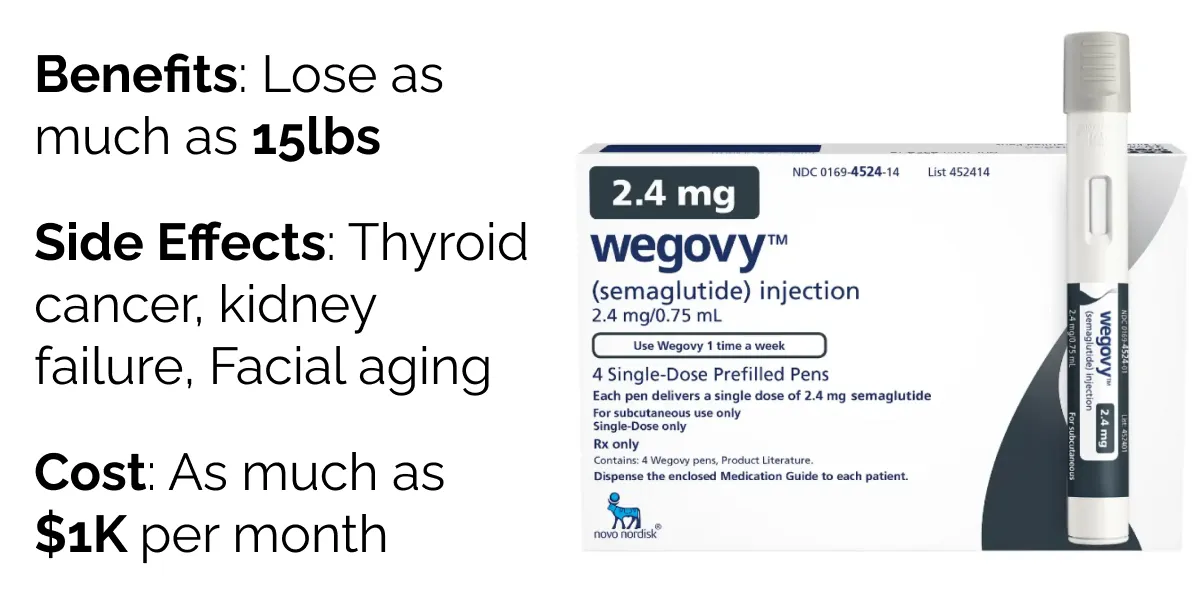
- Rare side effects like thyroid cancer, pancreatitis and kidney failure.
- Facial aging — plastic surgeon Dr. Oren Tepper said such drugs could “turn your facial clock forward” (NYT).
Treatment can cost as much as $1K per month — not including the $75K face lift bill. Plastic surgeons and dermatologists around New York are seeing an influx of patients on these drugs.

