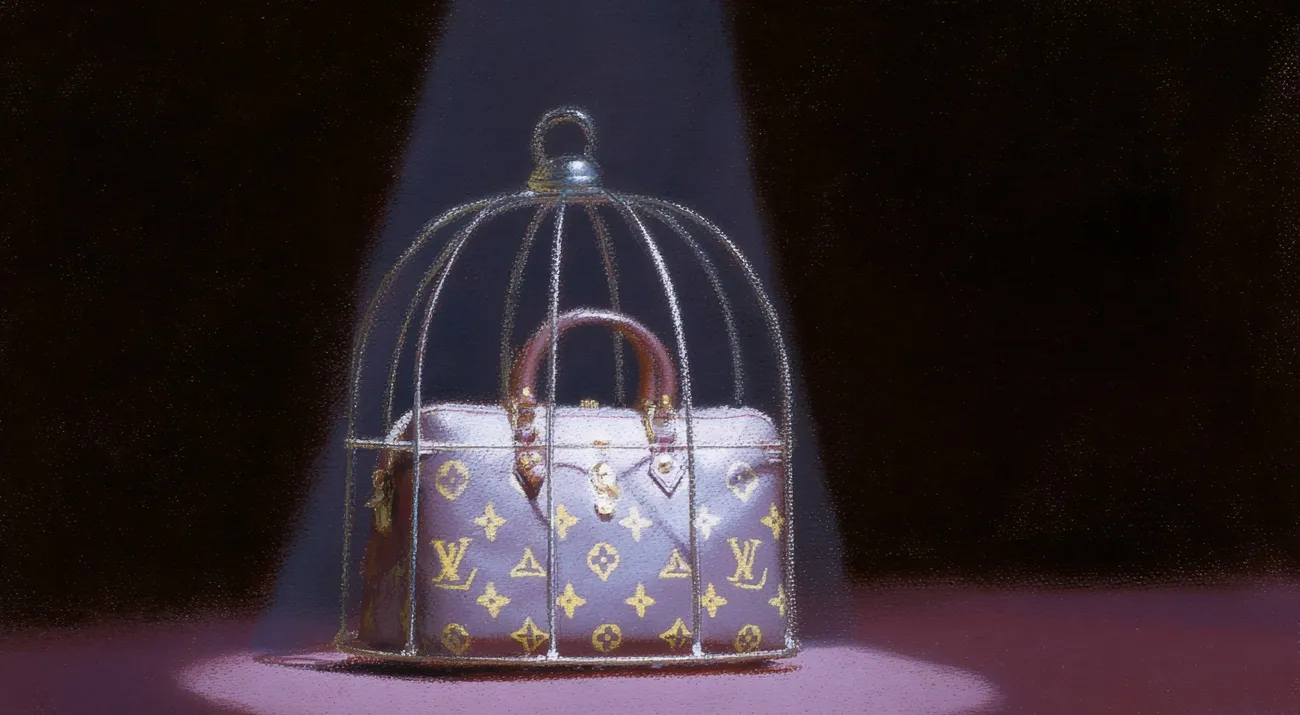
America is starting to steal Europe’s luxury crown. Middle-class shoppers are still splurging, but more are reaching for US brands instead of traditional European names, and investors are beginning to price in the shift.
LVMH's valuation edge is gone
LVMH recently lost its longstanding valuation premium over Ralph Lauren. Investors now price LVMH at a discount of roughly 3% to Ralph Lauren on forward earnings. That gap used to run heavily in LVMH's favor. The last time the two traded near parity was more than a decade ago, when Louis Vuitton's sales had gone stale.
The reversal reflects a real divergence in growth. Ralph Lauren posted 13% sales growth in the three months through June. That's its seventh consecutive quarter of 10%-plus growth in an otherwise flat market.
Coach, the flagship brand under Tapestry, grew sales 14% last quarter, driven largely by younger consumers making their first luxury handbag purchase.
Why price got European brands in trouble
Europe's biggest luxury houses spent the post-pandemic years raising prices aggressively. The entry-level Louis Vuitton Neverfull GM handbag is up 50% since 2019.
The Nano Speedy is more than 70% costlier. Over that same period, US median weekly wages rose just 5% in real terms, according to Federal Reserve data.
The result is what analysts at Bernstein describe as millions of orphaned luxury consumers — shoppers who formerly bought Louis Vuitton or Gucci and simply can no longer afford to.
Bernstein estimates more than half of Louis Vuitton's revenue comes from middle-class consumers, defined as those spending under roughly $2.3K per year on luxury goods. That customer base is now drifting.
Some are moving to US brands priced below $1K for most items. Others are buying European labels secondhand. The RealReal reported 17% quarterly sales growth, and Louis Vuitton was its most-searched brand in 2025.
How brands are responding differently
Ralph Lauren's CEO has been explicit about the strategy. The brand serves multiple spending tiers simultaneously — from $12 tennis socks to a $320K watch — without apologizing for either end.
"Luxury has often been defined as a $4K handbag. That is a lazy definition of luxury."
Patrice Louvet, Ralph Lauren
Some European brands are starting to adapt. Gucci, owned by Kering, has cut prices on select items and launched a new collection with an average handbag price of roughly $2K — about 27% below its older designs.
Burberry recently posted 4% sales growth after its new CEO, a former Coach executive, pushed a more accessible pricing approach. In the Americas, Burberry grew 12% at constant exchange rates last quarter.
LVMH is holding the line on prices entirely, betting that a new wave of creative directors will generate enough buzz to pull shoppers back.
Jewelry is a separate story. Richemont grew Americas sales more than 25% in the second quarter at constant exchange rates.
Bernstein analyst Luca Solca notes that jewelry stayed more affordable relative to leather goods because jewelry brands were more disciplined with post-pandemic price hikes. That restraint is now paying off in volume.
urThe structural question behind the numbers
Bain & Company estimates global luxury sales fell from roughly $417B in 2023 to $405B in 2025, with another 3%–5% decline in Q1 2026. Even its projected 2%–4% rebound this year would pale next to the 16% surge that followed the 2008 downturn.
Bernstein’s Solca sees a bigger problem for luxury giants: winning over the next generation. Younger shoppers are under financial pressure, while streetwear’s decline has weakened a key entry point into luxury, leaving smaller names like Miu Miu and Brunello Cucinelli to capture more of their attention.
For investors, the sector is bifurcating. Accessible luxury with disciplined pricing is growing. Megabrand leather goods dependent on middle-class aspiration are stalling until prices come down or incomes catch up.

