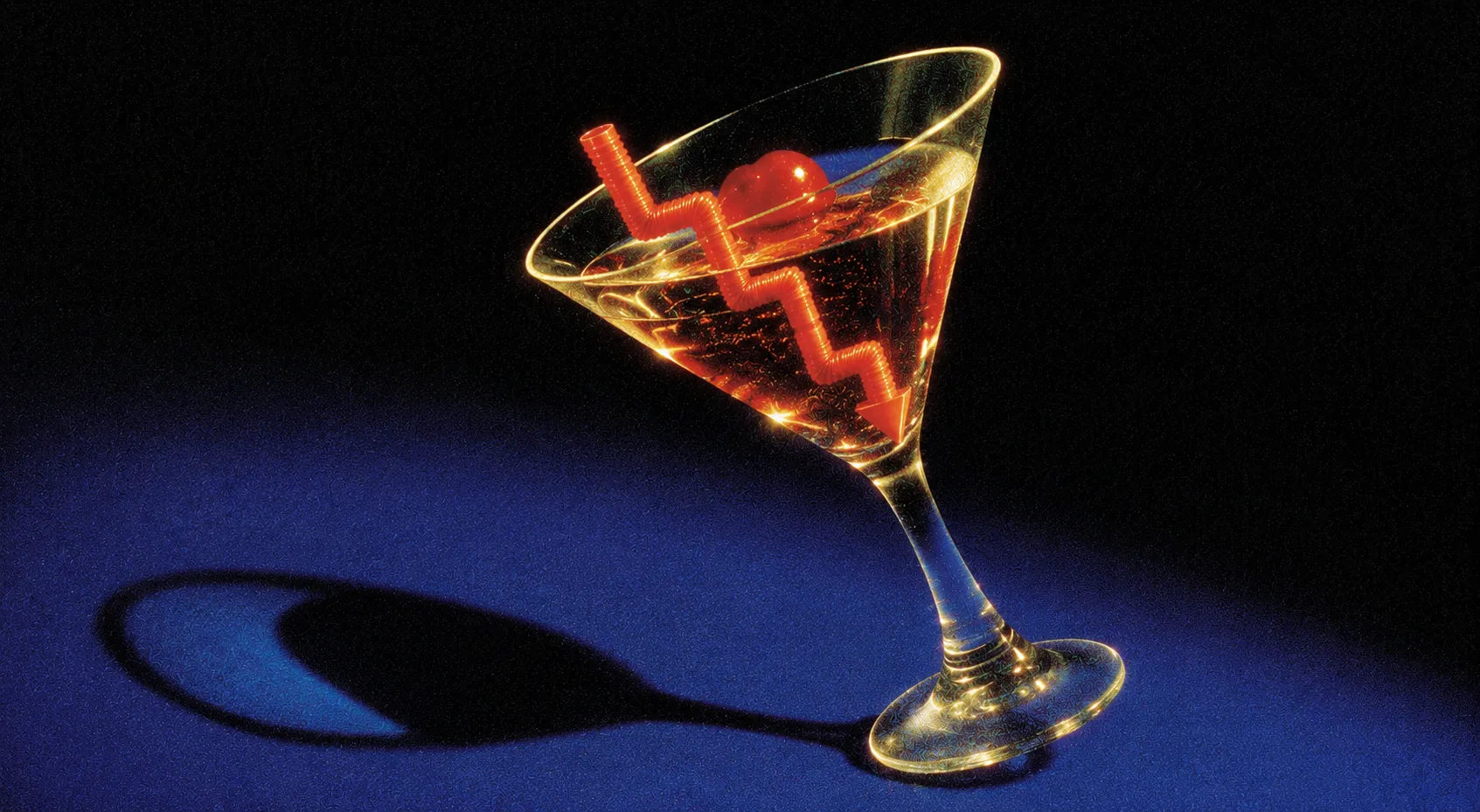
America is losing its taste for alcohol, and the industry is paying for it. Beer production fell 5.6% in 2025 and another 5.4% in Q2 2026 as changing consumer habits collide with mounting trade pressures.
With demand fading and challenges building on multiple fronts, the industry has few obvious catalysts for a turnaround.
Americans are simply drinking less
Spirits volumes in the US have declined for four straight years. Excluding ready-to-drink beverages, spirits sales fell 4.1% in 2025 and 4.9% in the second quarter of 2026.
The share of Americans who say they drink alcohol hit an all-time low of 54% in 2025, per a Gallup poll. Additionally, only 32% of Gen Z consumers drink weekly, versus 45% of older cohorts. As younger generations replace older ones, that gap becomes a structural drag on volume.
GLP-1 weight-loss drugs are adding pressure too, since people on those medications tend to drink less. Legal cannabis and non-alcoholic alternatives are picking up whatever share remains.
Bar and restaurant prices for spirits have risen 29% over five years, well above overall inflation. Yet consumers are not trading down to cheaper at-home drinks instead.
Grocery store spirit prices rose only 9% over the same period, but people are cutting back altogether rather than substituting.
"People are drinking less."
Kevin Grundy, BNP Paribas
Ready-to-drink canned cocktails are one exception. That category is growing 20% to 30% a year in the US. Gen Z likes RTDs for their convenience and lower upfront cost.
A 12-pack of canned margaritas costs around $25 at Walmart, while making cocktails from scratch requires buying multiple bottles.
But the major publicly traded distillers have been slow to capitalize on this trend, which is dominated by beer companies and private spirits firms.
Valuations are low but the case for buying is thin
Alcohol stocks have been punished. Molson Coors, Constellation Brands, Boston Beer, and Brown-Forman are all down over the past six months and over the past five years. Valuations have fallen by roughly a third in five years.
Brown-Forman now trades at 16.5 times forward earnings. Constellation Brands trades at 11 times. Molson Coors trades at 8.7 times.
The consumer staples sector as a whole trades at 22.8 times. That gap looks like an opportunity, but analysts are not buying it.
Only 22% of analysts covering Molson Coors rate it Buy or Overweight. Just 11% are positive on Brown-Forman. One out of 15 analysts covering Boston Beer rates it a Buy.
BNP Paribas analyst Kevin Grundy is bearish on Constellation, Molson Coors, and Brown-Forman, calling the industry's problems structural rather than cyclical.
Pernod Ricard, the French maker of Jameson and Absolut, warned that US weakness will keep sales growth toward the lower end of its 3% to 6% guided annual range through the next three years. Its shares dropped more than 7% after that update.
JPMorgan analyst Celine Pannuti said it is difficult to see a reason or catalyst for shares to re-rate from here.
Diageo, maker of Guinness and Johnnie Walker, is targeting $1B in total savings through an operational overhaul. Pernod has achieved half of a planned 1B euro cost-cut program, with the remainder planned through 2028.
The Canada trade war adds another layer of pain
On top of the demand problem, US spirits exporters are caught in a trade dispute with Canada that has wiped out a major export market. Canadian provinces banned American alcohol from government-run liquor stores starting in March 2025.
US alcohol imports to Canada fell 81%, from roughly $718M to $137M, in the year through February 2026. Brown-Forman reported its organic sales in Canada fell nearly 60% in its 2026 fiscal year.
The Distilled Spirits Council of the United States says American spirits exports to Canada dropped more than 70% as a result of the provincial bans.
Trump imposed a 50% tariff on Canadian alcohol after talks broke down, citing the bans as the direct cause. Canada's spirits makers are not benefiting from the standoff either.
Overall spirits volumes in Canada fell 4.4% following the US bans, while Canadian-made spirits volumes were essentially flat.
Both sides are now calling for an end to the mini trade war. But until the provincial bans are formally lifted, the export channel stays closed. That removes a meaningful revenue line for US distillers at exactly the moment domestic demand is contracting.

