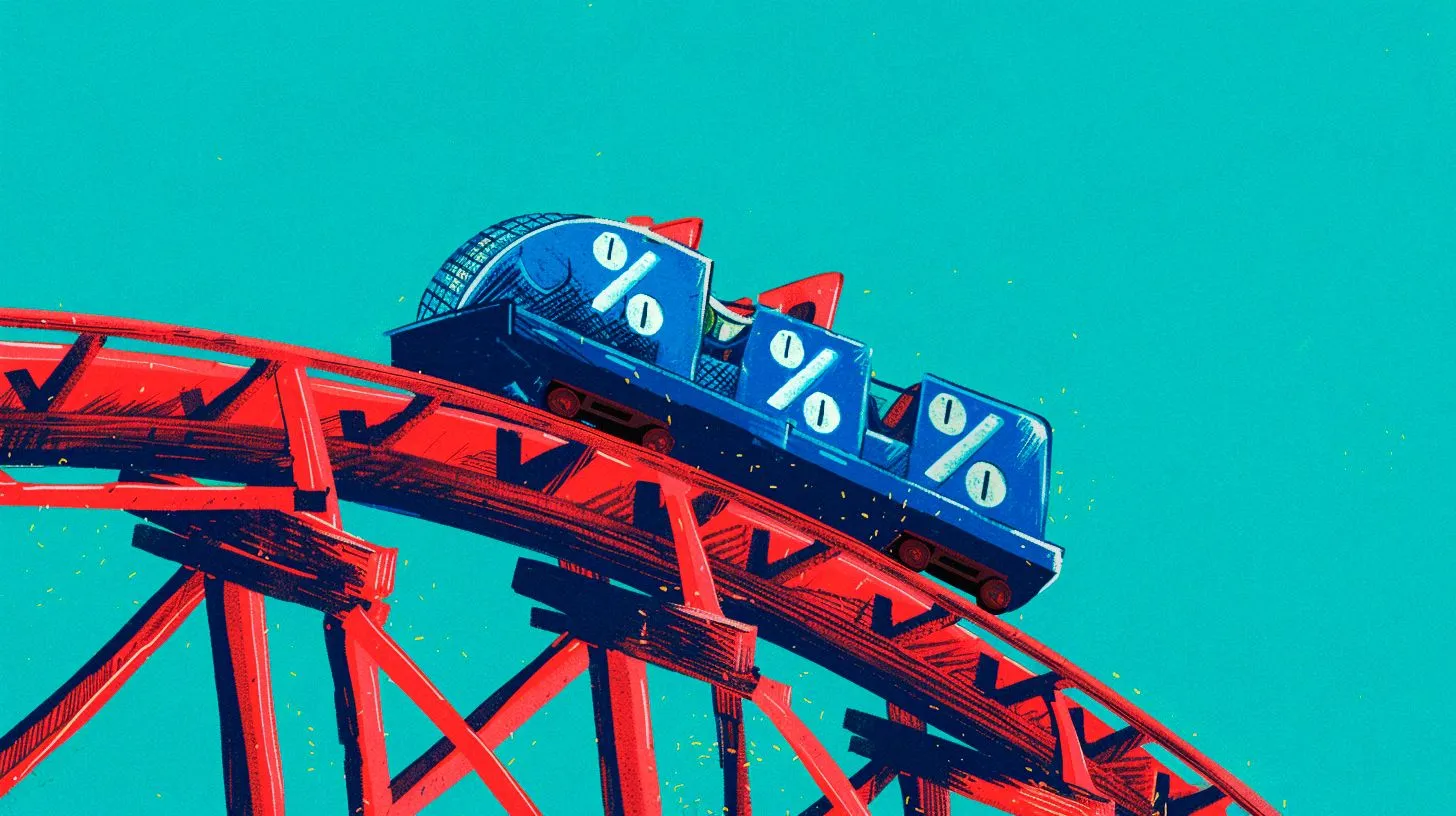
The winds of change are blowing for interest rates — but what they’ll bring is still a mystery, even for Wall Street optimists. With generationally high inflation and borrowing costs seemingly behind us, many hope for brighter days ahead for the markets.
What’s next? Following last Wednesday’s 0.50% rate cut at the Federal Open Market Committee meeting, everyone’s asking this question. After a 2.5-year-long campaign of rate hikes, the Fed has turned a corner, adopting a more dovish stance and forecasting rates to drop from 5.25-5.5% to as low as 4.4% by year-end. Typically, decreases in interest rates signal economic weakness, but Fed Chairman Jerome Powell insists that “the US economy is in good shape.” Optimistic analysts believe these cuts could bring more green days for underperforming stocks and bonds.
- Bank of America analysts point out that small and mid-cap value stocks have historically performed well during rate-cutting cycles, and reduced interest levels will ease financial pressures on growth names with floating-rate debt.
- Bonds, which faced one of the “worst bear markets of all time” during the central bank’s hikes, are also expected to bounce back, with Vanguard suggesting bonds could outperform stocks over the next decade.
What If They’re Wrong?
While analysts are hopeful for a soft landing, the Fed’s sharp reduction in rates has sparked concerns about the economy and job market. If economic conditions continue to worsen, rate cuts might not have the intended effect — a risk that some financial leaders are already preparing for.
- In the September Bank of America Global Fund Manager Survey, money managers reported overweight positions in recession-proof themes like utilities, bonds, and healthcare stocks.
- At the same time, there’s worry on Wall Street that rapidly reducing interest levels could reignite inflation, which has supported higher crypto prices and pushed gold to a new all-time high.
The biggest loser: The Fed says it will review the data to guide future rate cuts, but one group is set to lose regardless of the pace — the cash-rich. As interest levels reduce, deposits in banks and money market funds will generate less interest. That means that staying on the sidelines, once considered a safe strategy for over $6T of cash, might not be very neutral. Unlike WarGames, where “the only winning move is not to play,” sitting on the sidelines in this market might actually be the losing move.

