What does the fed tapering mean and how will it impact the stock market?
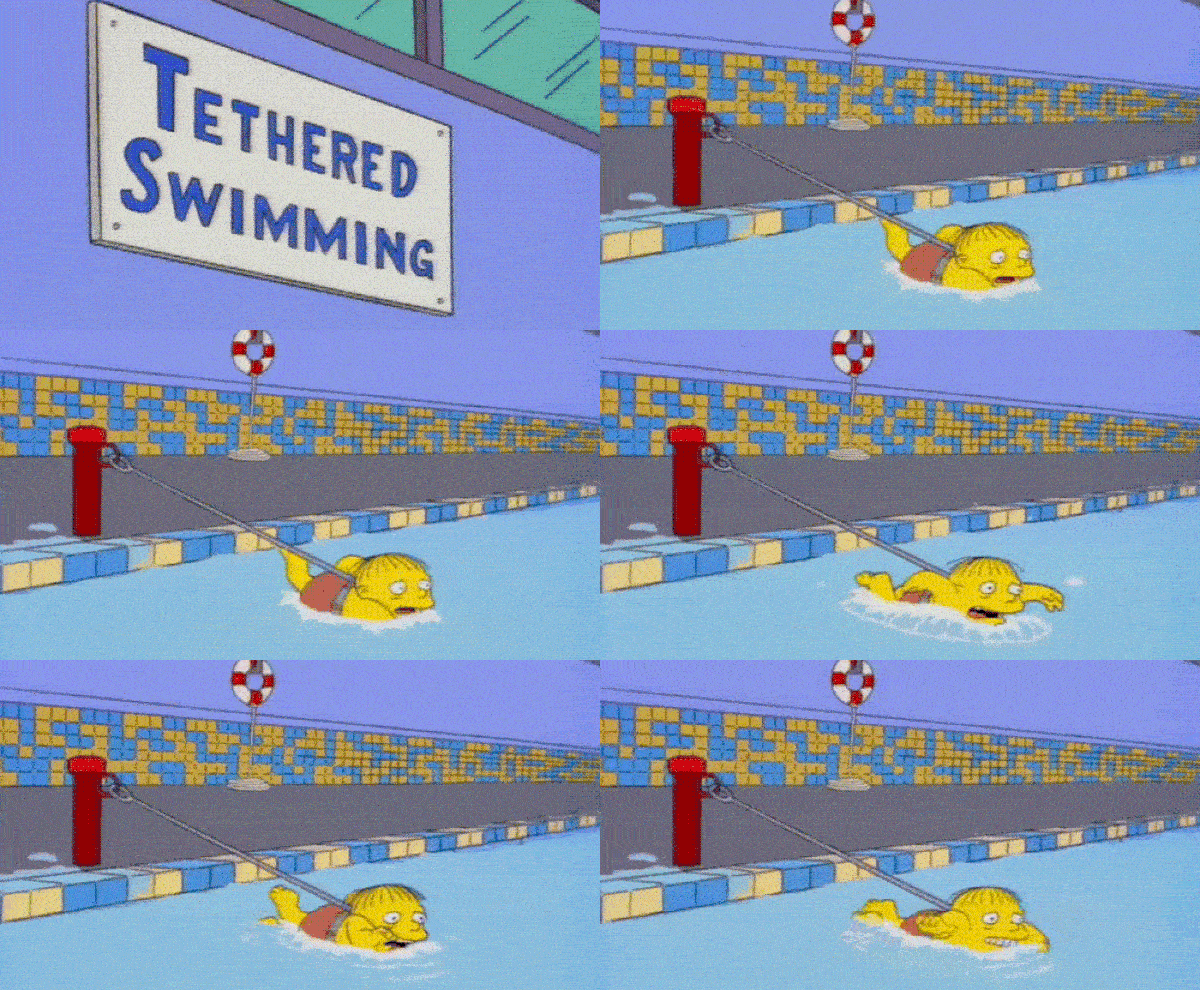
Can the economy swim on its own? We’re about to find out. Last week, the market saw one of its biggest recent corrections over fears the Fed would take away the economy’s life jacket — which kept it afloat during the pandemic.
The economy’s life jacket
When the pandemic hit and the economy crashed, the government activated the economy’s life jacket (buying up bonds) to avoid a repeat of 2008’s financial crisis. Here’s why they did it:
- Buying bonds lowers interest rates.
- Lower interest rates mean lower cost of borrowing — which increases economic spending.
And it worked – both the economy and the stock market rebounded faster than in 2008. But buying bonds can also have negative side effects like…
- Inflation – Consumer prices rose over 5% in the past year — higher than the government’s 2% target.
- Surging house prices – single-family home prices rose 22.9% in the last year, the most since 1968.
To prevent inflation from getting out of hand, the government “tapers” – buying fewer bonds over time. While tapering signals a recovering economy, it’s also a scary word to investors.
Avoiding another taper tantrum
The question isn’t whether tapering is coming or not, it’s a question of when. Last week, minutes from July’s Federal Reserve meeting signaled plans to start. When the Fed does announce the tapering, they’ll look to avoid the same mistakes made at the end of the 2008 financial crisis.
In 2013, when former Fed Chief Ben Bernanke told the world tapering would start, it led to a mass-market sell-off over fears of a slowing economy.
Economists at Goldman Sachs predict a 45% chance that tapering will begin in November.
Investors: Taper-proof yourselves
According to Gina Sanchez, Chief Market Strategist at Lido Advisors, investors should look in the infrastructure sector for “taper-resistant picks”. And history shows a similar pattern…
- The materials and industrial sectors outperformed when the Fed considered tapering in 2013.
- The incoming infrastructure bill could power the infrastructure sector again this time too.
The massive amount of money injected into the economy helped the market recover quickly to record highs. But kids don’t like having their candy taken away and neither do investors.
Looking ahead: Fed Chair Jerome Powell is set to give a speech this Friday but investors expect the tapering to be pushed back as the pandemic threatens the economy again.

