
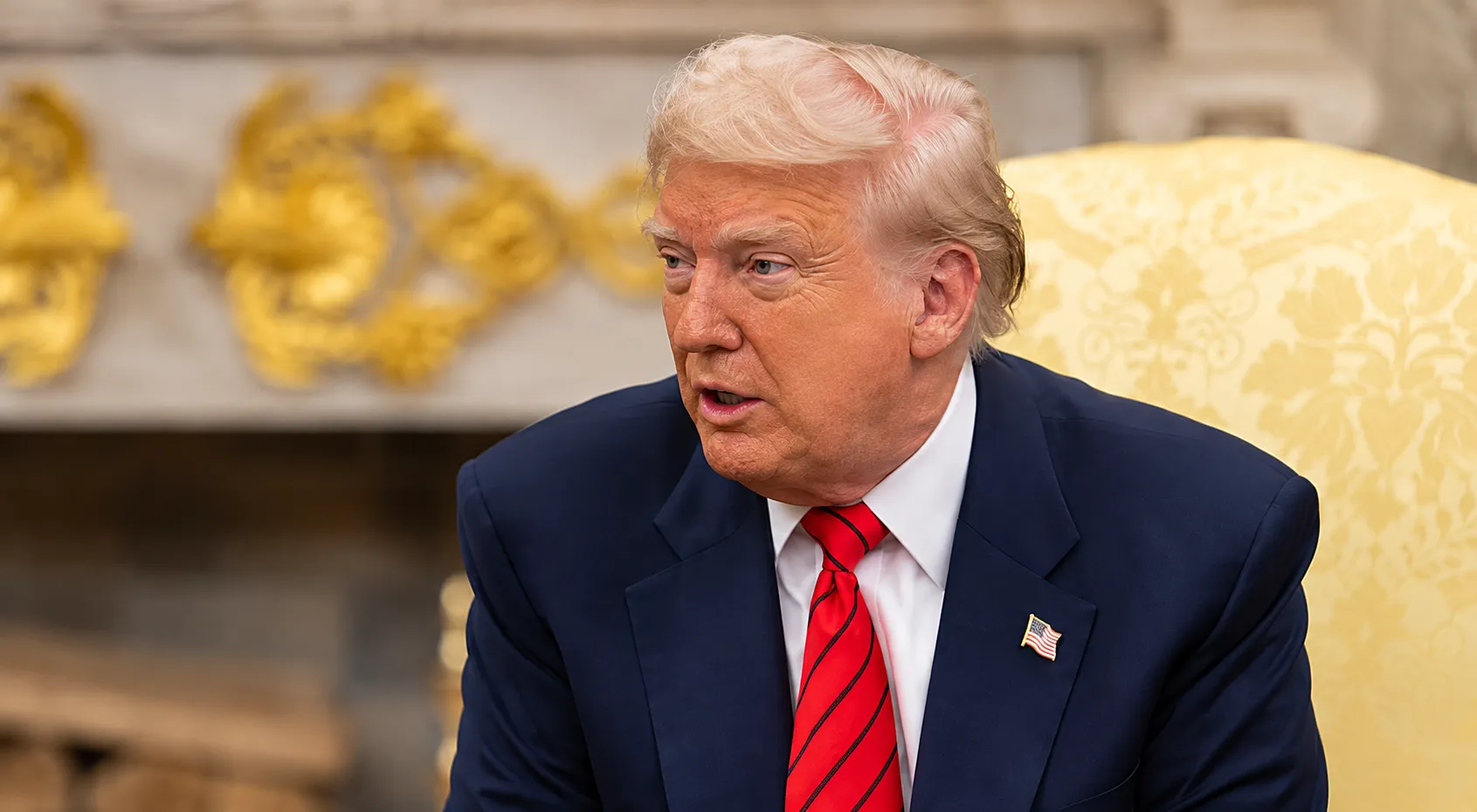
President Trump said on Nov. 3 that the US is close to a trade deal with Canada and that Canada would supply fertilizer without tariffs under it.
He gave no terms and no timeline, speaking on Fox News' Fox & Friends, and neither government has announced finalized terms. Hashtag Investing noted that the claim came without a signed agreement or any detail on which fertilizers would be covered.
Potash was already exempt
Potash, the main fertilizer Canada ships south, was explicitly excluded when Washington announced extra 50% duties in July 2026, and the Bank of Canada's October outlook listed it as exempt too, which means the promise mostly locks in a carve-out that already exists.
Net imports supplied 92% of US potash use in 2025, and Canada provided 79% of US potash imports from 2021 to 2024, per the US Geological Survey. Canada produced 32.8% of the world's potash in 2024, and the US took 53% of its exports.
Canpotex, the export arm that markets potash for Nutrien and Mosaic, sits at the center of that flow. Clarity on tariff treatment removes a question mark hanging over cross-border shipments for both producers, even though the duties never landed on the product itself.
Farm input costs are climbing regardless. The USDA projects US spending on fertilizer, lime, and soil conditioners will rise $5.3B, or 15.3%, from 2025 to about $39.6B in 2026, up from roughly $34.3B.
US Farm Fertilizer Spending Set to Climb 15.3% in 2026
Farm spending on fertilizer, lime and soil conditioners, $B, 2025 vs 2026 forecast
Bar chart. US$B. 2025: Spending ($B) $34.3. 2026 (f): Spending ($B) $39.6.
Source: USDA via Hashtag Investing
The politics behind the thaw
Advanced talks collapsed in August, after which the administration placed 50% tariffs on hundreds of categories of Canadian imports, and Ottawa responded in kind.
At the July review of the USMCA pact, Washington refused to sign off on extending the pact for 16 more years, which leaves the current deal in place for now. The Bank of Canada estimated in late October that about 80% of Canadian merchandise exports to the US were tariff free, with an average US tariff of 7.5%.
The softer tone arrived days before the midterms, with tariff-driven inflation ranking high among voter concerns and several Senate races running tight in states bordering Canada. Washington recently lifted some tariffs on Canada and replaced them with others at the urging of Republican Sen. Susan Collins, who faces a close race in Maine.
Canadian Prime Minister Mark Carney has framed any movement as Washington shifting toward Ottawa, and says Canada holds red lines that stopped it from signing August's offer. National Economic Council director Kevin Hassett said the two sides were very close to a deal.
Carney said he had a constructive conversation with Trump about the outline of an agreement. Canada's budget officer estimates trade measures since early 2025 could leave Canadian GDP 1.4% below its pre-tariff path after five years.

