Special Purpose Vehicle Acquisition Companies (SPACs) — aka blank check companies — was the hype investment of 2020.
In 2020, SPACs became a popular way for companies to go public. These publicly traded investments gave retail investors the chance to invest in a company — before they went public.
Learn more: What is a SPAC?
All aboard — the SPAC hype train
In 2019, the early success of Virgin Galactic and DraftKings going public via SPAC led to a massive inflow of capital into SPACs. Every day, you’d hear another SPAC being raised or another company going public via SPAC.
- In 2021, SPACs raised $95b in just 3 months — more than the $80b raised in all of 2020.
- Even athletes and celebrities like Shaquille O’Neal and Serena Williams took part in SPACs as advisors and directors.
With more SPACs, finding a company to take public became more competitive. Over time, the quality of companies taken public by SPACs dropped…
- Archer Aviation, an electric flying taxi service with zero revenue, is going public via SPAC, Atlas Crest Investment.
- WeWork — the coworking space company that imploded in 2019, is going public via SPAC, BowX Acquisitions.
At one point, investors had to call BS…
SPAC hype train — suddenly crashes
The recent sell-off in tech stocks took a lot of sectors down with it. SPACs being one. In 2020, a SPAC could jump over 50% on a merger announcement. But now, they’d be lucky to move up 10%.
- Average SPAC returns on the first day of trading fell from 5.4% in Feb. to 0.1% in March.
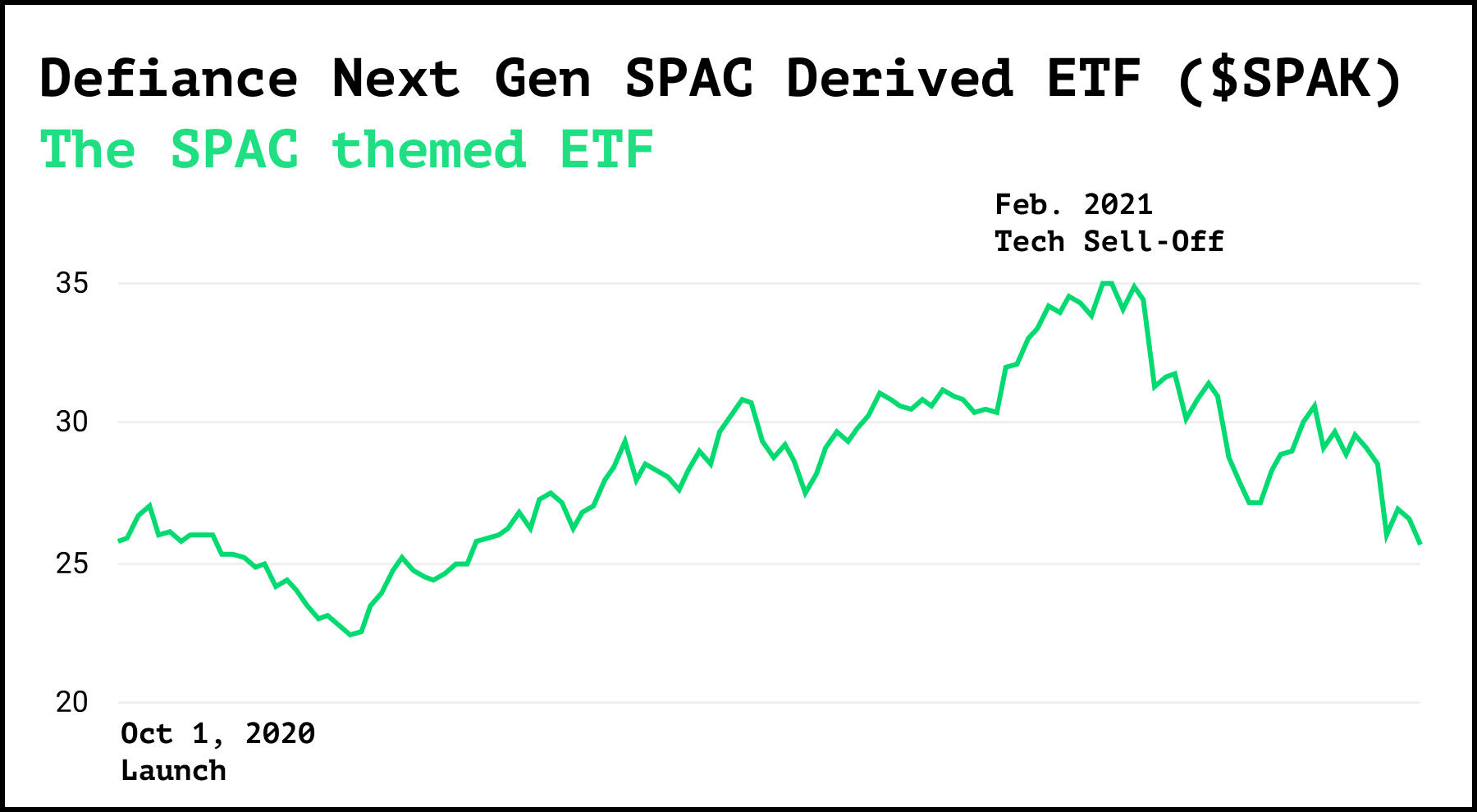
- The Defiance Next Gen SPAC ETF, an ETF that tracks big-name SPACs, is down nearly 25% since mid-Feb.
For investors… Don’t count SPACs out yet
There are reasons why SPACs have been so popular. Initial public offerings (IPOs), the traditional way of going public, is criticized as expensive and time-consuming. For many companies looking to go public, SPACs are still an attractive option over IPOs.
While the SPAC bubble may have popped, not all companies going public via SPACs are necessarily bad. There are still gems to be found in the sea of garbage — there’s just more trash to sift through now.
Watch out: A good company doesn’t always make a good investment. Overpaying for something could make for a bad investment.

