The Solution For the World’s Worst-Performing Stock Market: Prevent Investors From Selling
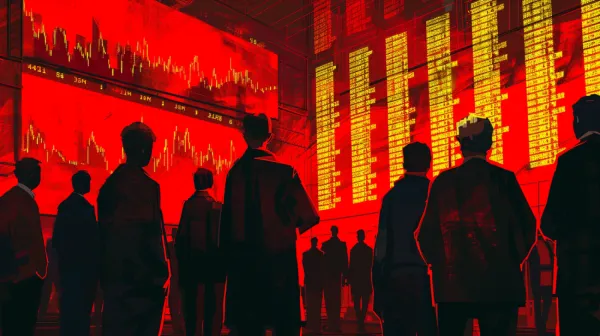
China’s economy, the second-largest globally, has caught a bad case of long COVID — and if it doesn’t do something about it soon, Germany, Japan, or India could make this the worst Year of the Dragon ever. Since 2020, weak economic growth, a distressed property sector, and a collapsing stock market have weighed on China — scaring away both local and foreign investors.
How bad is the situation? The severity is evident from the substantial loss in value China’s stock market has experienced since its peak in 2021, totaling $6.3T. The CSI 300 index (a.k.a. the S&P 500 of China) has lost over a third of its value — posting three consecutive years of decline. And China and Hong Kong finished 2023 as the worst-performing global markets. Enough is enough, and worried Chinese officials are taking matters into their own hands.
The prescription for China’s problems: To prop up the country’s ailing market, China’s government has started buying shares of domestic companies as part of a $278B stimulus package.
- Yesterday, the country banned institutional investors from selling more equities than they buy during the first and last 30 minutes of each trading day — an effort meant to curb market volatility and bearish bets.
- The country also pledged to limit short selling and high-frequency trading, which act against the market, with at least one major quant fund facing a temporary trading ban.
Is China worth the squeeze?
Chinese stocks look cheap at these valuations — the iShares MSCI China ETF (NYSE:MCHI) trades at a price-to-earnings (P/E) ratio of 11.5x — a significant discount to the S&P 500’s 23x P/E. However, even with policy and stimulus on its side, diving into the market could be a daring and potentially risky move.
- Over the past few years, overseas investors who attempted to buy the dip in Chinese markets often ended up with disappointing returns compared to those in the US, India, and Europe.
- Even Chinese citizens have started favoring overseas indexes as the country’s 200M+ retail investors lost billions in China’s stock market and have only recently begun repurchasing domestic names.
The Great Wall Street showdown: Investors will have to weigh the risks of a second Donald Trump presidency, which could stand to derail China’s comeback. Trump, who imposed new tariffs and anti-China trade policies, has already threatened to impose further tariffs as high as 60% on Chinese goods… if re-elected.

