Germany's Federal Cartel Office listed a new merger review on Friday: Tesla's planned purchase of assets from EMAG, the Salach machine-tool maker whose equipment produces the gears inside humanoid robots.
The filing appeared in Germany's Federal Cartel Office review list on Nov. 27 under case B5-132/26, with the deal described as an acquisition of assets from the EMAG group.
Terms weren't disclosed, and the review hasn't been cleared.
EMAG is based in Salach, near Stuttgart, and makes manufacturing systems for precise metalwork, electrochemical machining, and laser processing.
The strategic fit is more specific than a normal supplier deal because EMAG's machines can produce flexsplines, wave generators, and planetary gears.
Tesla is building a robot parts base in Germany
Tesla recently registered Tesla Machining Technologies Management SE at EMAG's headquarters, using €120K in share capital and the Salach address.
The entity was first registered on Aug. 26 as Blitz 26-299 SE, then renamed by Tesla this month.
Its listed managers include Tesla Germany sales chief Maximilian Stromberger, an American robotics engineer, and the human resources head at Tesla's Grünheide factory.
Local German media reported that roughly 220 EMAG employees could transfer to Tesla if the transaction receives approval.
The filing follows earlier German automation purchases, including Grohmann Engineering and Manz's Reutlingen operations, as Tesla expands European manufacturing capacity for robotics and next-generation vehicles.
EMAG would bring specialized gear-making equipment into a company that wants tighter control over robot production.
The target is financially strained, after losing €42M on €496M of revenue in 2024 and announcing 455 German job cuts.
EMAG Was Losing Money Before the Robot Pivot
EMAG revenue and net loss, 2024, million euros
Bar chart. Million euros. Revenue: Million euros 496. Net Loss: Million euros -42.
Source: Business Insider via Electrek
EMAG's auto exposure explains part of that pressure, since the company historically served transmission and drivetrain manufacturing.
Optimus needs precision gears at scale
Tesla's robot ambition depends on small mechanical parts that must survive repeated movement inside shoulders, elbows, hips, knees, and hands.
EMAG says its machines support actuator components including flexsplines, wave generators, and planetary gears for humanoid robots.
"The main application is in the rotational actuators of humanoid robots."
EMAG.
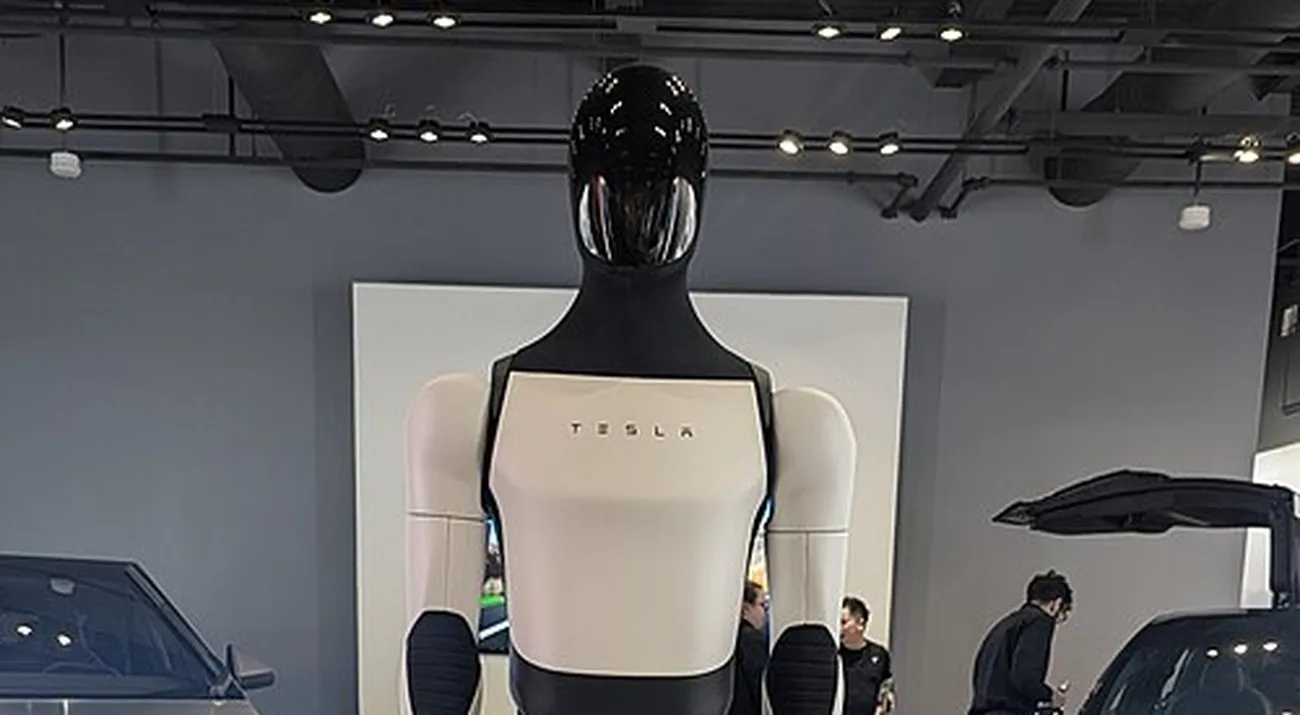
Tesla said in its recent third-quarter update that it had started early production of Optimus on a high-volume line at Fremont.
Elon Musk said the company plans to start selling the robots within roughly a year and targets 20K robots per week by the end of 2027.
Musk has flagged the humanoid hand as a main hardware problem, and custom gears have become a reliability worry.
Tesla's Optimus design shown in 2022 used 28 structural actuators per robot, which turns gear production into a volume problem quickly.
The deal points to where Tesla's robot plan is moving from presentation slides into factory plumbing.
Owning more of the machinery behind Optimus could reduce supplier risk, but approval, integration, and repeatable production still stand between a filing and mass output.