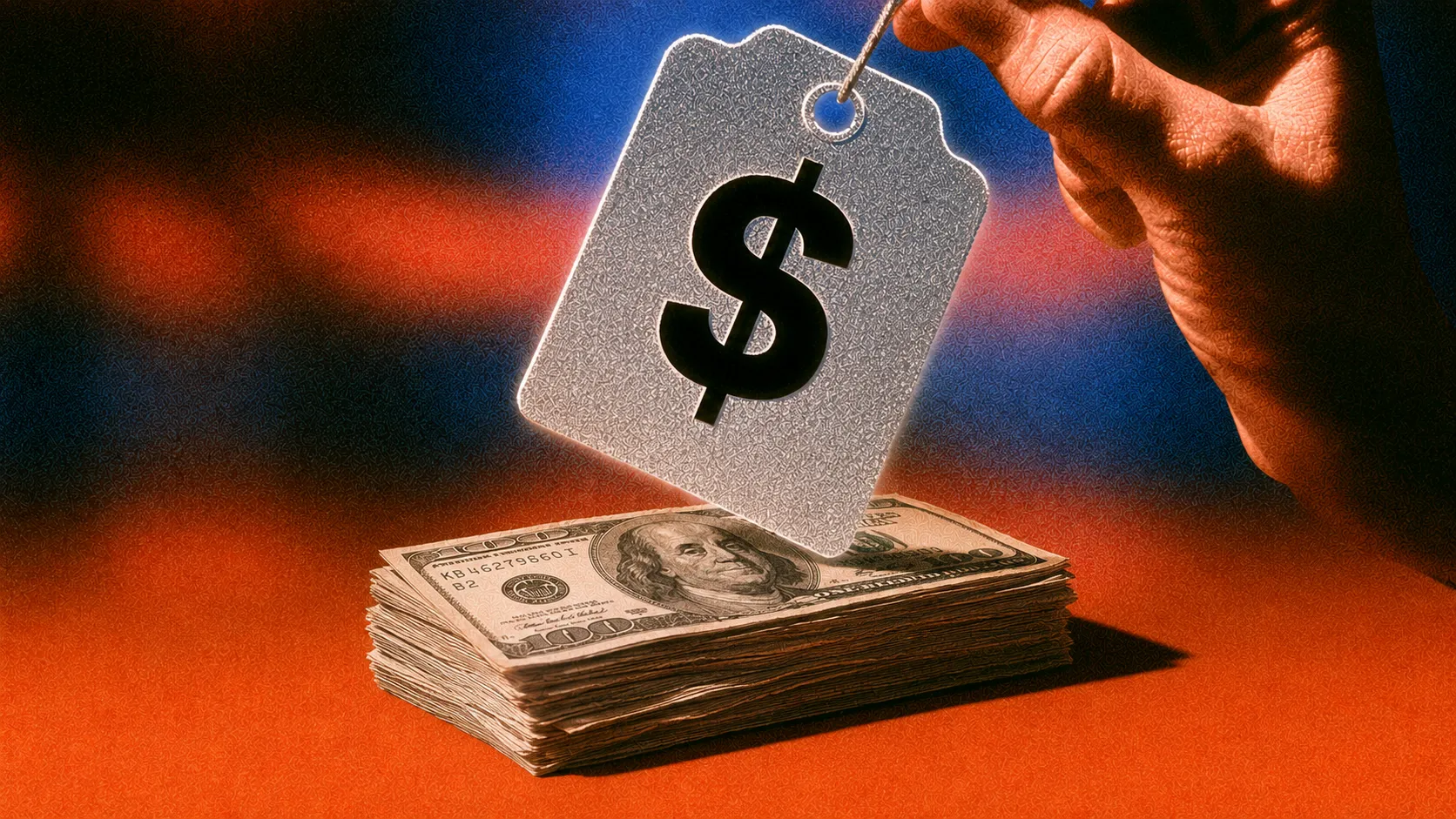
After the Supreme Court struck down President Trump's global tariffs earlier this year, more than $160B in refunds began flowing back to US importers.
Retailers got a large share of that money. What they did with it has varied widely, and the gap reveals a lot about how each company views its customers and investors right now.
Price cuts lead the reset
Walmart received roughly $2.9B in tariff refunds and rolled back prices on 11K items, including ground beef.
CFO John David Rainey said shoppers were making visible spending trade-offs in June as gas prices climbed above $4 a gallon. The price rollbacks will reach consumers during the current fiscal third quarter.
E.l.f. Beauty received roughly $50M in refunds, plus $2M in interest, with another roughly $10M expected. The company ran a pricing test in May, cutting the Halo Glow Skin Tint by $4 and watching unit sales jump nearly 40%.
It expanded the test across almost its entire catalog before permanently lowering prices on about 10% of its lineup.
"The consumer is telling us, they're voting with their dollar."
Mandy Fields, E.l.f. Beauty CFO
Tractor Supply directed its refunds toward absorbing rising freight and fuel costs rather than passing them to shoppers, lowering prices on items like pine shavings and premium pet food.
Not every retailer passed savings along
Lowe's received roughly $80M in refunds and chose shareholder returns over price cuts. The refund delivered an 11-cent boost to Lowe's earnings per share for the second quarter.
CEO Marvin Ellison said the company did not plan to use tariff dollars to lower prices and took "the right planned steps to drive profitability."
Kohl's put $100M of its refunds into gross margin and plans to invest the remainder in deeper inventory.
Target lowered prices on more than 10K items but did not explicitly tie those cuts to tariff refunds. Target said refunds provided a $994M pretax benefit to its gross margin and operating income and a $752M boost to net earnings.
Home Depot received $730M in refunds and used roughly $685M to reduce cost of goods sold, which drove a 0.3% improvement in its gross margin for the fiscal second quarter.
The road less taken
Williams-Sonoma received roughly $200M in refunds and split them three ways. The bulk went to reducing cost of goods sold.
Another $47.5M went to reimburse vendor partners for discounts those vendors had provided to help offset tariff costs. And $10M went into a one-time contribution to some employees' 401(k) accounts.
CEO Laura Alber said reimbursing vendors was "the right thing to do" and that it would strengthen supplier relationships versus competitors.
Burlington Stores said it plans to reinvest all $55M of its refunds into lower prices for shoppers over the second half of its fiscal year.
Why the divergence is hard to untangle
The gap between approaches partly comes down to to how retailers handled the added expense. Tariff costs were typically absorbed into broad cost structures rather than tracked to specific products.
That makes it nearly impossible to verify whether any price cut is proportionate to the refund a retailer actually received.
Bryan Eshelman, a managing director in AlixPartners' retail practice, noted that value-focused retailers have a strategic reason to direct refunds toward prices and to publicize it.
But the one-time windfall sets a higher earnings bar for next year's comparisons. Companies that reported big margin boosts this quarter will face tougher year-over-year numbers in 2027.

