Ship traffic through the Strait of Hormuz has fallen 90% below pre-war levels, sitting at a five-day average of roughly 13 vessel transits per day as of Tuesday, near the lowest level since May 12.
Before the US and Israel struck Iran on Feb. 28, roughly 130 ships crossed the strait daily, carrying about 20 million barrels of crude and petroleum products.
Today, oil exports through Hormuz have fallen to a seven-day average of roughly 9 million barrels per day, according to Energy Secretary Chris Wright, who noted that tankers moving covertly cause private trackers to undercount the figure.
Total Gulf oil exports average about 15M barrels per day, still well short of the pre-war pace.
No deal in sight
A short-lived interim agreement signed on June 17 briefly pushed transit traffic to a five-day average of about 60 ships, but it collapsed after the US and Iran clashed over which shipping routes were protected.
The Trump administration responded with strikes and reimposed a naval blockade. Iran's top security official said Tuesday that Hormuz won't fully reopen until Washington meets Tehran's demands.
Last week, Treasury Secretary Scott Bessent suggested a deal was close, triggering an oil price selloff. No agreement has materialized.
Brent crude has swung between $70 and over $100 a barrel during the conflict, last trading near $90. The IEA now forecasts global oil demand will fall by 1.6M barrels per day in 2026 as high fuel prices weigh on consumption.
"Although the market is projected to return to surplus towards the end of this year, risks remain substantial and the urgency of reopening the Strait has increased, as previously available inventory buffers are rapidly depleting."
International Energy Agency
Gulf states are rewiring the plumbing
With no quick diplomatic fix in sight, Gulf producers are spending billions on bypass infrastructure.
Abu Dhabi's state energy giant ADNOC is doubling pipeline capacity, targeting 3.6M barrels per day, and announced an $8.2B gas business expansion.
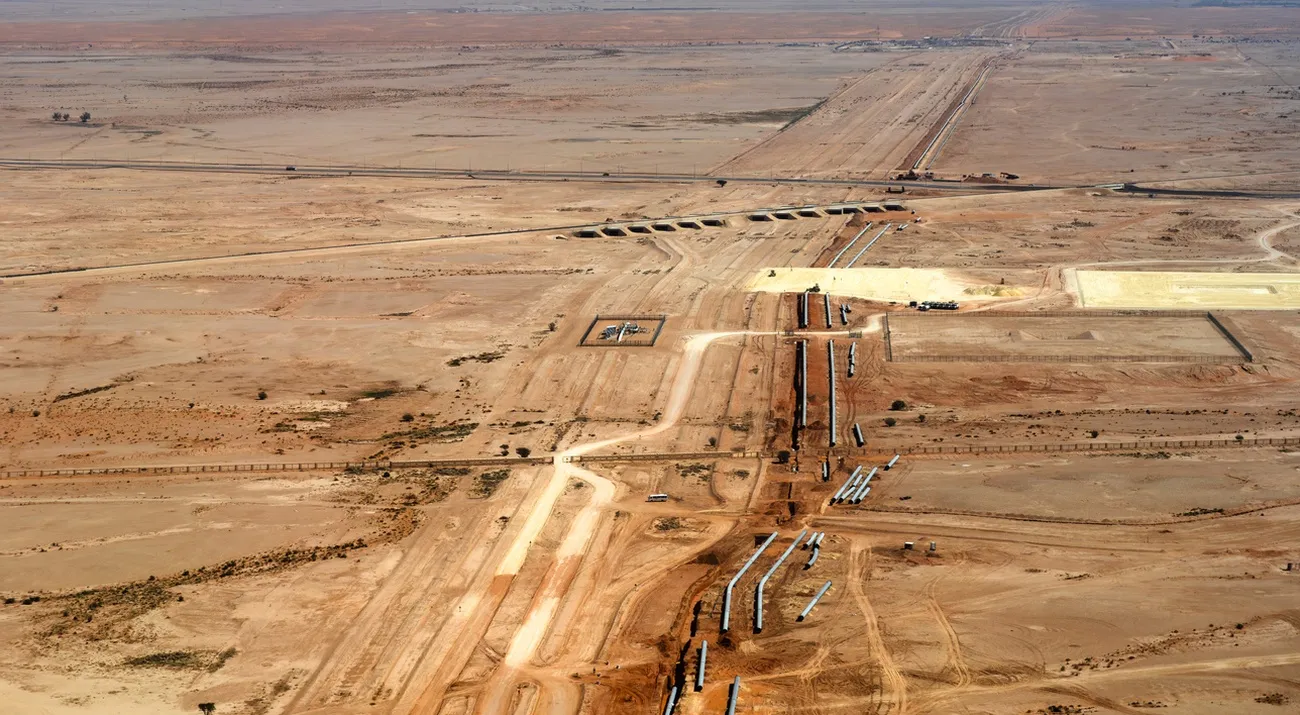
Saudi Aramco is accelerating expansion of its East-West Pipeline, which already reroutes roughly 7M barrels per day to the Red Sea port of Yanbu, with plans to add another 1 to 2 million barrels per day.
Kuwait is in talks with Saudi Arabia to build a new pipeline to Red Sea or Oman ports. Iraq and Jordan have revived plans for a pipeline carrying up to 1M barrels per day to the Port of Aqaba.
Gulf nations are also expanding oil storage in South Korea, Japan, and India, pre-positioning crude on the buyer's side of any future closure.
Analysts say Hormuz will never fully lose its role, but the war has permanently shifted how much trust Gulf exporters place in any single corridor.

