Semiconductor stocks collectively fell on Friday after chipmaker Micron (NASDAQ:MU) reported earnings that sent a strong message: years of high chip demand may be coming to an end.
What’s the big deal? For the past two years, chipmakers have struggled with parts shortages, rising material costs and supply chain issues, which led to massive auto and electronic device backlogs.
With a recession on the horizon, consumer spending is slowing, and manufacturers are cutting production. This double-whammy could hit chip suppliers hard — who are forecasting darker days:
- Micron reported a “significant reduction” in demand.
- Intel saw conditions that are “much worse” than anticipated.
The worst part: Manufacturers ordered too many chips when they were in short supply. Now that PC and smartphone sales are slowing, manufacturers must use their existing chip supply first.
Per Needham analysts, it could take “one-two quarters for the smartphone and PC customers to burn off the excess inventory” before they rebuild their chip supply (YF!).
- A large portion of Micron’s chips end up in smartphones and PCs.
- Micron forecasted upcoming quarterly sales at 21% below what Wall Street predicted.
This is the cyclical nature of semiconductor stocks. In a recession, you might not be upgrading your iPhone each year.
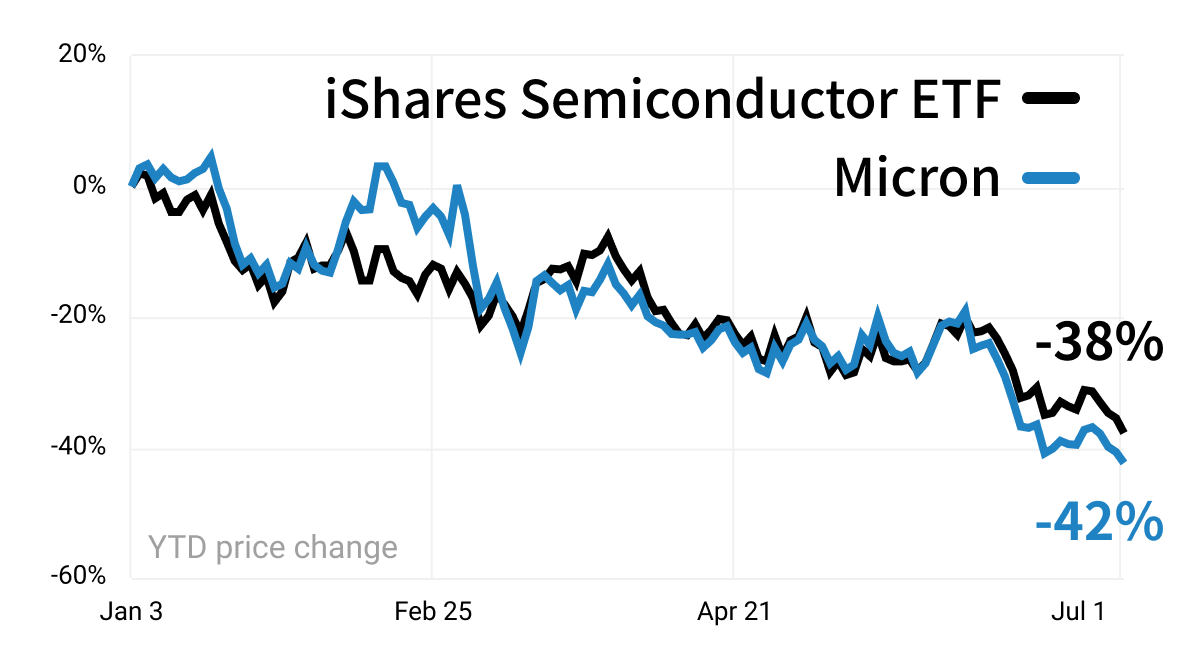
Down goes the industry: Stock prices have fallen to reflect semiconductors’ new reality with the iShares Semiconductor ETF (NASDAQ:SOXX) falling 38% this year.
- Nvidia and AMD have both lost half their values this year.
- Intel and Qualcomm are down roughly 30% this year.
Micron fell 3% after reporting earnings and is down 42% this year. Even at these levels, Micron isn’t near the low valuations it saw in 2019, so there’s still room to fall.

