Recession Warning Signs Are Flashing Brighter Than The BlueWalker 3 Satellite
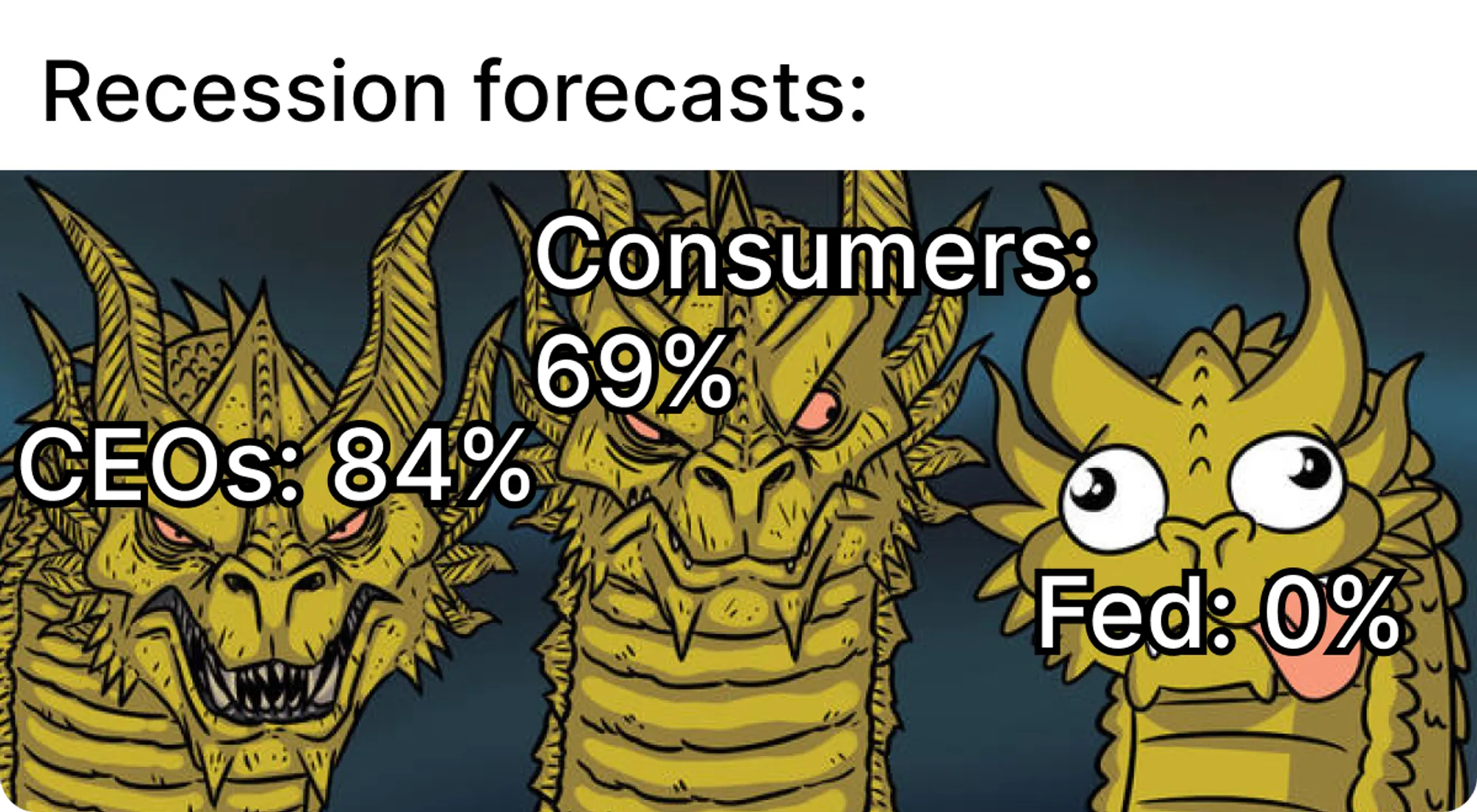
Don’t get that “no racession” tattoo just yet. Sentiment for and against a recession has flip-flopped countless times in the past year. And in recent weeks, the recession narrative is once again in control. Recession forecasts have been all over the place lately (as low as the Fed’s 0% prediction):
- 84% of CEOs surveyed by The Conference Board expect a recession in the next 12-18 months, while Visual Capitalist reports that 69% of consumers expect one.
- Last month, Goldman cut the odds of a recession in the next year down to 15% from 35% in March.
Brace yourselves: If you think it’s been painful so far, Bloomberg doesn’t expect the economy to feel the full impact of higher rates until the end of 2023 or early 2024. This week, 30-year treasury yields jumped to 4.88% — the highest in 16 years, and the world is still getting used to the idea that rates are likely to remain higher for longer.
The warning signs are there
Extra savings for the bottom 80% of households by income have already fallen below pre-COVID levels. The economy is under pressure from several fronts, including strikes, student loans resuming and rising borrowing costs. Delinquencies are increasing across credit card, mortgage and auto loans, and there are several other signals.
- Tighter lending: The share of banks that said they were making it harder for businesses to get loans soared to 51%. In the past, whenever this number broke above 50%, the US was already in a recession or about to enter one (BBG).
- “Soft landing” calls: Right before the 2000 dot-com and 2008 Great Financial Crisis recessions, the number of articles that mentioned “soft landing” had spiked.
Forward-looking: Bloomberg’s model predicts a 50%+ chance that next year, the National Bureau of Economics will declare that a US recession had started in late 2023. It’s difficult to forecast recessions and even harder to predict what will trigger one. Be prepared because the pain isn’t over.

