US Crude Inventories Are Piling Up. Hormuz Is Keeping Global Oil Supplies Under Pressure
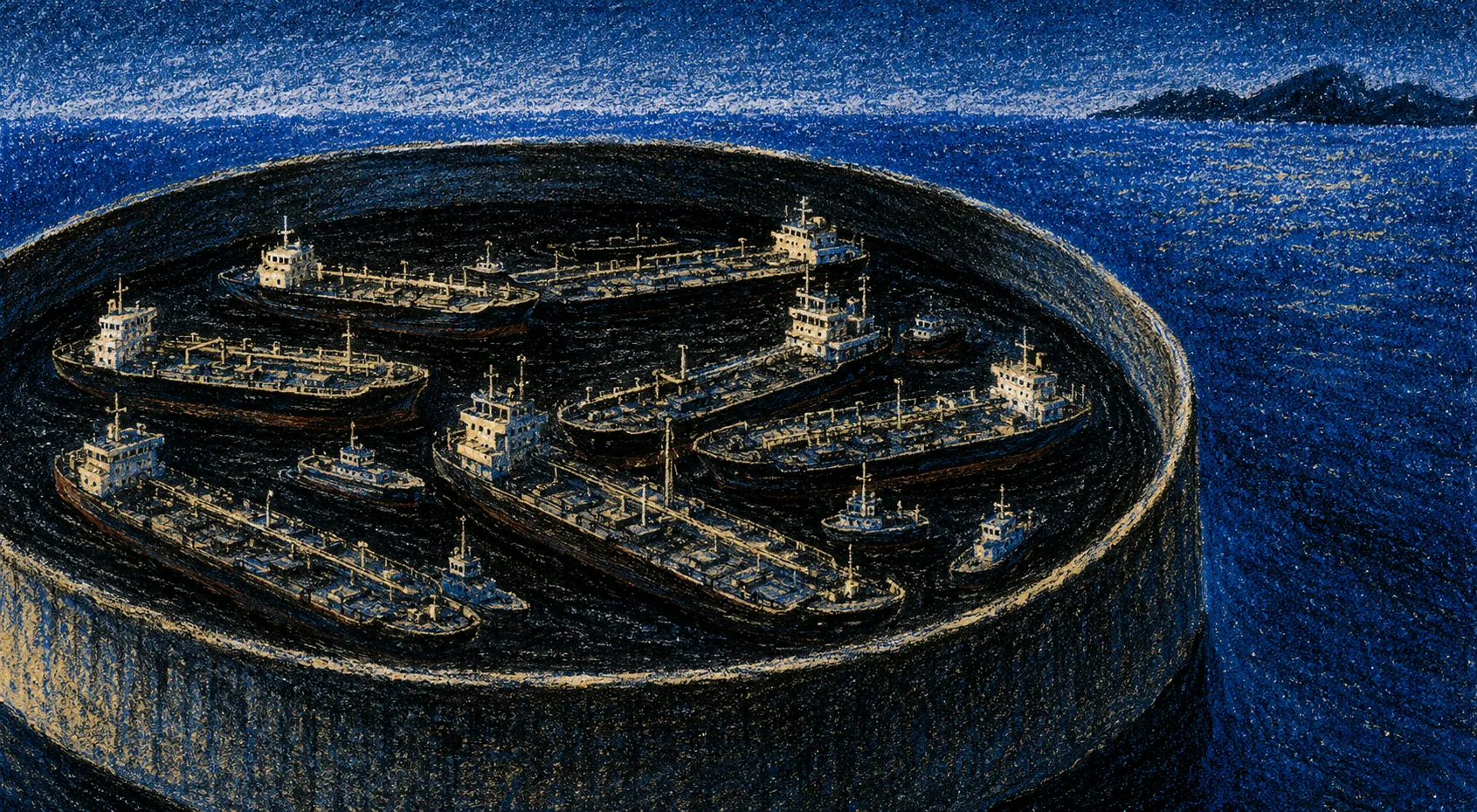
The oil market is sending contradictory signals this week — and you need to know which one actually matters. A massive US inventory build landed Wednesday, but global supply buffers are eroding fast. The Strait of Hormuz remains closed, and a disaster off Oman's coast is making things worse.
The build that looks bigger than it is
US commercial crude inventories rose 17.4M barrels to 424.4M barrels in the week ended Aug. 7. That's the largest weekly gain since January 2023. Analysts had expected a draw of roughly 600K barrels.
The driver was a combination of falling exports and rising imports. US crude exports dropped to 3.06M barrels per day, the lowest since November 2025. Net imports rose by 1.77M barrels per day, with Canada and Venezuela both hitting multi-month highs.
Most analysts cautioned against reading too much into it. Josh Young of Bison Interests said the build looks anomalous and would only be bearish if more builds appear in future reports, calling it more likely a one-off.
David Russell of TradeStation noted the numbers are very noisy because of tanker timing and said markets will likely look past this report.
Refineries kept running hard, at 96.2% capacity. Gasoline stocks fell 1M barrels to 208.7M barrels, sitting 6% below the five-year average. Distillate stocks (which cover diesel and heating oil) barely moved, down just 10K barrels against expectations of a 1.6M-barrel drop.
What the US number hides
Zoom out and the picture flips. The IEA said Wednesday that global oil demand will fall 1.6M barrels per day in 2026. That's up sharply from its July forecast of close to 1M barrels per day. High fuel prices are crushing consumption.
But global supply is also under severe stress. The Strait of Hormuz remains closed. Supply was running 6.3M barrels per day lower year-on-year in July.
The IEA warned that inventory buffers are rapidly depleting as global observed oil stocks fell below 7.9B barrels for the first time since April 2025.
The US Strategic Petroleum Reserve hit its lowest level in more than four decades, sitting at 298.7M barrels. Brent crude has swung wildly, surpassing $100 a barrel last month before falling near $70, and was last trading just under $90.
The IMF cut its annual global growth forecast to 3% from 3.3% since the Iran war began in February.
The oil spill that's adding pressure
A separate crisis is unfolding off Oman's coast. A sanctioned tanker carrying 800K barrels of Russian oil ran aground on June 30 and has been leaking largely unchecked since.
The slick now covers more than 2K square km and has started hitting Oman's shoreline near a protected marine nature reserve.
Greenpeace reported the slick grew from roughly 45 square km at end-July to over 600 square km within days of August starting. Oil spill specialist John Amos of SkyTruth said a full breakup of the tanker could produce a spill rivaling the 1989 Exxon Valdez disaster in size.
Clean-up efforts are stalled. The IOPC Funds said it won't cover costs because the incident is classified as an act of war. The tanker carried no recognized Western insurance, and monsoon conditions are blocking salvage access.
Global buffers are shrinking, Hormuz is still shut, and a worsening environmental disaster is adding logistical noise to an already fragile system.
The IEA sees demand destruction softening toward year-end and projects a return to surplus, but flagged substantial risks before that happens. For energy exposure, one noisy weekly US number shouldn't reset the thesis.

