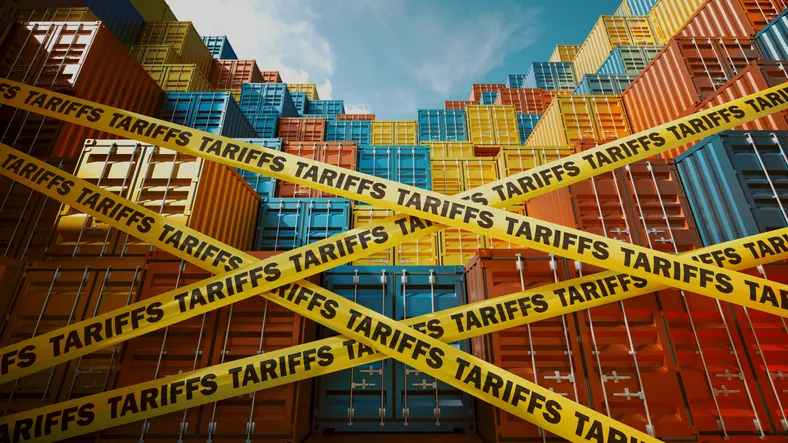
The Federal Reserve Bank of New York found that tariffs imposed in 2025 and early 2026 added 2.9 percentage points to goods price inflation by February 2026.
The estimate covers a sample of 67 categories of consumer goods. Without the levies, researchers say prices in that basket would have been about 1% lower.
In other words, the cost of many everyday items would have declined instead of climbing. The authors are New York Fed economists Mary Amiti, Sebastian Heise, and David Weinstein.
"Tariffs have a larger and more drawn-out impact on consumer prices."
Amiti, Heise, and Weinstein, Federal Reserve Bank of New York
American-made goods carry a third of the cost
Roughly two-thirds of the price effect came straight from higher prices on imported goods. The remaining third came from US producers, who paid more for imported parts and materials and raised their own markups once competing imports got pricier.
Timing splits the same way. Import prices move fast, while US-made goods adjust over six to 12 months as costs work through the supply chain.
For every one percentage point rise in average tariffs, consumer goods prices climb about a quarter of a percent after a year.
Households are bracing for more
Consumers expect inflation of 3.9% a year from now, up from 3.6% in August, per the New York Fed's September Survey of Consumer Expectations.
That's the highest level in over three years, and households marked down both their current and future financial outlooks.
The Federal Open Market Committee recently raised rates for the first time in three years, lifting its target to between 3.75% and 4%, with another increase expected by year end.
Tariffs and energy price surges tied to the war in the Middle East are the main drivers of the current inflation run.
The squeeze shows up in household budgets too. Trump's second-term policies raised net taxes and costs in 2026 for every income group except the richest 1%, according to the Institute on Taxation and Economic Policy.
The middle fifth of Americans face a hit equal to 2.7% of their income, and the poorest fifth 5.7%.
The research lands weeks before midterm elections on Nov. 3, with affordability already the dominant issue. The Supreme Court has found many of the tariffs unlawful, yet the price effects the study measures are still filtering through US-made goods.

