Boeing Wins a $20B Navy Fighter Deal. Its Defense Turnaround Faces Another Test
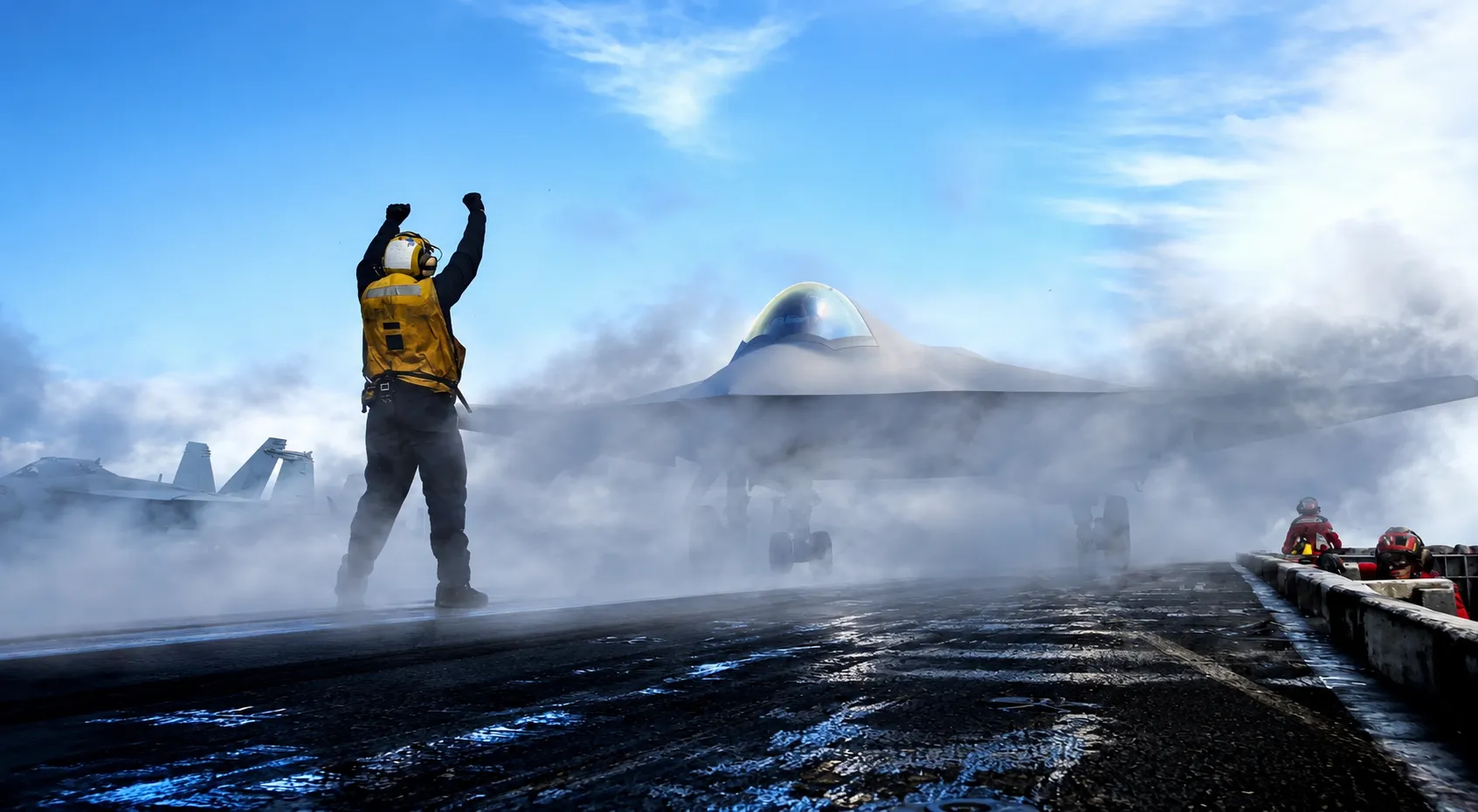
Boeing has secured a Navy contract worth more than $20B to develop the F/A-XX, adding another next-generation fighter to its workload.
The award puts Boeing behind both services’ newest fighter programs while its defense business works through losses and delayed projects.
The agreement funds full-scale development, including several aircraft that will be used to evaluate flight safety, onboard equipment, and weapons compatibility.
Beginning in the 2030s, the F/A-XX is expected to supplement and eventually replace the Navy’s Super Hornets and Growlers while flying alongside the F-35C.
Both services are betting on Boeing
The Navy announced the selection Sept. 29 after Boeing beat Northrop Grumman, its last remaining competitor. Lockheed Martin left the competition last year, narrowing the contest to two manufacturers.
That follows the Air Force’s March 2025 selection of Boeing to build the F-47. Together, the awards make Boeing the sole supplier of sixth-generation tactical fighters for the Navy and Air Force, with new manufacturing capacity in St. Louis designed to support multiple advanced aircraft programs.
The next generation is expected to combine improved stealth with AI-powered sensors and potentially lasers or hypersonic weapons, according to the Congressional Research Service. The Navy also plans for its fighter to work with Collaborative Combat Aircraft, unmanned aircraft designed to fly missions alongside crewed jets.
Michael P. Duffey described the program as central to the military’s air-combat plans. Acting Navy Secretary Hung Cao called it a generational leap in air superiority.
Boeing entered the decision as the favorite, according to BNP Paribas aerospace and defense analyst Matthew Akers. Shares rose following the announcement, while Northrop shares fell.
Winning contracts has not prevented losses
The award arrives at a defense business whose recent contracts have produced substantial losses. Boeing recorded more than $5B in losses on its biggest defense programs in 2024 and another $800M in 2025, including more than $2.7B in charges tied to the KC-46 refueling tanker.
Those setbacks help explain executives’ pledge to avoid fixed-price development contracts, which can leave Boeing absorbing costs above the agreed price. CEO Kelly Ortberg said earlier this month that the space and defense unit had improved dramatically, though problems remained.
Delays are another part of that record. Boeing’s refueling drone completed its first flight in April, years behind schedule, and is not expected to enter service until 2029.
The fighter awards give Boeing’s St. Louis operations new work, but they also require the company to develop two advanced aircraft programs in parallel. Its manufacturing expansion supports that effort; the refueling drone’s delays show why delivery schedules still deserve scrutiny.
Pressure also persists in commercial aviation, where the FAA delayed certification of the 737 Max 10 on Monday after Boeing identified a software glitch affecting certain landing procedures. Winning military work does not resolve the separate problems holding up its passenger jets.
Boeing has secured both services’ next-generation fighter programs. With billions already lost on earlier defense contracts, the test for its turnaround is whether those wins become aircraft delivered on schedule and work that earns a profit.

