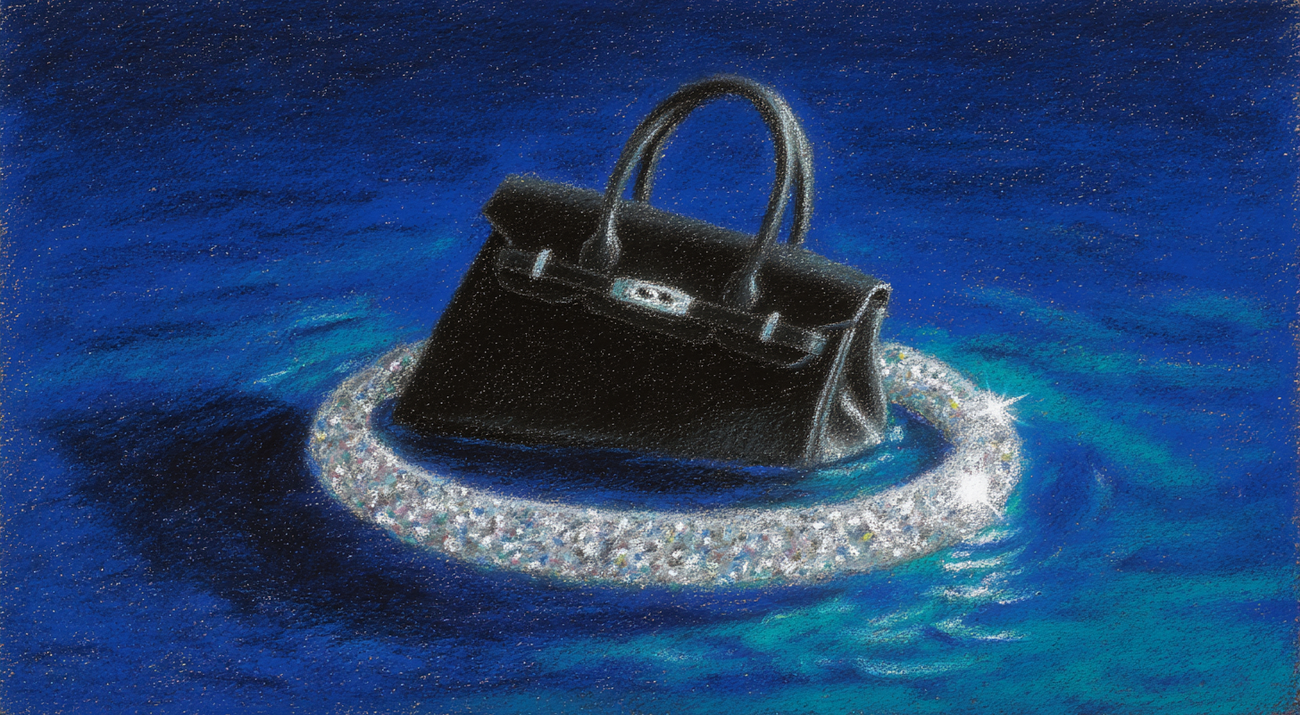
Luxury goods have spent two years in a soft patch, with brands wrestling with slowing demand and aggressive pandemic-era price hikes that alienated buyers. That narrative is cracking.
A 20% sales surge at Richemont for the quarter ended June 30 landed well ahead of analyst expectations and sent the broader sector rallying.
Jewelry is driving the recovery
Richemont reported $7.2B in quarterly sales, beating the consensus. Its jewelry division, home to Cartier, Van Cleef & Arpels, Buccellati, and Vhernier, grew 24%, marking seven consecutive quarters of double-digit growth.
Jewelry is the fastest-growing category in luxury right now, and Richemont is its undisputed market leader.
The appeal is not just to ultra-wealthy buyers. Bernstein analyst Luca Solca noted that middle-class consumers spending $3K to $4K are increasingly choosing jewelry over handbags because a ring or bracelet feels wearable every day and holds its value longer. That demand is showing up at both the high and accessible ends of the market.
Richemont's watch division also posted 8% growth, and even its fashion and accessories segment, a chronic underperformer, rose nearly 10%. The quarter was broad, not narrow.
Where growth is and isn't coming from
The Americas and Asia Pacific both accelerated. Strong demand came specifically from Hong Kong, Macau, South Korea, and Taiwan. Europe grew. The Middle East returned to growth as local shoppers offset a tourism drop tied to the Iran conflict.
China is the unresolved question. Richemont reported double-digit growth in greater China, which lifted sentiment.
But Bank of America analysts flagged that the broader sector needs sustained improvement in China to reach historical growth rates near 9%, and visibility there remains low. China's economy grew just 4.3% in Q2, below forecasts.
The read-across to rivals has limits. Vontobel analyst Jean-Philippe Bertschy pointed out that Richemont's peers are likely to report weaker numbers.
Richemont's portfolio of high-desirability brands with strong pricing power is relatively unique. Other luxury groups carry heavier exposure to handbags and soft goods, categories that haven't recovered as cleanly as jewelry.
What the rest of earnings season will tell us
Richemont kicked off what's shaping up to be a pivotal reporting stretch. Burberry reported its first-quarter results on the Friday following Richemont's print. LVMH, Kering, and Hermes all report in the last week of July.
"A recovery in handbag sales is important for the industry because the category boosts profit margins and improves sales productivity at luxury stores."
Carol Ryan, The Wall Street Journal
Two numbers will matter most. LVMH's fashion and leather goods division growth rate will signal whether aspirational buyers are returning to the category that defined the last decade of luxury expansion. Hermes handbag sales will show whether the ultra-premium tier is still holding.
The structural shift underneath the trade
Beyond the quarterly noise, McKinsey's 2026 report found that the global luxury market is projected to reach $700B by 2030, growing 4 to 6% annually.
The US remains the world's largest luxury market by sales. China is expected to be among the fastest-growing through 2030.
What's changing is what drives purchasing. Emotional connection now ranks ahead of craftsmanship and heritage as the top driver of brand desirability in both the US and China.
Consumers in both markets say they'd spend extra discretionary income on travel before any luxury product category. AI is reshaping how buyers discover and research products before they ever enter a store.
For investors, the immediate picture is a sector mid-rotation. Jewelry has been carrying the trade. The question for the next four weeks is whether handbags and soft goods are genuinely recovering, or whether Richemont's quarter is a company-specific story that doesn't extend to the rest of the shelf.

