Between 2012 and 2021, the amount invested in U.S. sustainable funds has grown nearly 10x to $360B.
ESG (environmental, social and corporate governance) factors are increasingly influencing our investment decisions — but ESG labels can be deceiving, and ESG funds come at a higher cost.
The blurring lines with ESG
Tesla is down nearly 10% since being kicked out of the S&P 500 ESG Index — which includes companies that meet S&P’s sustainability criteria.
- In a blog post, Margaret Dorn, S&P Head of ESG Indices, asked, “how can a company whose self-declared mission is to ‘accelerate the world’s transition to sustainable energy’ not make the cut?”
- Here’s why: Dorn answers her own question, citing concerns over Tesla’s working conditions, how they have handled death and injury investigations and its low-carbon strategy.
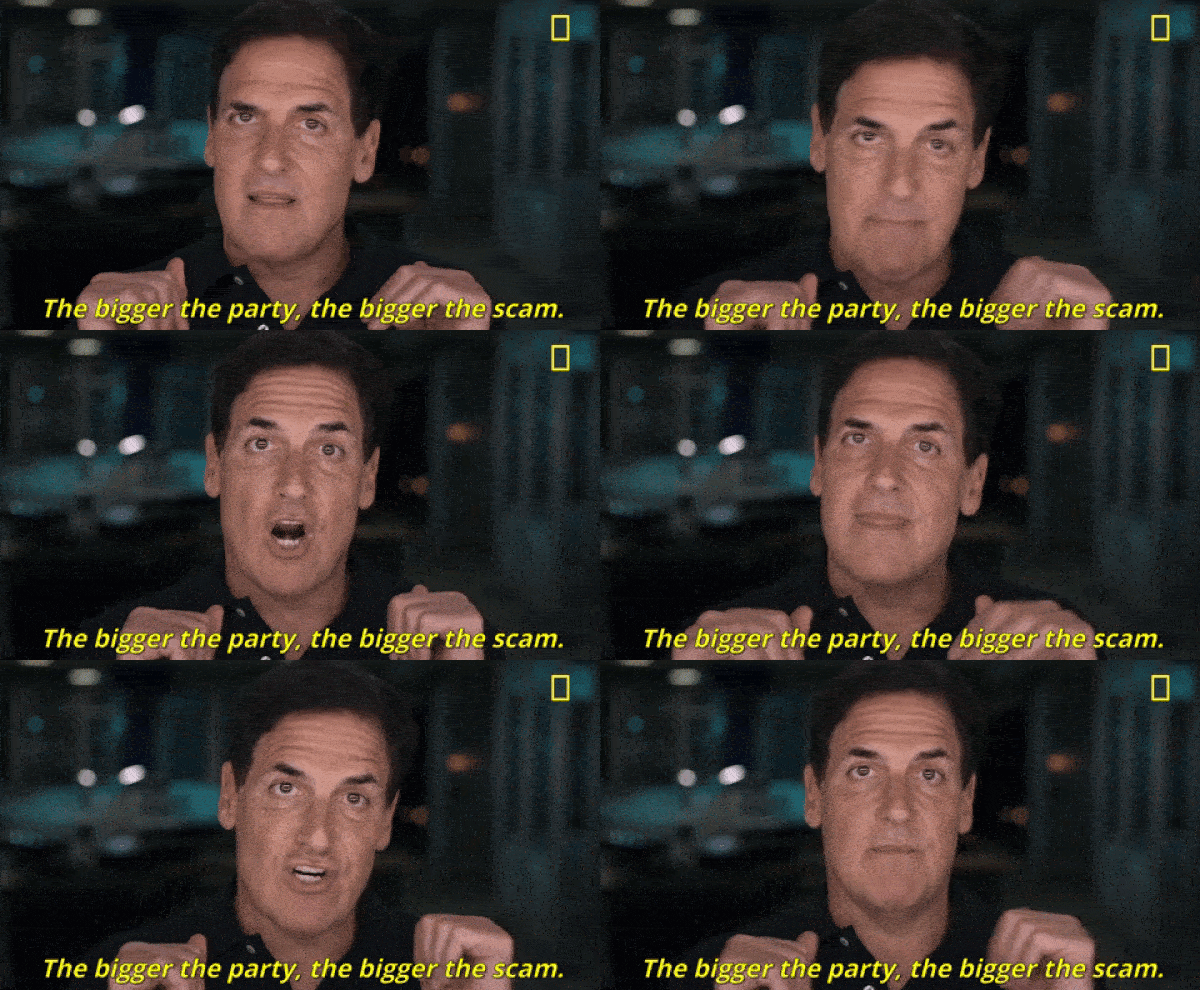
Elon Musk said, “ESG is a scam” that is “weaponized by social justice warriors.” Per Managing Partner of Loup Ventures (BBG), funds tracking the S&P 500 ESG Index would be forced to sell Tesla as a result of its exclusion.
Tesla is still included in other ESG funds, but its ESG status is being heavily debated, focusing on the ESG industry’s controversies.
Slap on an ESG label and call it a day
There aren’t standard ESG metrics, measuring the “social” and “governance” aspect is complex, and ESG labels can be misleading:
- A Bloomberg investigation revealed that BlackRock gives sustainable labels to their funds — which have little to do with whether the companies inside have any environmental or social impacts.
- BlackRock — which manages one of the largest ESG funds, iShares ESG Aware MSCI USA ETF (NASDAQ:ESGU), holds companies like oil giants Exxon and Chevron, McDonald’s and Activision.
The S&P 500 ESG Index — which contains tobacco, coal and weapon makers — is designed to maintain a similar industry weighting as the S&P 500.
Investors: Fees and returns behind ESG
ESG funds charge higher fees than their counterparts, but investors aren’t always rewarded with higher returns — and whether they’re actually sustainable is in question.
- Between 2012-2021, ESG funds underperformed the S&P 500 by a small margin — and are down even further in 2022 from strong returns in the energy and commodities sector.
- The industry has oversold performance, and returns have come mainly from ESG fund’s focus on tech — Aswath Damodaran, NYU Stern School of Business Professor (Barron’s).
The SEC has begun scrutinizing fund managers on ESG classifications — but more regulations and standardized ESG ratings are needed.

