On June 16, it was reported that General Motors plans to ramp up its electric vehicle (EV) and autonomous vehicle investment by 30% over the next 4 years.
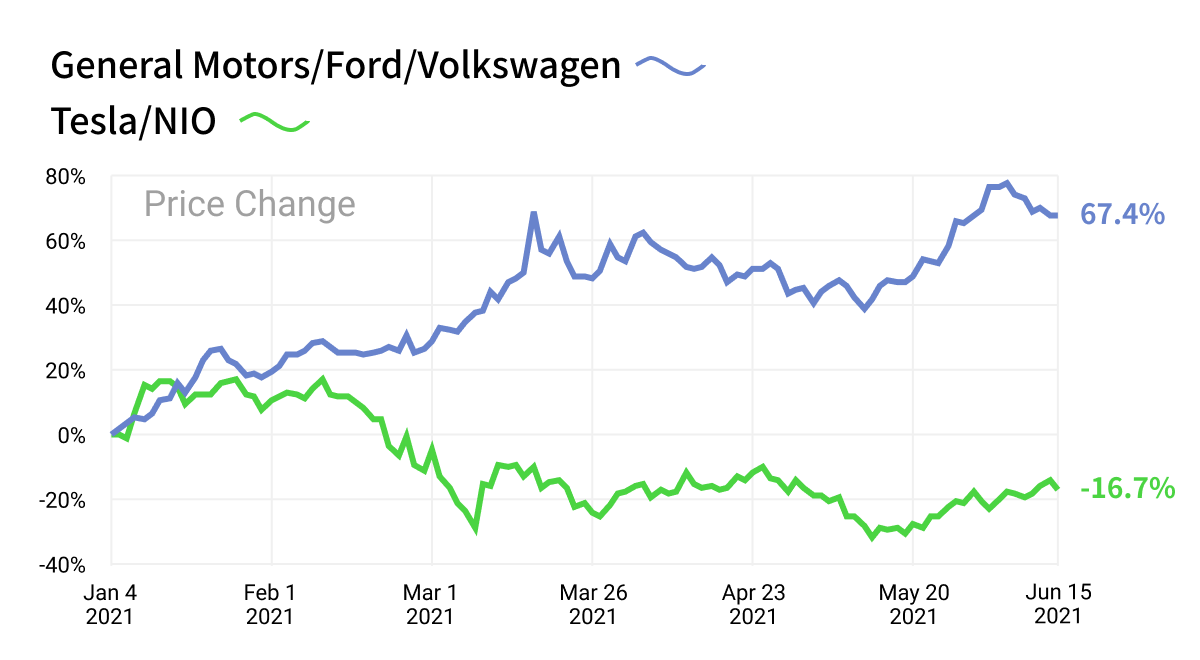
What’s the big deal? 2020 was all about upstart EV makers like Tesla, NIO and Nikola. 2021 put the focus back on the old car souls like GM, Ford and Volkswagen.
- These carmakers ramped up their electric investments with plans to shift the majority of productions to EVs in the next decade.
- In 2021, these old car stocks returned an average of 67% compared to an average loss of 17% between Tesla and NIO.
Electric vehicles are estimated to account for 58% of total vehicle sales by 2040 and traditional carmakers are in the best position to benefit.
- They’ve got big advantages over new upstarts — a head start in manufacturing, established dealerships and cash (lots of it).
- For General Motors, who made over $6b of net income in 2020, ramping up its EV investment isn’t an issue.
But when you’re an electric vehicle startup, cash gets a lot tighter. That was the case for Lordstown Motors (NASDAQ:RIDE), an EV truck maker with zero revenue. On June 8, RIDE warned investors of bankruptcy concerns — with its CEO/CFO resigning in the following week.
The Joe’s take: At a 10x P/E (ELI5: Price-to-earning ratio) and 0.6x price-to-sales multiple, General Motors’ stock is looking much cheaper compared to other EV stocks. In comparison, Tesla trades at an 11x price-to-sales multiple.
- If investors were to value GM’s company like an EV maker, its stock could rise.
- For GM to trade like an EV stock, investors will have to see more results/traction while buying into their electric story.
Dive Deeper: General Motors has innovation in its blood, and here’s why

