Food Inflation Is Heating Up. Investors May Find Opportunity in the Fallout
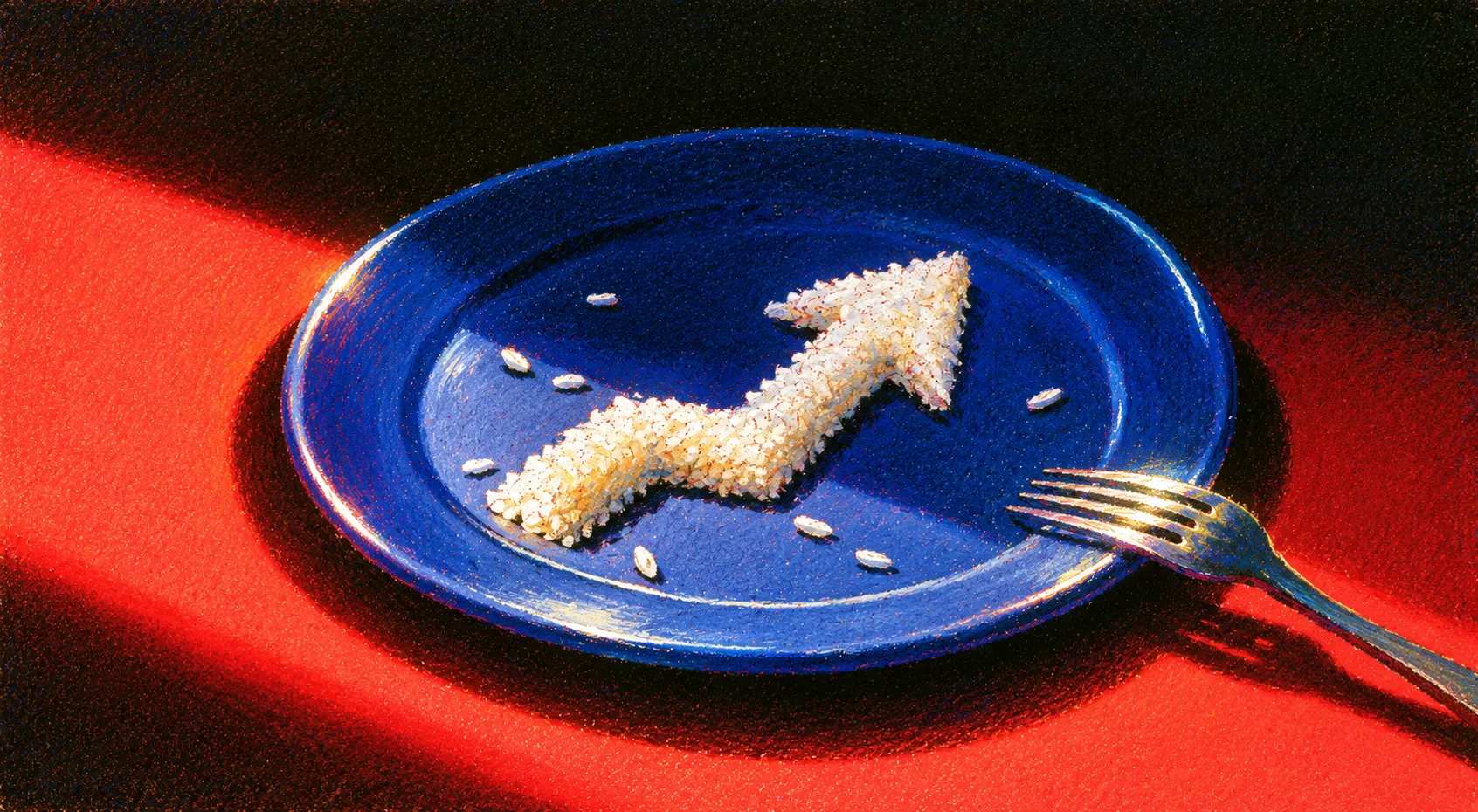
Food prices are climbing again, but the bigger problem may still be ahead. Rising fuel costs, fertilizer shortages, and unpredictable weather are putting pressure on farms worldwide. Much of that pressure has yet to reach grocery shelves, which means shoppers could be in for a tougher 2027.
The numbers behind the rise
Global food prices are already at their highest level in nearly four years. The United Nations Food and Agriculture Organization's (FAO) food price index reached 136 points in September, its highest reading since November 2022.
That's a 1.5% increase from August and 5.8% above September 2025. Sugar accounted for much of the monthly increase, while meat was the only major category to get cheaper.
FAO Food Price Index component changes, September 2026 vs August 2026
Month-over-month percent change as of September 2026
Bar chart. % Change (MoM). Sugar: Change (%) 6.10%. Cereals: Change (%) 5.10%. Wheat: Change (%) 6.30%. Corn: Change (%) 5.60%. Vegetable oils: Change (%) 0.90%. Meat: Change (%) -1.10%.
The agency also trimmed its 2026 global cereal production forecast to 2.979B metric tons, down 2.1% from the prior year's record.
Why farming is getting expensive
Before food gets expensive at the grocery store, it gets expensive to produce. Diesel powers tractors, irrigation systems, and delivery trucks, and the Middle East and Russia account for roughly half of global net diesel exports.
Middle Eastern diesel shipments have already fallen from nearly 2M barrels per day to under 1M, leaving farmers facing higher operating costs.
Fertilizer isn't offering much relief either. The Gulf is a major supplier of urea and sulfur, but shortages have forced phosphate producers to reduce output. Natural gas shortages have also shut fertilizer plants across South Asia.
Higher oil prices create another problem. They make biofuels more attractive, encouraging producers to divert corn, vegetable oils, and rapeseed from food production toward fuel.
The supply shocks behind rising food prices
As of Oct 19, 2026
| Pressure point | Latest figure | Source |
|---|---|---|
| Middle East diesel exports | Down from close to 2M to under 1M barrels a day | S&P Global |
| Agricultural commodity prices | Up 13% in Q3 2026 | IFAD |
| Wheat prices | Up more than 30% in 2026 | Reuters |
| 2026 global cereal output | 2.979B tons forecast, down 2.1% | FAO |
| Countries where food beat headline inflation | 22% of 150, up from 14% | World Bank |
The next harvest is at risk
The disruption isn't limited to higher costs. Shipping problems through the Strait of Hormuz are already affecting harvests, according to the International Fund for Agricultural Development.
Farmers initially managed by using existing fuel and fertilizer supplies. But as the disruption continues, some are planting less and cutting back on fertilizer, which could mean smaller harvests ahead.
Agricultural commodity prices climbed 13% in the third quarter, with further increases expected through early 2027. An official involved in a UN-backed fertilizer shipping initiative warned that parts of Asia and Africa could face a food security crisis without a US-Iran agreement in the coming weeks.
Weather could make matters worse. A strong El Niño is expected to peak toward the end of 2026, increasing the risk of droughts and floods in major agricultural regions next year.
S&P Global isn't predicting a full-blown food crisis just yet, but its researchers believe the possibility is getting harder to dismiss.
What it means for stocks
Consumers are already feeling some of the pressure. Wheat prices have risen more than 30% this year, rice prices in Indonesia have reached records, and bread costs in Egypt have climbed roughly 25%. India's sugar prices have also hit an all-time high.
The World Bank found that food inflation exceeded overall inflation in 22% of the 150 countries it studied, compared with 14% in the previous quarter.
For investors, the impact depends on where companies sit in the food supply chain.
Fertilizer producers such as Nutrien, CF Industries, and Mosaic could benefit from higher prices as urea and phosphate supplies tighten.
Equipment makers face a tougher outlook. Farmers dealing with smaller margins and uncertain harvests are less likely to spend on new machinery, creating pressure for Deere and AGCO.
Food manufacturers have their own problem. Companies such as General Mills and Kellanova face higher ingredient costs, which can hurt profits before price increases reach customers. Kroger can pass some costs along, but shoppers may respond by choosing cheaper products.
And the pressure isn't expected to ease soon. The FAO's chief economist expects the biggest impact in late 2026 and into 2027, when grain reserves that have helped contain prices begin running low.
That leaves the market particularly vulnerable to another poor harvest or export restrictions from major producers. For lower-income households, where food can consume roughly half the household budget, even a modest increase can have serious consequences.

