Financially Stressed Consumers are Turning to Buy Now, Pay Later Apps for Groceries
How are consumers dealing with sky-high food costs? Skipping meals, switching to lower-cost brands — and taking on more debt.
In the past two years, the monthly cost of a nutritious diet for a family of four jumped 48% from $675 to $1K. And many have turned to “buy now, pay later” (BNPL) loans to scrape by.
Everything is too damn expensive
… But rising food costs have “been the most stubborn of all the categories,” per Walmart’s CEO.
- Going up: Annual food costs in the US rose 8.4% in March.
- Going down: Monthly food costs fell in March for the first time since 2020.
Except not fast enough to relieve budget pressures — as Americans turn to BNPL apps for their grocery bills.
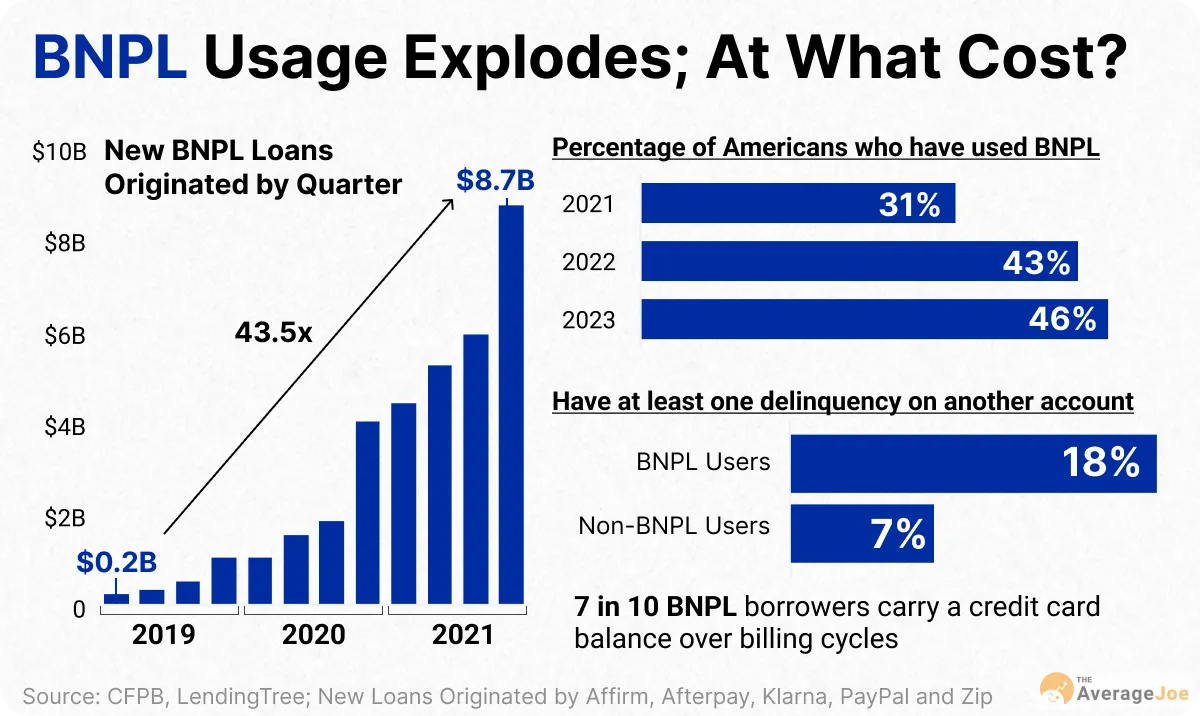
Per a LendingTree survey, 27% of BNPL users are bridging paychecks with these loans — and 21% are buying groceries with them.
BNPL is a slippery slope
These loans — often seen as temporary solutions to bigger problems — are easy to get and require minimal credit checks.
- But it’s easy to forget to pay them back, late fees can rack up, and therefore negatively impact credit scores.
- “You are putting yourself into the cycle of debt that would be very difficult to get out of” — per Payment Specialist Terri Bradford.
The industry isn’t regulated like the credit card industry — but that’s at risk of changing. Earlier this year, the UK proposed rules thath could make it more difficult to qualify for loans and restrict marketing conducted by BNPL companies.

