DoJ Sues Payment Giant Visa, Alleging Anticompetitive Practices in Debit Card Market
A debit card might be free to use, but global payments leader Visa ($V) keeps getting richer thanks to America’s love for plastic. However, things may soon change for the debit king. In 2020, Visa attempted to buy fintech company Plaid in a $5.3B deal — but the Department of Justice (DoJ) blocked it. Unfortunately for Visa, that wasn’t the last time they’d face regulators.
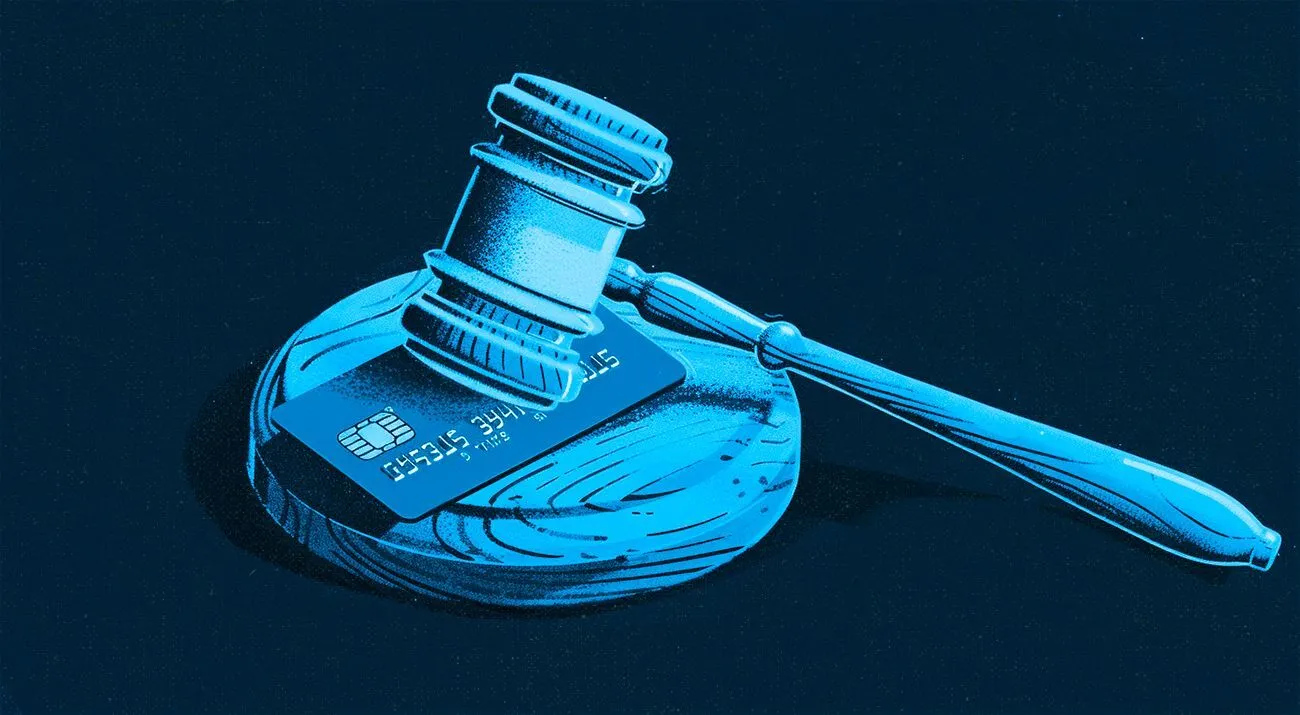
Card declined: Yesterday, the Justice Department filed an antitrust lawsuit against Visa, accusing the backbone behind countless point-of-sale terminals of using its market dominance to crowd out rivals in the debit card market, which hurt both consumers and businesses. The lawsuit follows a two-year investigation into the world’s largest payment processor, with the DoJ focusing on Visa’s monopoly status and how the company impacts the prices of “nearly everything.”
- According to Bloomberg, the antitrust suit accuses Visa of making “exclusive agreements to hinder the expansion of competing networks” and tech entrants — including penalizing merchants that use alternative services.
- The DoJ’s lawsuit is just the latest in a string of cases targeting major intermediaries, including Ticketmaster parent Live Nation, real estate firm RealPage, and CVS Health’s Caremark.
Pricing Problem
Central to the case is tokenization, a technology Visa and its rival Mastercard ($MA) use to enhance payment security. Tokenization replaces the 16-digit number on debit or credit cards with a token, which is device or merchant-specific. But that security comes at a cost.
- The DoJ is reportedly investigating how Visa priced payment processing for merchants that didn’t use its tokenization service — previously calling it a “technological barrier” that limits competitors.
- Last year, Mastercard settled a case with the Federal Trade Commission (FTC) over tokenization, which it used to prevent merchants from using other payment networks.
Problems afoot: The filing caused Visa’s stock to drop nearly 5% yesterday — approaching its steepest single-day decline in three years. This comes just months after Visa and Mastercard agreed to reduce swipe fees for merchants by $30B over five years as part of a settlement. Analysts are weighing the potential impact on the payments industry, with the case threatening Visa’s dominance in the debit card space — especially as the industry is being shaken by the possible Capital One-Discover merger.

