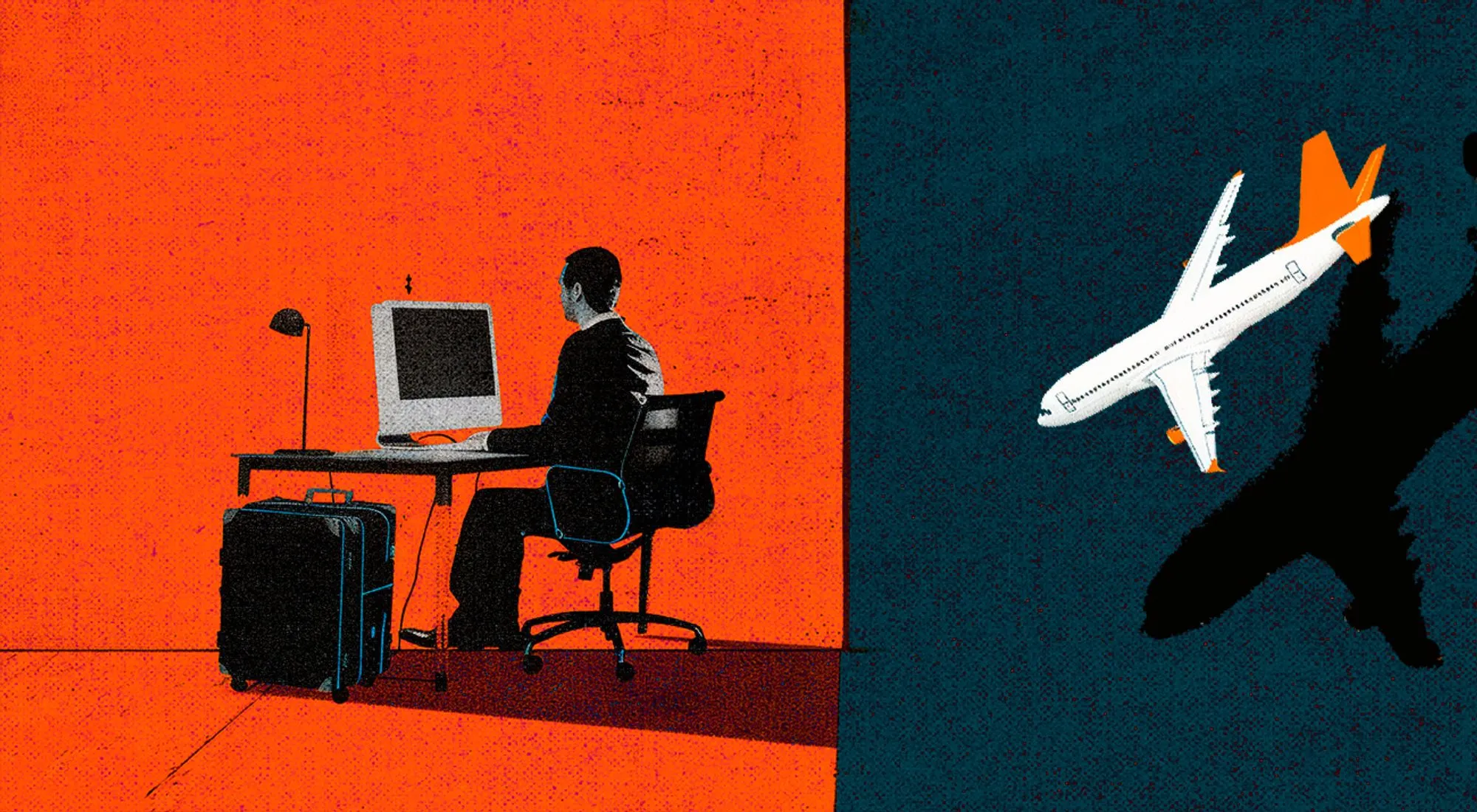
The friendly skies aren’t so friendly for business travelers these days. While vacationers eagerly pack their bags, briefcases are gathering dust as corporate travel charts a slow and turbulent path to recovery. Despite robust growth in leisure trips, studies suggest it could take years for business travel to reach pre-pandemic levels — a trend that has airlines and hotels shifting gears.
One-day wonders no more: The decline of the one-day business trip is a key factor in the sluggish rebound. Executives are cutting back on quick in-and-out trips due to frustrations with flight disruptions, environmental concerns, and shifting work attitudes post-pandemic.
- The Global Business Travel Association (GBTA) doesn’t expect inflation-adjusted corporate travel spending to fully recover until 2027.
- Half of respondents in a 2023 GBTA survey said worries about travel hassles have reduced their willingness to fly for work.
Retreats Over Routine Trips
Not all business travel is grounded. Companies are still willing to spend big bucks on retreats and offsites to unite distributed teams. With remote work now the norm, firms view these gatherings as crucial investments in culture and collaboration.
- Hilton reports a “material increase” in offsite team events as a direct result of reduced office spaces.
- Moniker, a corporate retreat planning agency, forecasts 25% sales growth in 2025 as demand for full company and team retreats rebounds.
New normal: While inflation and economic uncertainty cloud the outlook, industry leaders remain cautiously optimistic. Andrew Crawley, president of American Express Global Business Travel, believes customer budgets will eventually catch up to higher airfares and hotel rates. Still, the era of jetting off for a day of handshakes and PowerPoints may be gone for good — replaced by a more selective approach to business trips in an increasingly virtual working world.

