China Plots Course For Global Auto Domination, Threatening Western Automakers
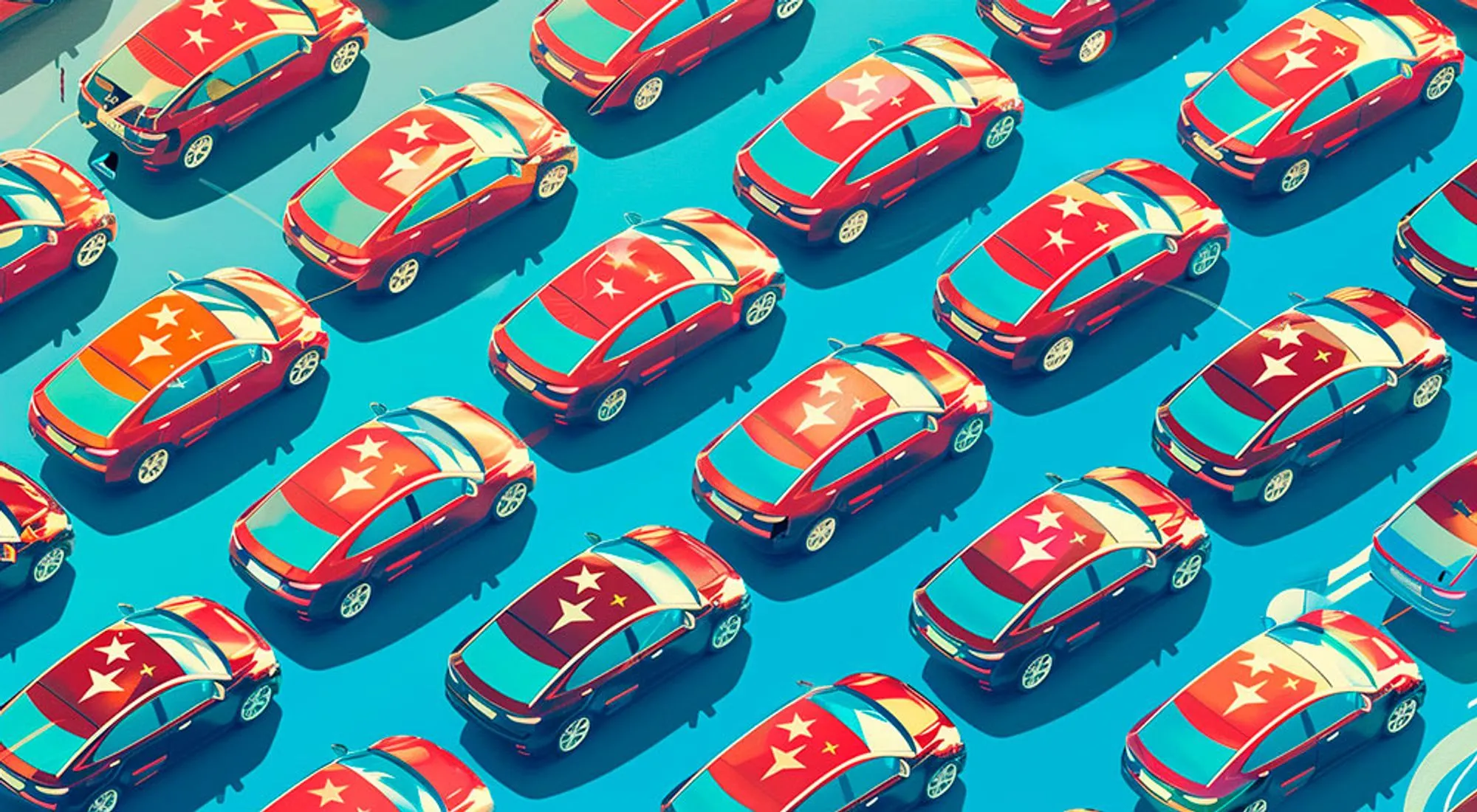
Today, almost every aspect of American life involves Chinese goods — from electronics to furniture to toys. To get ahead in the growing electric vehicle (EV) market (despite what Tesla’s stock price says), China is focusing on its next major product category — one that rolls on four wheels.
Stay schemin’: In 2023, China surpassed Japan as the world’s largest auto exporter, and to keep that spot, China plans to push its low-cost EVs. Leveraging cheaper labor, production, and material costs, Chinese automakers like BYD, NIO, and XPeng can offer cars as cheap as $10K — and conceivably generate billions in annual revenue by attracting more affluent customers to Chinese-built vehicles.
- Chinese automakers have plans for the US market. NIO aims to enter by 2025, while BYD is opening up factories in neighboring Mexico — possibly a step towards bringing its $10K Seagull to North America.
- Besides their affordability, many Chinese EVs boast advanced features, longer ranges, and are nearing full self-driving capabilities.
Preparing for (Price) War
BYD Americas’ CEO stated that Western automakers are “not ready” for Chinese competition, and he might be right. Currently, Chinese EVs can’t be sold in the US due to regulatory concerns about Chinese subsidies and economic security. But if they find a way to bypass these restrictions, they could wreak havoc on Western automakers — potentially threatening union jobs.
- Chinese EVs can be up to $50K cheaper than American-built ones, which could significantly undercut US automakers.
- In response, the US imposed a 100% tariff on Chinese EVs last month to prevent an “extinction-level event” for its carmakers (NBC).
Battle of the Brands: The disruptive potential of Chinese EVs has Western automakers on alert. Many are developing lower-cost EVs ahead of the competition’s arrival. Last week, Stellantis CEO Carlos Tavares announced plans for a $25K EV Jeep, joining companies like General Motors and Volkswagen in the race. While targeted tariffs might give these companies a fighting chance, Tesla’s CEO Elon Musk remains skeptical.

