Bed Bath & Beyond Joins Blockbuster in the “Failed to Innovate” Graveyard
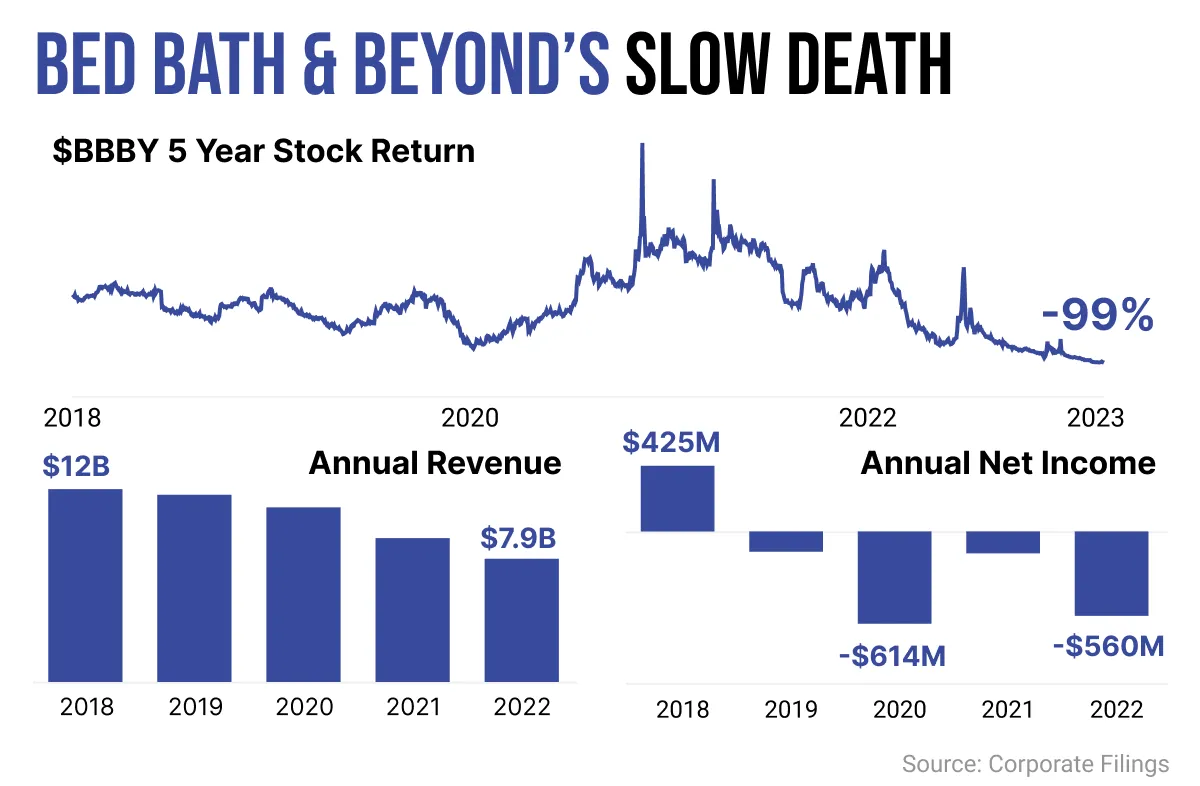
Moment of silence for the meme-stock legend and one of America’s most popular home goods retailers.
- On Sunday, Bed Bath & Beyond filed for Chapter 11 bankruptcy — just months after warning it was in trouble.
- That’s putting nearly 14K BBBY employees’ jobs and retirement plans on the line.
What went wrong? Almost everything that could’ve did.
BBBY made all the classic corporate mistakes
1/ Failed to innovate. While the world was moving online, BBBY continued to expand its physical presence. When it did focus on e-commerce, it was too late. Retail industry consultant Doug Stephens said BBBY “needed to do something probably ten years ago” if they wanted to survive (Modern Retail).
2/ Failed turnaround plans. BBBY went through several strategy, store and cost cuts as well as leadership changes, but nothing worked for the brand. Per Stephens, “They just sort of continued to try to put a bandaid over a hemorrhaging wound.”
3/ COVID was the nail in the coffin. BBBY didn’t have the supply chain to handle pandemic lockdowns — losing market share to competitors like Walmart, Amazon and Wayfair. And once retail consumers began to emerge, BBBY was hit by inflation and slower spending.
4/ Too much debt. To finance its losses and turnaround plan, BBBY’s debt balance ballooned to $1.2B. Earlier this year, the company reached the point where it failed to pay the interest on those loans.
Unless it finds a buyer in the bankruptcy process, all 360 stores will shut down. And BBBY likely won’t be the last household name to go bankrupt this year — Tupperware, your expiry date is coming.


RIP: Meme-stock investors who followed Ryan Cohen’s investment into last year.

