
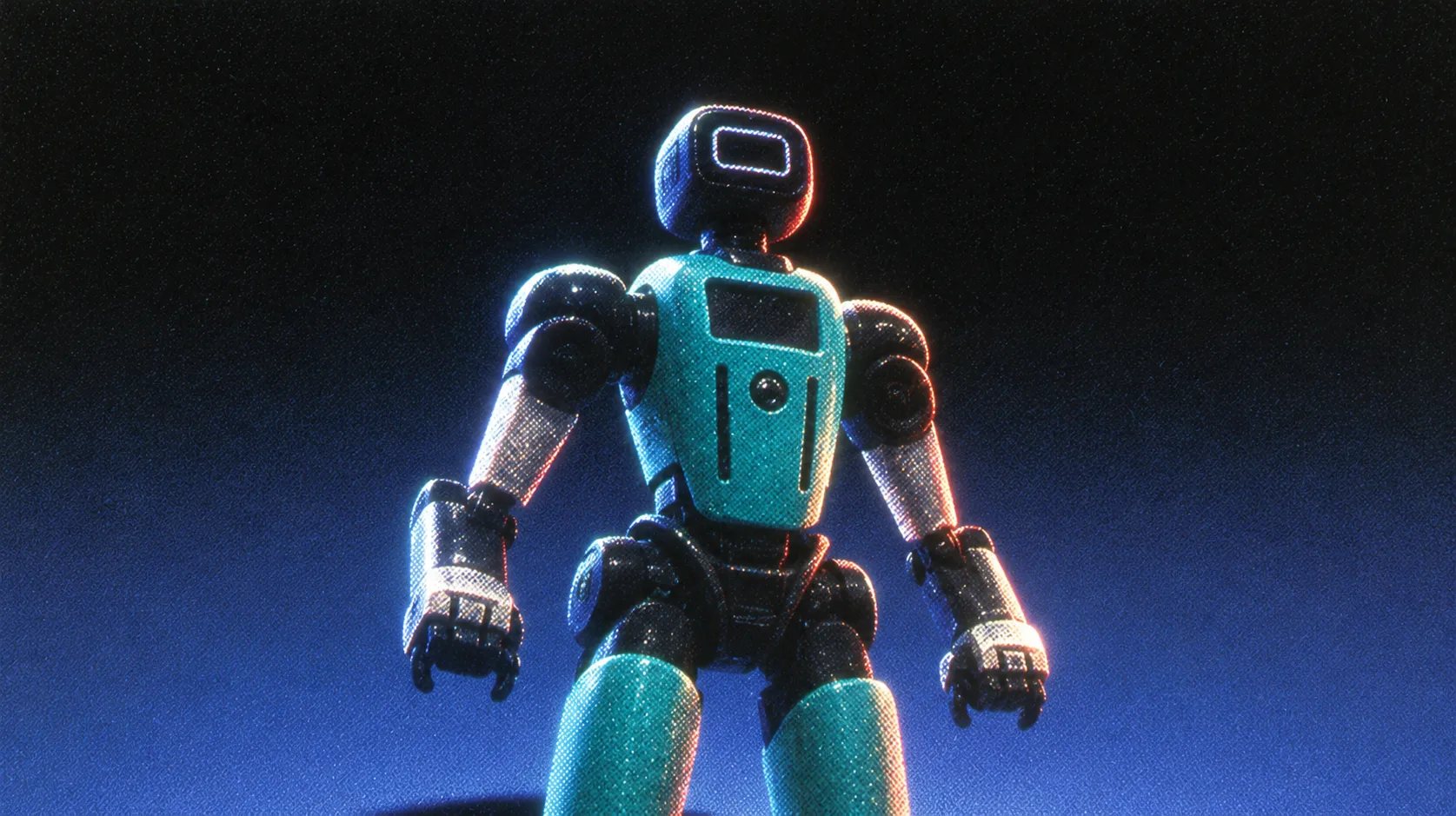
$138.1M. That is what Agility Robotics lost in 2025 on $1.78M of revenue, and the gap between those two numbers is the whole story. The Salem, Oregon company began trading on Nasdaq today after completing its merger with Churchill Capital Corp XI, a special purpose acquisition company.
What the filings actually show
The first half of 2026 was larger in absolute terms: an operational loss of $362.7M against $174K in total net sales, a 72% drop from a year earlier, regulatory filings show.
Full-year 2025 was smaller in scale and similar in shape. Revenue reached $1.78M, up from $310K in 2024, with a net loss of $138.1M, and about 64% of revenue came from related parties.
Approximately $38M of that net loss was non-cash expense tied to employee stock awards. The company still used $99.8M in cash to run the business in 2025, and it ended the year with $103M in cash.
By June 30, cash and equivalents stood at $14.7M, plus $7.1M of restricted cash, while cost of goods sold rose roughly 110% to nearly $3.9M in the first half.
Agility told regulators it expects significant expenses and continuing losses for the foreseeable future.
The raise came in light
The company went public by merging with Churchill Capital Corp XI, a special purpose acquisition company sponsored by former Citigroup executive Michael Klein.
The deal and related financings brought in about $465M in gross capital before expenses, well under the more than $600M projected when the merger was announced in June. Shareholder redemptions shrank the trust.
The final stack came in three pieces. Roughly $164M arrived from Churchill XI's trust account, $201M from a private placement led by Foxconn, and $100M of equity funding landed before closing.
Orders exist but carry conditions
Agility has more than $300M in committed multi-year orders for Digit 5, its next-generation robot, though those orders hinge on contractual milestones, product features and specifications.
Deliveries to early-access customers are targeted for the first half of 2027, with general availability by the end of that year. The orders only convert as those conditions are met.
The deployed business is real but small. Digit has logged more than 65K hours of operation across nine customer facilities, including GXO, Schaeffler, and Toyota Motor Manufacturing Canada. GXO has agreed to add Digit at two more US logistics sites in early 2027, and AGCO signed a pilot for its Hesston, Kansas factory.
The pipeline runs to more than 30 prospective customers across logistics, automotive, aerospace, defense and consumer products. Management's stated goal is 100 customers and 25 facilities by the end of 2027.
A benchmark US investors did not have
Agility says it is the first US publicly listed pure-play humanoid robotics company with active commercial deployments. The qualifier does work. UBTech has traded in Hong Kong since December 2023, and Unitree listed in Shanghai this year. The adoption side of the humanoid robot race has a longer record.
What US investors gain is a public market value on a humanoid maker whose numbers are disclosed. Until now, the category carried valuations set in private rounds that never had to publish a cash burn figure.
Agility's merger valued its existing equity at about $2.5B, well below the roughly $39B attached to privately held Figure AI.
The Federal Communications Commission banned new foreign-made advanced robotic devices in July, and Agility builds Digit at a 70K-square-foot plant in Salem, Oregon. America's robot ambitions have a supply chain story of their own.
The next verifiable checkpoint is the first half of 2027, when Digit 5 units have to reach early-access customers for any of that $300M backlog to count.

