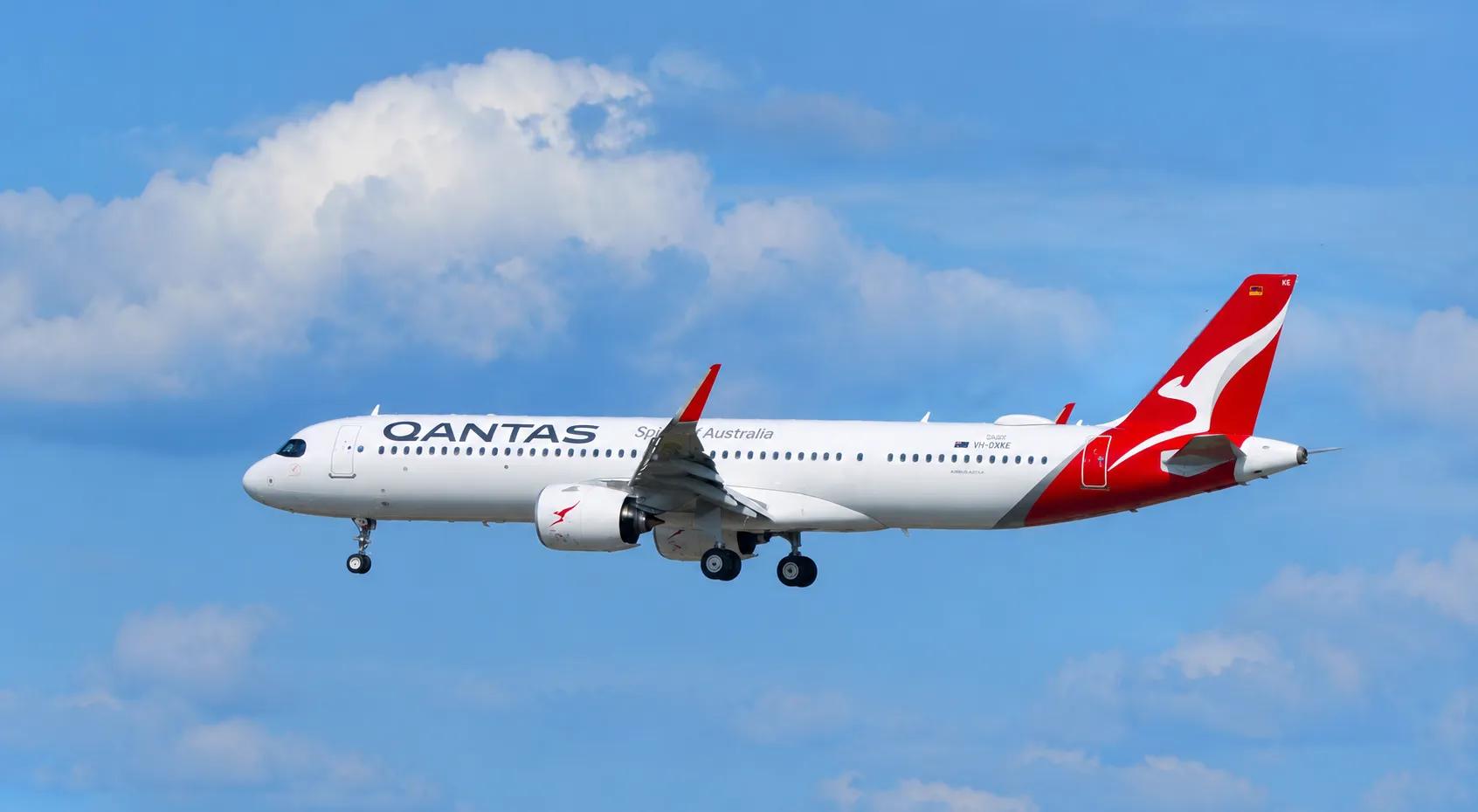
Australia's competition regulator granted Qantas Airways and American Airlines authorization to keep running their trans-Pacific joint business for five more years, until Oct. 30, 2031.
The final determination landed on Oct. 14, extending an arrangement the Australian Competition and Consumer Commission has approved in some form since 2011.
The two Oneworld carriers can continue coordinating flights between and within Australia and the US, New Zealand, Canada, and Mexico.
The coordination goes deep. The alliance covers schedules, capacity, pricing, revenue sharing, marketing, frequent-flyer programs, and cargo.
In plain terms, two competitors get to operate one shared network across the Pacific and split the proceeds, something antitrust law normally blocks.
The approval took almost a year
Qantas and American filed for renewal in November 2025. The ACCC issued interim approval in April 2026, then a draft determination supporting a five-year extension in September, before signing off last month.
Similar arrangements between the two have been authorised since 2011, so the renewal was more continuation than surprise.
The practical payoff shows up in connecting traffic. The joint business feeds passengers from 26 Mexican cities toward major Australian destinations, using American's domestic reach to fill Qantas's long-haul widebodies.
Qantas is reshuffling its other partners
The locked-in US tie-up arrives as Qantas unwinds a relationship closer to home. The carrier will end its codeshare and frequent flyer arrangements with Air New Zealand on April 7, 2027.
The split follows Air New Zealand's September move to broaden its transtasman partnership with Virgin Australia, a direct Qantas rival.
The Pacific alliance map is sorting into two camps, with Qantas doubling down on American while Air New Zealand pairs off with Virgin.
Route plans give the renewal a longer runway. Qantas is targeting a 2028 launch for nonstop Sydney to New York service, a city pair with no direct operator today.
Passengers currently connect through intermediate hubs, adding hours to a trip that premium and corporate travelers pay up to shorten.
A nonstop into New York only works commercially if American can funnel connecting passengers onto it, which the extended authorization now secures through 2031.
For American, the arrangement secures access to Australian demand without flying every route itself.
Regulators in these cases weigh network benefits against the risk of two carriers setting one price.
The next real test comes in 2028, when the Sydney to New York flight either validates the partnership's economics or exposes how thin trans-Pacific premium demand actually is.

