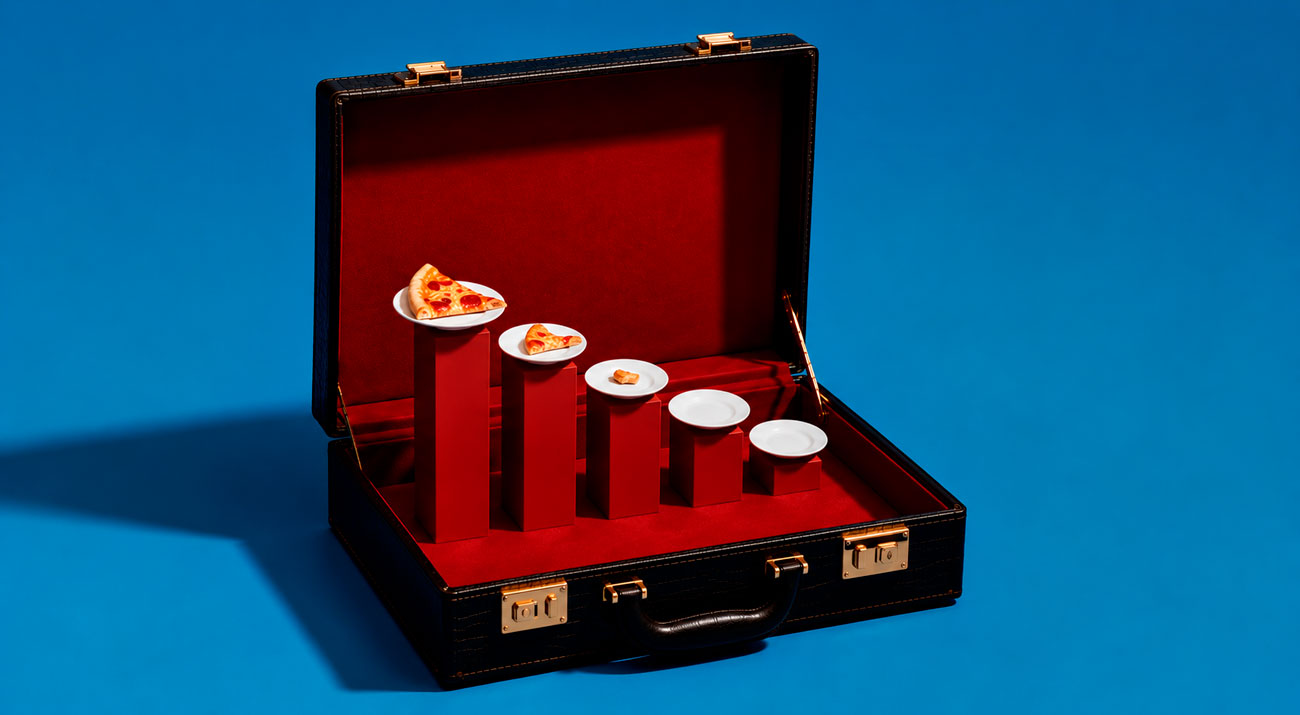
The industry’s biggest special right now is market share. Higher menu prices have made every dining decision more deliberate, creating a clear divide between the restaurant chains pulling customers in and those watching them walk away.
Serving trouble: The operating environment hasn’t gotten any easier for restaurants. Traffic remains uneven, labor and food costs are elevated, and consumers are thinking harder about every meal out. But that’s also creating opportunities for the strongest brands, which continue to grow, improve margins, and take customers from weaker rivals.
- Darden's LongHorn Steakhouse led the portfolio with 9.5% same-store sales growth, while Olive Garden trailed at 2.4%.
- Brinker grew sales 22% in fiscal 2025 and trades at just 13x forward earnings, with Wall Street expecting 21% earnings growth in 2026.
Big Pizza Loses Its Edge
The pizza category has become the industry’s clearest cautionary tale. Delivery apps erased the advantage national chains once enjoyed, putting local pizzerias on the same digital shelf as the biggest brands. The result is a category losing momentum as consumers increasingly opt for chicken and Mexican instead.
- Domino’s shares are down nearly 40% over the past year after US same-store sales grew just 0.9% and management dropped its 2026 growth target.
- Yum! sold Pizza Hut, Papa John’s has explored a sale, while Domino’s now controls 54% of sales among the top three public pizza chains.
The portfolio takeaway: Even in a struggling category, relative strength matters. Domino’s franchisee model still generated $672M in free cash flow last year, giving it a financial edge over smaller rivals. Similarly, Dutch Bros continues to deliver 30%+ revenue growth, while Chipotle Mexican Grill trades at its lowest valuation since 2012, with analysts expecting earnings to rebound 19% in 2027. In this industry, the next course is being served at a competitor’s expense.

