The Roundhill Magnificent Seven ETF has fallen 13% in June, putting it on pace for its worst month since the fund launched in 2023, while the seven companies have collectively shed roughly $3T in market value this month.
The selloff has been sharp, but it hasn't been equal.
AI is splitting the group in two
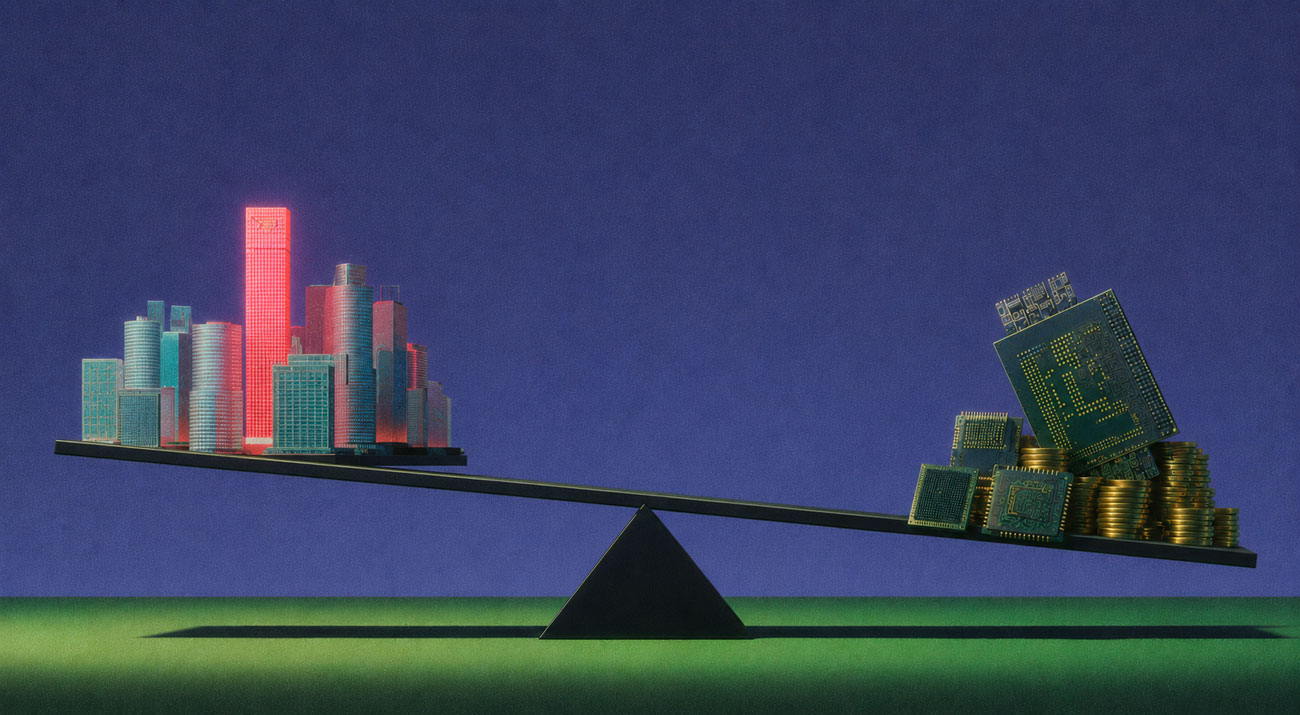
The core dynamic driving June's underperformance is what one analyst calls the AI cash-flow divorce, a market-wide reckoning over which companies are financing the AI boom versus which ones are collecting from it.
Microsoft, Amazon, Alphabet, and Meta are deep in the spending column.
Microsoft is pointing to roughly $190B in 2026 capital expenditure. Amazon expects roughly $200B. Alphabet has guided to roughly $180B–$190B. Meta is targeting roughly $125B–$145B.
Together, the four biggest AI builders are heading toward roughly $700B in annual spending, with investors still waiting to see where the returns land.
Nvidia, memory suppliers, and semiconductor infrastructure names are sitting on the other side of the counter. Memory chip maker Micron now has nearly the same market cap as Meta after a blockbuster earnings report this week.
Chip equipment maker Applied Materials and Broadcom joined Nvidia as the second- and third-most crowded long positions among hedge funds last month.
The Defiance Large Cap ex-Mag 7 ETF, which tracks everything in the S&P 500 outside the group, is up 2.6% in June.
Buying opportunity or structural shift
Fundstrat technical strategist Mark Newton said the underperformance looks mature, with Microsoft, Meta, Alphabet, and Amazon all falling to roughly two-month lows. He's looking for relative strength to reassert, noting that stabilization in the group would be an important positive for the broader market.
The historical parallel cuts the other way. The Nifty Fifty (the dominant one-decision stocks of the early 1970s) took 25 years to recover from their peak valuations and catch up to the S&P 500, per Wharton finance professor Jeremy Siegel's research.
Cisco, the most valuable company in the world in 2000, only regained its dot-com peak last year.
The Mag Seven still make up more than 30% of the S&P 500 by market cap, and their combined valuation stands at roughly $22.62T. They remain, as Bokeh Capital Partners CIO Kimberly Forrest put it, companies that make heaps of cash.
Still, the old trade of buying the basket and letting index gravity do the work is no longer sufficient. Investors are now being asked to separate who can convert AI spending into free cash flow from who's still writing the checks.

