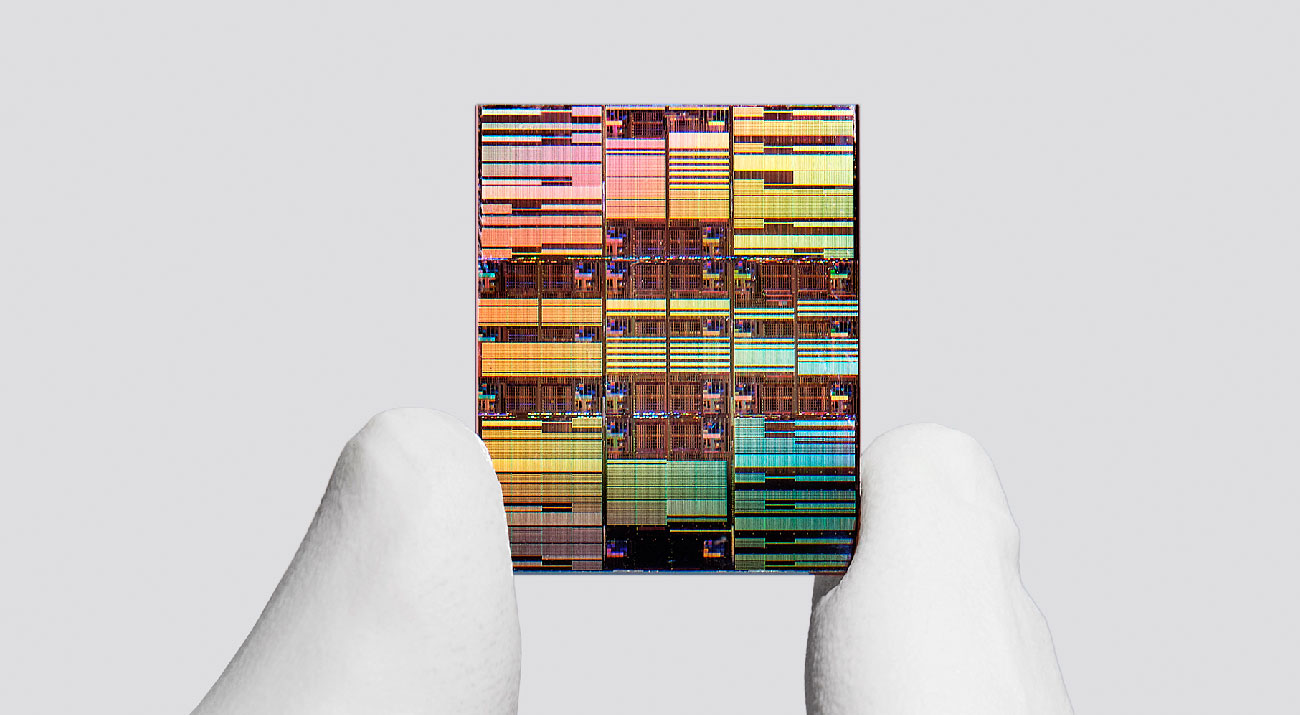
International Business Machines unveiled the world's first sub-1-nanometer chip technology on June 25, pushing transistor density to roughly 100B on a fingernail-sized surface.
The new 0.7-nanometer process nearly doubles the transistor count of IBM's previous 2-nanometer chip from 2021. IBM says it delivers up to 50% higher computing performance and 70% greater energy efficiency.
The nanostack design also shrinks a memory circuit type called SRAM by 40%, a larger gain than IBM's previous chip generation.
SRAM is heavily used in Nvidia's Groq chips and chips from Cerebras Systems, both of which currently rely on Taiwan Semiconductor Manufacturing Company.
Power demand is driving the push
Energy efficiency is as important as raw speed right now. AI data centers are consuming so much electricity that some construction projects face delays because affordable power isn't available.
IBM Vice President Huiming Bu put it plainly: "Everyone demands more performance, but no one wants to pay for the power."
IBM doesn't manufacture or sell chips. It licenses its process technology to chipmakers. Past licensees have included Samsung Electronics and Rapidus, a Japanese manufacturer.
IBM said the new technology should be ready for production within five years but declined to name future partners.
Analyst Dan Hutcheson of TechInsights called the announcement "a big deal," saying it adds "another 10 or 15 years on the road map." Patrick Moorhead of Moor Insights & Strategy noted open questions about which partners will adopt the technology and whether IBM will reach market first.
For context on where this fits competitively: TSMC is currently making chips rated at roughly 2 nanometers, and Intel recently moved its 1.8-nanometer process into risk production, the testing phase before commercial manufacturing.
IBM's broader chip ambitions
The chip announcement isn't IBM's only hardware bet. The company recently said it plans to form Anderon, a new independent subsidiary to produce silicon wafers for quantum-computing processors. The venture is backed by a $1B investment from the Trump administration and another $1B of IBM's own cash.
Anderon is expected to begin wafer production later this year, with IBM as its anchor customer. BCG projects the quantum-computing provider market will reach $90B to $170B by 2040.
JPMorgan upgraded the stock earlier this week, citing improving recurring revenue and margins in IBM's software business.
The chip and quantum moves together suggest IBM is betting that the hard physics of miniaturization still has room to run.

