These Agricultural Landlords Collect Rent From America’s Farmers — Here’s How Everyday Investors Can Get In Too
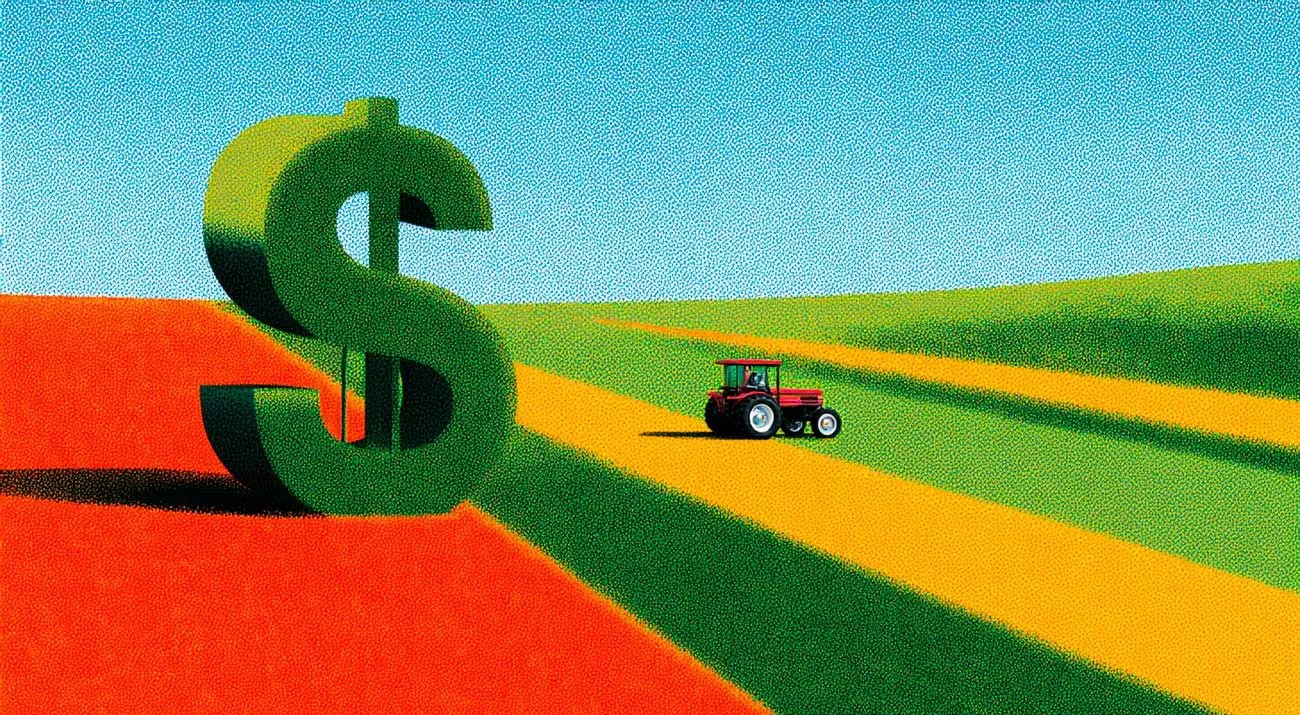
Owning a farm might sound old-fashioned — but the smartest money on Wall Street has found a way to profit from America’s agricultural backbone without getting their hands dirty. While traditional investments stumble through market volatility, farmland REITs have quietly offered steady passive income — the same kind of appeal that’s driven billionaires like Bill Gates and John Malone to invest in farmland directly.
Fields of fortune: For the average investor, farmland REITs offer a way to tap into one of humanity’s most essential needs — food. These REITs own prime agricultural land across America, then lease it to professional farmers who handle all the operational headaches. The USDA forecasts net farm income will jump 29.5% in 2025, largely thanks to $33.1B in government disaster payments flowing to farmers. On paper, that should translate to stronger rent-paying ability. But like any investment, it’s not without trade-offs.
- Farm cash receipts are actually expected to decline $1.8B this year, with crop prices under pressure across major commodities.
- Weather disasters, trade disputes, and commodity volatility can hammer tenant profitability — and when that happens, some farmers fall behind on rent.
The Riches Beneath Our Feet
The farmland REIT universe is small, with just two key players — but both have carved out distinct strategies. Farmland Partners manages 190K acres in the Midwest, focusing on staple row crops like corn and soybeans. Gladstone Land owns 117K acres in California and Florida, specializing in higher-value produce like fruits and nuts. While FPI unlocks value through strategic land sales, Gladstone is leaning into “participation rent” models to capture more upside when harvests are strong. Beyond strategy, both companies have shown long-term commitment to income and performance — here’s how they stack up:
- Both Farmland Partners and Gladstone Land have paid reliable dividends for over a decade, with current yields of 5.3% and 2.3%, respectively.
- Additionally, Farmland Partners recently posted a net income of $7.8M in Q2 after prior losses, while Gladstone Land reported net gains of $15.1M in Q1.
The harvest ahead: Before you start dreaming of passive farm income, keep in mind this isn’t a get-rich-quick scheme. Farmland may be tied to essential goods, but that doesn’t make it immune to risk — farmers still face bankruptcies during downturns, and REIT performance can dip. This year, and are down 10% and 9.6% respectively, but their steady dividends have cushioned the blow. Still, with global food demand on the rise, investors sometimes feel the most dependable growth is the kind rooted in the ground.

