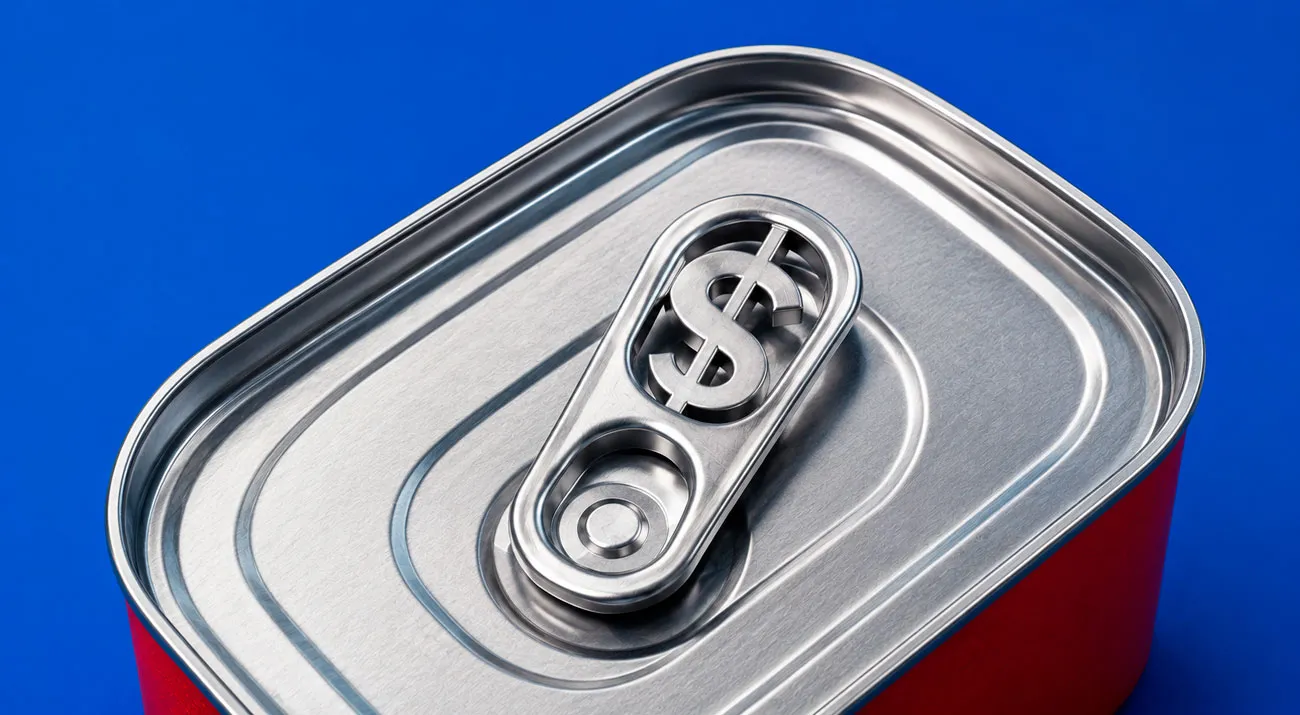
Trump’s steel tariffs are leaving a bitter aftertaste on the tariff menu. A year after President Trump slapped 50% duties on steel, the policy has created an unexpected casualty — tin cans. American can makers still rely heavily on imported tinplate and now face higher costs for a material they cannot easily source domestically. The fallout is reaching grocery shelves, raising prices for staples like beans, corn, and soup.
- Imports accounted for more than 80% of US tinplate consumption last year, while domestic supply fell from 60% a decade ago to under 20% in 2025.
- Prices for canned fruits and vegetables climbed 5.7% year-over-year in March, far outpacing the 2% increase across overall at-home food prices.
Aisle of trouble: US Steel plans to restart tinplate production in Indiana next year, but analysts say American can makers will still import more than two-thirds of their tinplate for years. Foreign canned goods avoid the tariffs entirely through a loophole, potentially pressuring local brands like Campbell’s, Conagra, and Hormel Foods. Calling food tariffs “lunacy,” Cato Institute’s Scott Lincicome warned the policy is set to make American goods “less competitive globally.”

