Republicans Seeking One Big Beautiful Bill With 2025 Tax Plan, New Budget Face Their Biggest Challenge Yet — Agreeing With Each Other
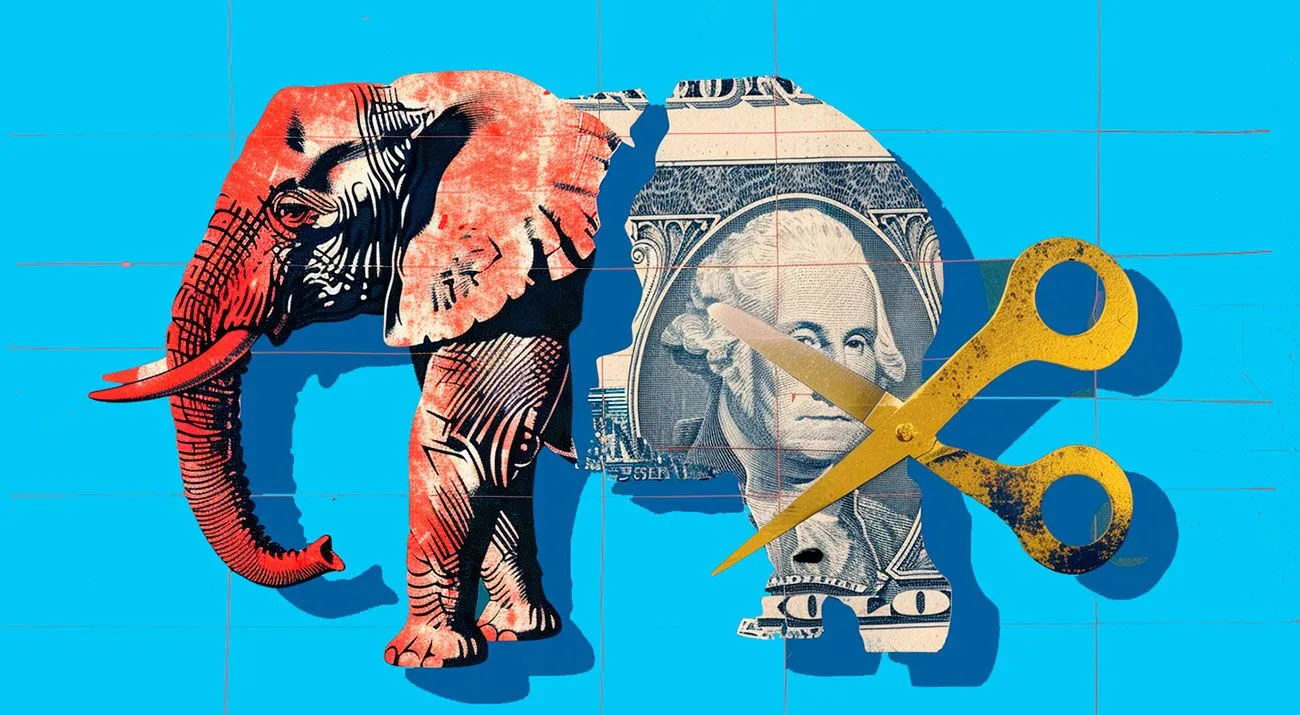
Politicians champion all sorts of issues, but few matter more to voters than taxes and the federal budget. For anyone who ranks “the economy” as their top concern — now’s the time to lean in.
Republicans are starting to piece together the sequel to their 2017 Tax Cuts and Jobs Act, which slashed taxes for individuals, estates, and businesses at massive expense to the federal debt. This time around, it’ll be more complicated than it looks.
Setting the stage: The GOP may have political control, but consensus is still a tall order — especially after making several conflicting promises. On one hand, Republicans pledged to make the tax cuts in their 2017 tax bill permanent. On the other, they’re proposing a number of changes that would likely reduce tax revenue, like eliminating tax on tips, overtime pay, and retirement income. That flies in the face of America’s $35T national debt, which is worsening with the federal deficit on track to exceed $2T this year. As a result, everything’s on the table for draft one.
- In early negotiations, lawmakers have entertained axing tax breaks like the mortgage interest deduction, head of household status, and health insurance subsidies, among other things.
- However, as negotiations come to a head, Republicans are most conflicted on cuts to Medicaid, the State and Local Tax Deduction (SALT), and Trump’s desire to raise taxes on Americans making over $2.5M per year.
Coming to Consensus
With virtually every corner of the tax code up for negotiation, Republicans could fracture over innumerable roadblocks in their mission to pass the elusive “One Big Beautiful Bill” that would contain key legislation like the 2025 tax plan, as well as the budget.
- Early budget proposals have recommended $163B in spending cuts to discretionary spending — like health, housing, and education — while increasing funding for defense and homeland security.
- Trump has suggested that tariff income could help fill in over $6T of the deficit gap, but he’s still largely betting on rate cuts to lower the government’s own interest payments.
What does it mean for you? Right now, it’s too early to tell how this bill could affect you; but we’ll stay on it. However, if you’re an Average Joe, it’s more likely that proposed budget cuts to government services will have the biggest impact — and not just for those dependent on Medicare, Medicaid, or Social Security. Shrinking the federal budget could ripple far beyond individual consumers — and further strain an economy already on unsteady footing.

