Novartis’ Big Bet Is Paying Off, And Competitors Are Struggling To Catch Up
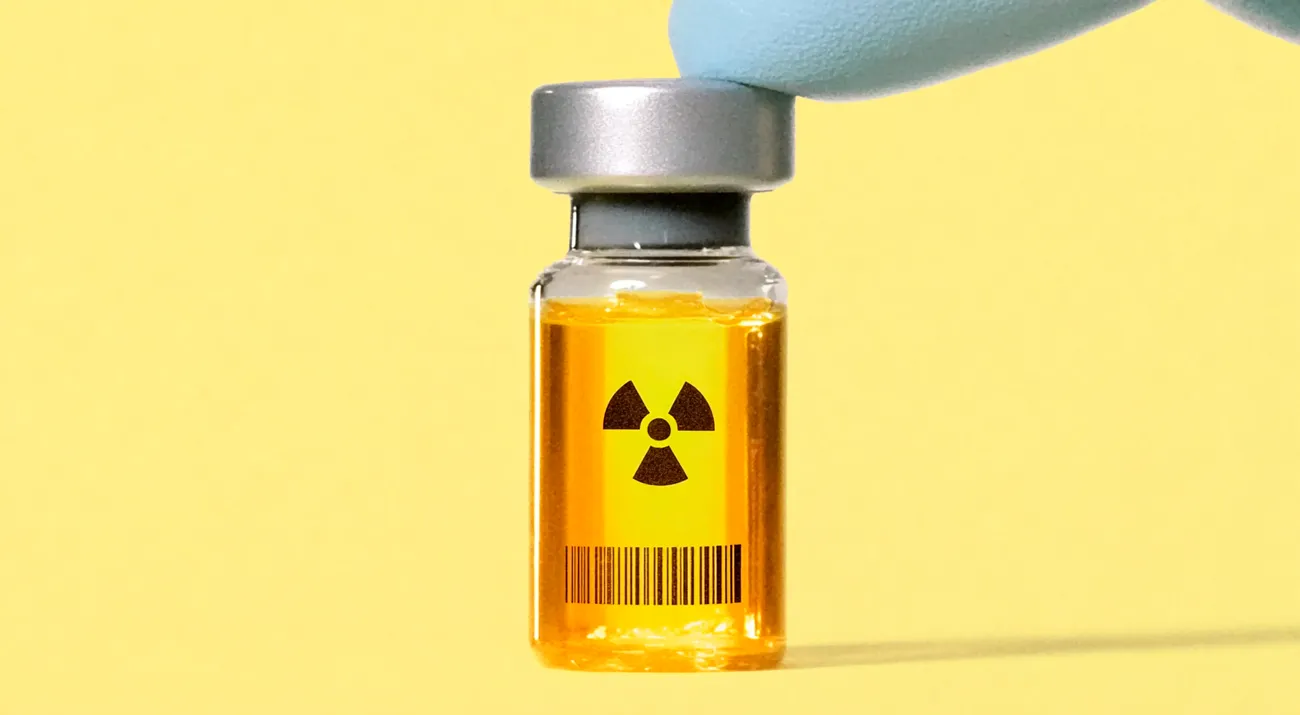
Novartis is glowing — and it’s not just from the radioactive cancer treatments it’s pioneering. The Swiss pharma giant’s stock has surged over 30% this year, powered by breakthrough therapies and aggressive dealmaking that’s putting the firm ahead of both medical innovation and looming trade disruptions.
The atomic advantage: Novartis has established itself as radioligand therapy’s undisputed champion — a targeted radiation treatment producing results doctors are calling “never seen before,” completely clearing metastatic cancer from patients’ scans within six months. Unlike traditional methods that damage healthy tissue along with tumors, this treatment sends radioactive isotopes directly to cancer cells through an IV drip. Building on these breakthroughs, Novartis has strengthened its position through smart strategy and scale.
- The company secured its foothold through savvy acquisitions — buying Advanced Accelerator Applications in 2017 and shelling out $2.1B for US biotech Endocyte in 2018.
- CEO Vas Narasimhan estimates the radioligand market could reach $25B to $30B if the therapy lives up to its promise — triple his 2021 projection of $10B.
Pharma’s Bitter Pill to Swallow
Still, the entire pharmaceutical industry faces an unprecedented challenge — President Trump’s threatened 200% tariffs on imported drugs, which could fundamentally reshape access to medicine in the US. Narasimhan told analysts the company had productive talks with the Trump administration and supports efforts to get developed markets outside the US to pay more for innovative medicines — but companies aren’t waiting around to see how it plays out.
- Novartis is investing $23B into US manufacturing over the next five years, while competitors Roche and Johnson & Johnson are investing $50B and $55B over the next four years, respectively.
- Drugmakers are already stockpiling, with Leerink Partners analyst David Risinger noting firms may hold 6 to 18 months of inventory in the US — buying time until 2027 or 2028.
The race against decay: Once Novartis creates its cancer-fighting isotopes, they’ve got just three to five days before decay reduces their effectiveness. The company has built a 24/7 tracking system for GPS-tagged vials, set up radiation-proof hospital rooms worldwide, and is using AI to anticipate everything from air traffic issues to severe weather. Asset manager Vontobel’s Carla Bänziger believes it’ll take 10-15 years to build the infrastructure needed for radioligand therapy to become mainstream — but she’s betting Novartis has created “high barriers to entry” that’ll keep competitors at bay.

