Merck Is Bracing for Life After Keytruda, the Accidental $29.5B Blockbuster — Here’s How It Plans to Fill the Gap
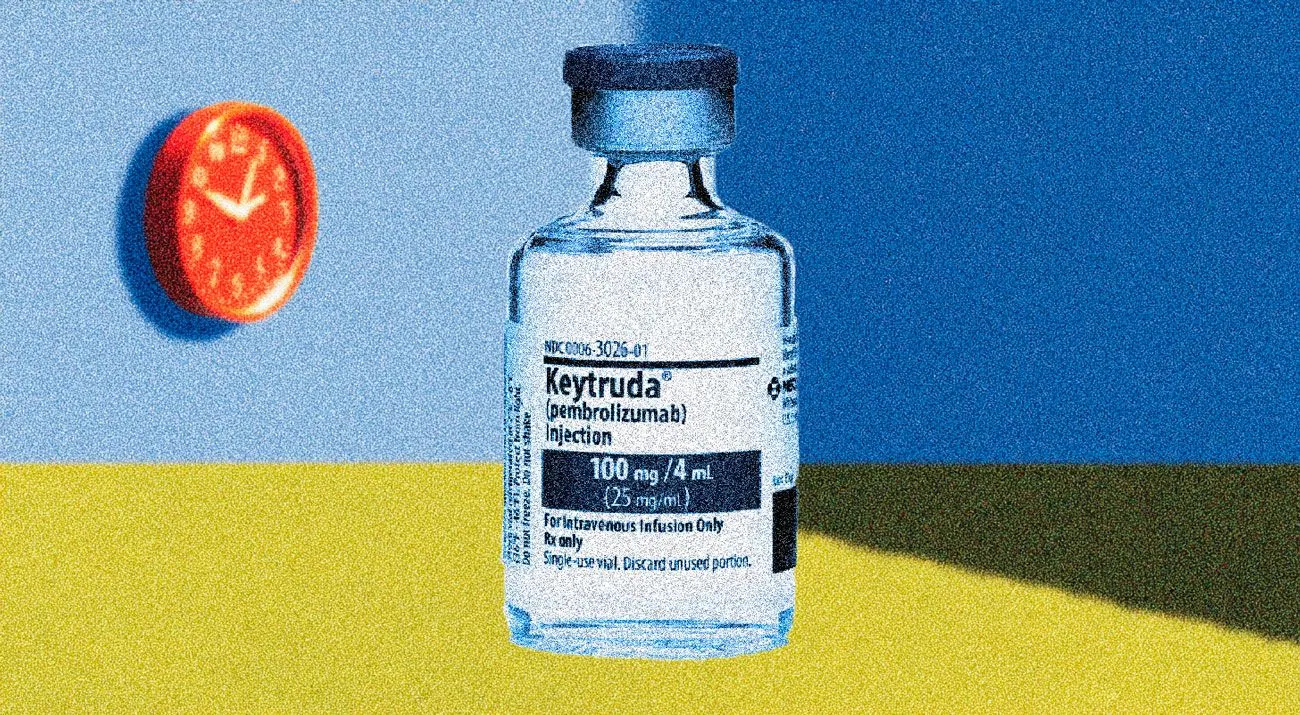
To see all that cancer drug Keytruda can do, you’ll need to scroll… and keep scrolling. Approved for 41 indications in the US — and 30 in Europe — it’s as blockbuster as blockbuster drugs come.
It hasn’t just been a big win for cancer patients, who scored a breakthrough in its 2014 approval, but an undeniable victory for owner Merck, which charged over $150K/yr for the biologic at launch.
It’s a fascinating payoff for an immunotherapy that was discovered accidentally, shelved, considered “low priority,” and eventually found a lucky break in the clinic. But as reluctant as Merck was to give it a try, it’s now putting up quite the battle to keep it — and its billions in revenue.
The final countdown: In Merck’s most recent fiscal year, Keytruda pulled in $29.5B in sales, or about 45% of the company’s revenue. And growing 22% year-over-year, demand continues to skyrocket. But despite its enormous success, Keytruda is about to face new competition… from itself. With the blockbuster set to go generic (and subject to US government price negotiations) in 2028, dozens of generic knockoffs could soon flood the market. It’s fighting to preserve its crown jewel.
- In October, Merck plans to launch an injectable version that it claims could “cut treatment time nearly in half” — the “product hop” also carries new patents that would be unavailable to generic competition.
- Merck CEO Rob Davis says that the new injectable could soften the blow of losing the IV version to generic land, with the business projecting it would “capture 30% to 40%” of its US patient base.
End of Days (for Keytruda)
Still, 30% to 40% is far less than 100%. To that end, Merck has been preparing for life after Keytruda. Only some investors don’t want to wait and see. stock is down 36% from all-time highs, trading at 12x price-to-earnings — significantly lower than the industry average. That could spell opportunity.
- According to CNBC, Merck has “nearly tripled its late-stage pipeline” since 2021, thanks to progressing internal drug candidates, its $11.5B acquisition of Acceleron in 2021, and its $10.8B purchase of Prometheus Biosciences in 2023.
- On Wednesday, Merck added to its product portfolio by acquiring Verona Pharma for $10B, scoring an already-approved drug for COPD, plus a “cardio-pulmonary pipeline.”
So what’s the damage? Part of Merck’s anemic valuation is uncertainty — not just in the clinic, but around whether the big buys will yield big sales. The lead product of its 2021 Acceleron acquisition, WINREVAIR, was just approved in 2024 and has posted middling numbers in its pursuit of the pulmonary arterial hypertension market (Merck forecasts peak annual sales of $3B). Merck sees $3B–3.5B in peak sales for Verona’s Ohtuvayre. Will these transactions hit their stride in time for Merck’s day of reckoning? We’ll have to see.
Read more: Merck isn’t alone — Sanofi is set to M&A its way to a new all-star

