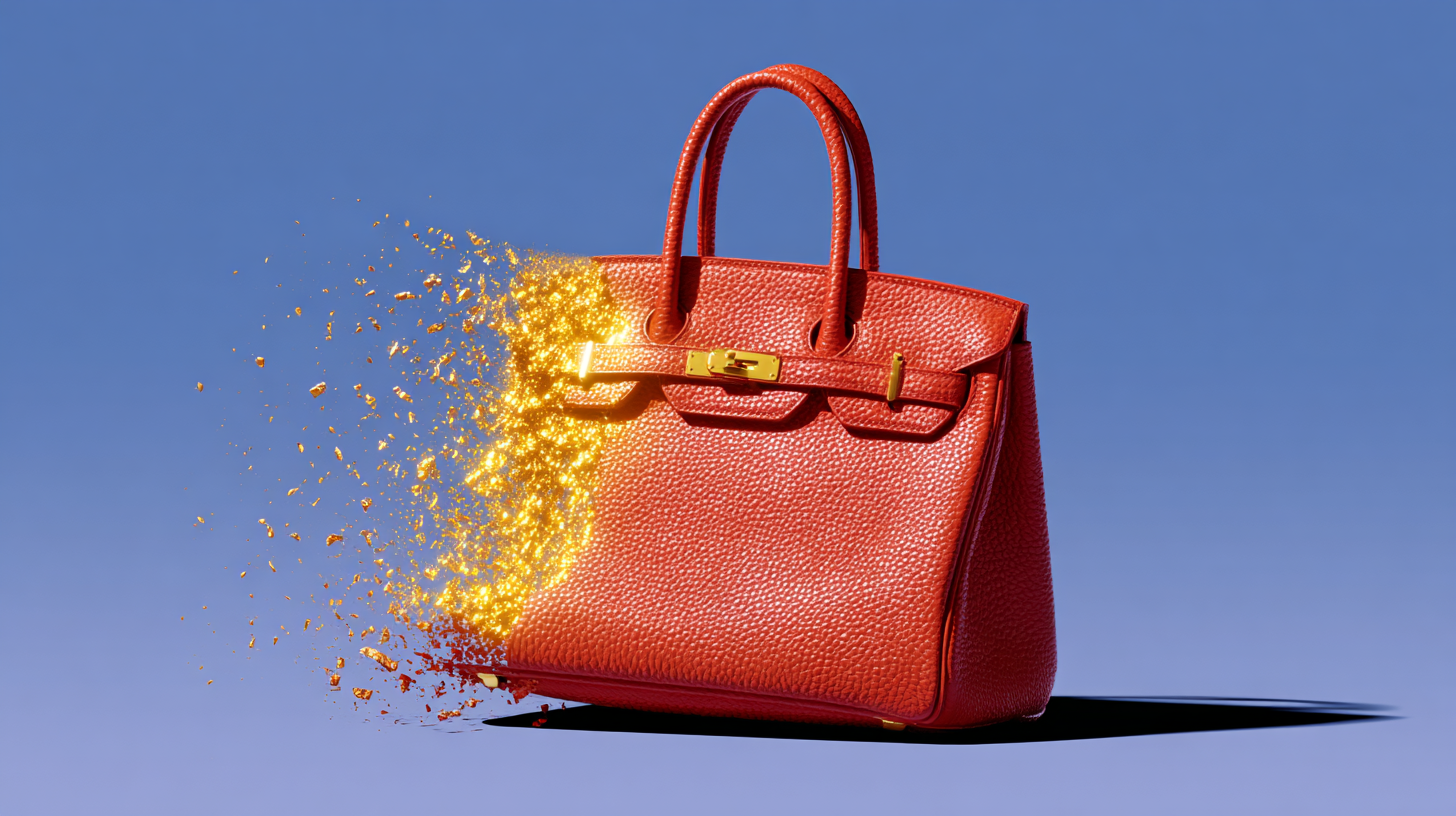
The champagne’s gone flat on luxury’s biggest party trick. For years, brands turned scarcity into gold — cultivating wait lists that stretched for years while resale values soared past retail prices. But those premiums are evaporating fast as demand cools and the “can’t-miss” status becomes less certain.
The scarcity mirage: Resale data is saying what luxury marketing won’t. Luxury’s old playbook of raising prices, manufacturing scarcity, and letting demand chase harder is failing. Rolex premiums have roughly halved to ~7% since Jan. 2024, while Patek Philippe fell from 38% to 11%, according to WatchCharts. Even the iconic Hermès Birkin is now selling for roughly retail once auction fees are included on larger sizes. Bernstein analyst Luca Solca says the shrinking premium suggests waitlists are shortening and Hermès supply is finally closer to demand than before.
- Hermès makes around 150K Birkin and Kelly bags per year, driving ~25% of sales, while watches and perfume fell year-over-year in Q3 2025.
- Ferrari’s market cap is $59.6B despite delivering under 15K cars per year, while Porsche is valued at $45.4B after selling over 300K units.
Luxury’s Mask Slips
Declining resale values aren’t the only problem for luxury brands. Luxury author Dana Thomas says quality started slipping in the 2000s as garments were downgraded from single-piece knits to cheaper stitched constructions, with weaker buttons and fading color. Diana Kakkar, co-founder of supplier MAES London, added that brands increasingly cut costs by lowering fabric standards, even selling “wool” jackets that are mostly polyester or acrylic.
- Luxury automakers are feeling it too, with Porsche delivering 279.45K vehicles in 2025, down 10%, its biggest drop since 2009.
- North America held up best, while Germany fell 16%, Europe dropped 13%, and China sank 26%, with analysts pointing to tariff pressure and inventory pull-forward in the US.
Luxury’s reckoning: New problems are eroding the “economic cushion” that once made scarcity brands feel like safe bets. McKinsey’s 2026 State of Fashion report says the mid-market is now the fastest-growing segment, with strong quality at better price points replacing luxury as fashion’s main value creator. Leather specialist Yilmaz calls the backlash a “wake-up call,” warning that no amount of marketing can sell “craftsmanship” if products are falling apart in front of customers. The uncomfortable truth for luxury is simple — scarcity only works when customers still believe the wait is worth it.

