Kraft Heinz Is Splitting Into Two Companies — And It Signals a Deeper Crisis in America’s Pantries
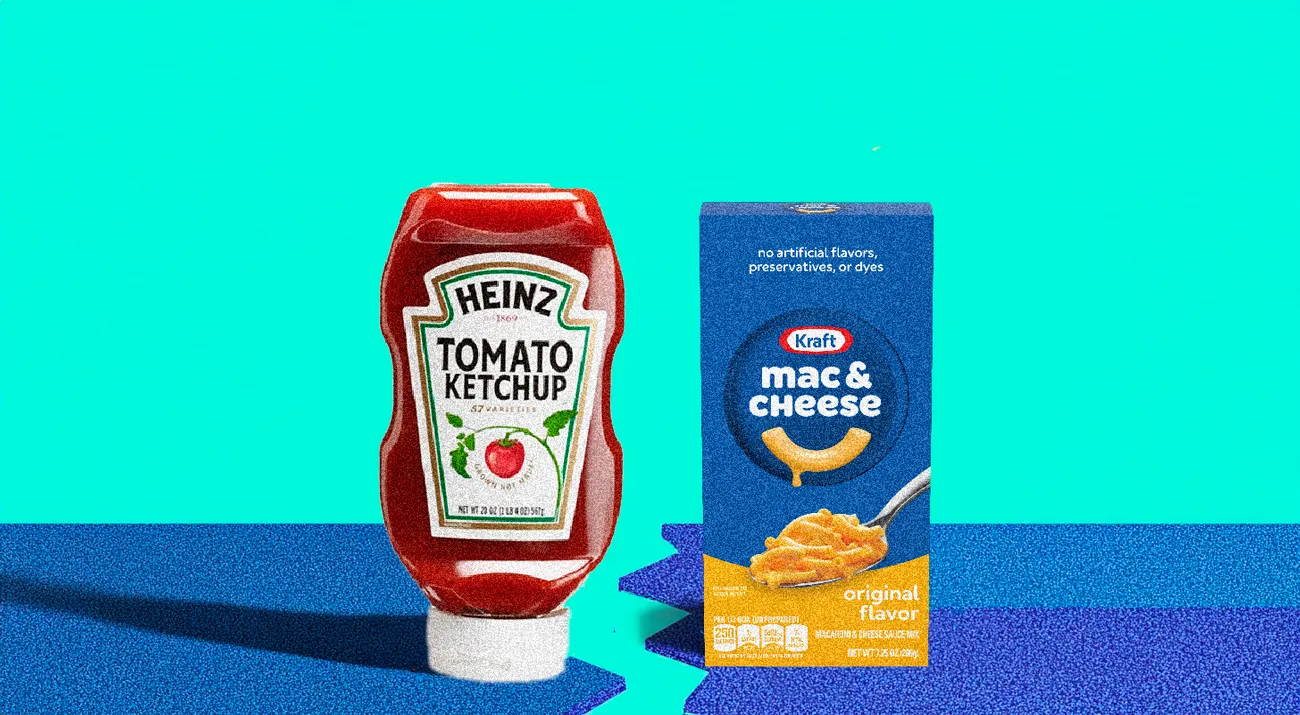
Sometimes you can’t have your mac and cheese and eat it too. Kraft Heinz announced it’s splitting into two separate companies, officially admitting defeat on the $46B merger that Warren Buffett and 3G Capital orchestrated back in 2015.
Unwrapping the deal: The food giant’s stock has plunged over 70% since the deal and 27% over the past year, with CEO Carlos Abrams-Rivera acknowledging the current structure was “not driving the type of performance that [they] wanted.” Now it’s breaking apart into two focused companies: one for shelf-stable icons like Kraft Mac & Cheese and Heinz ketchup, and another for North American staples such as Oscar Mayer and Lunchables. The split has even drawn criticism from Warren Buffett, who told CNBC he was “disappointed” and noted Berkshire ($BRK.B) opposed the move — though the company proceeded after Berkshire’s board members resigned earlier this year.
- Kraft Heinz said the shelf-stable meals unit, “Global Taste Elevation Co.,” would have posted $15.4B in 2024 sales, with about 75% coming from sauces, spreads, and seasonings.
- The staples unit, “North American Grocery Co.,” would have generated $10.4B during the same period, with the transaction expected to close in the second half of 2026.
Brands Lose Their Bite
Kraft Heinz isn’t alone in its quest to get smaller. The packaged food industry was already slowing before the pandemic, with sales rising only about 2% per year from 2012 to 2019, McKinsey says. To cope, companies leaned on mergers and acquisitions to trim costs and strengthen their bargaining power with retailers. However, the packaged food sector is now experiencing its biggest wave of corporate breakups since the 1990s, as businesses discover that focused operations often earn higher valuations than sprawling conglomerates.
- Keurig Dr Pepper announced plans to split its coffee business from beverages after completing its $18B acquisition of Dutch coffee company JDE Peet’s.
- PepsiCo has reported flat or declining North American demand since 2022, prompting activist investor Elliott Management to take a $4B stake and push for operational changes.
Aisles of irrelevance: While the S&P 500 has gained 40% over the past two years, food and beverage stocks have flatlined as growth stalls across the sector. Smaller, nimble brands marketing directly through social media are capitalizing on demand for high-protein and fiber-enriched products, fueled by the “fibermaxxing” trend and rising interest in functional foods. Adding to the pressure, consumers are drifting from name-brand items as inflation drives them toward cheaper private-label goods. With customers ditching artificial additives and weight-loss drugs like Ozempic curbing demand for snacks, the old guard of packaged food is watching the future pass them by.

