Kidults Can’t Stop Playing With Toys And Investors Can’t Stop Buying The Stocks Behind Them
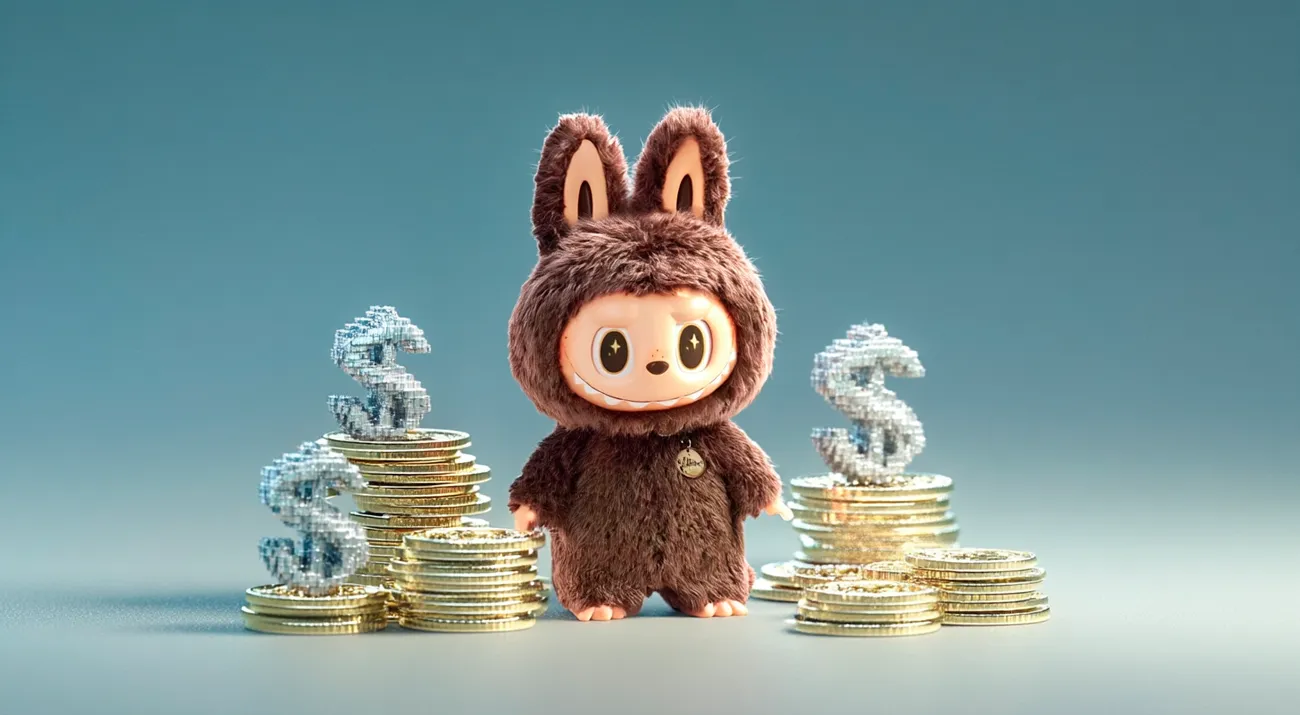
Adults have stormed the toy aisle with their credit cards ready — and they’re not shopping for their children. The “kidulting” phenomenon has transformed playthings into serious business, sending toy shares soaring and leaving retailers scrambling to stock enough collectibles for their grown-up customers.
The kids are alright (and they’re 35): While companies once focused on convincing parents to buy for their children, today’s campaigns target the same person as both decision-maker and end user. This trend exploded during COVID-19 when flush consumers with extra discretionary income started splurging on collectibles, video games, and board games — and they haven’t stopped shopping since.
- Pop Mart International Group’s stock has skyrocketed over 235% in the past year, and profits grew nearly 400% in the first half of 2025 — with their latest mini Labubu toys consistently selling out within minutes.
- Major retailers are seeing explosive growth in trading cards, with Target reporting sales up nearly 70% this year and on track to exceed $1B in 2025, while Walmart Marketplace saw trading card sales jump 200% between Feb. 2024 and June 2025.
Why Adults Can’t Stop Playing
The psychology behind this trend runs deeper than simple nostalgia. Adults are drawn to toys for four key reasons: childhood memories that provide comfort, an affordable luxury that expresses personality, emotional connections with like-minded collectors, and community building through shared interests. But there’s something more primal at play here — what jazz critic Ted Gioia calls “dopamine culture,” where social media algorithms have trained us to crave constant stimulation.
- Sales of the 90s toy Tamagotchi more than doubled between 2022 and 2023, with the new “Tamagotchi Paradise” model beating preorder expectations by 4x and selling 1.5x projections in its first week — with 20-30% of current buyers being parents who grew up with Tamagotchis during the 2004 boom.
- Stocks like Bandai and JAKKS Pacific are riding the trend, with Bandai expanding into anime and manga through a new Sony IP partnership that includes a 2.5% stake.
Midlife reality check: Every toy craze eventually faces its reckoning. Funko serves as a cautionary tale — its stock quadrupled during COVID, only to collapse nearly as quickly afterward. Investors should note that throughout history, fads from Cabbage Patch Kids to Beanie Babies eventually cooled once novelty wore off or economic conditions shifted. The question is, will consumers run out of disposable income, shift their spending elsewhere, or simply move on to the next shiny object?

