GE Broke Itself Into Three Companies — A Year After Its Big Spinoff, How Has That Worked Out?
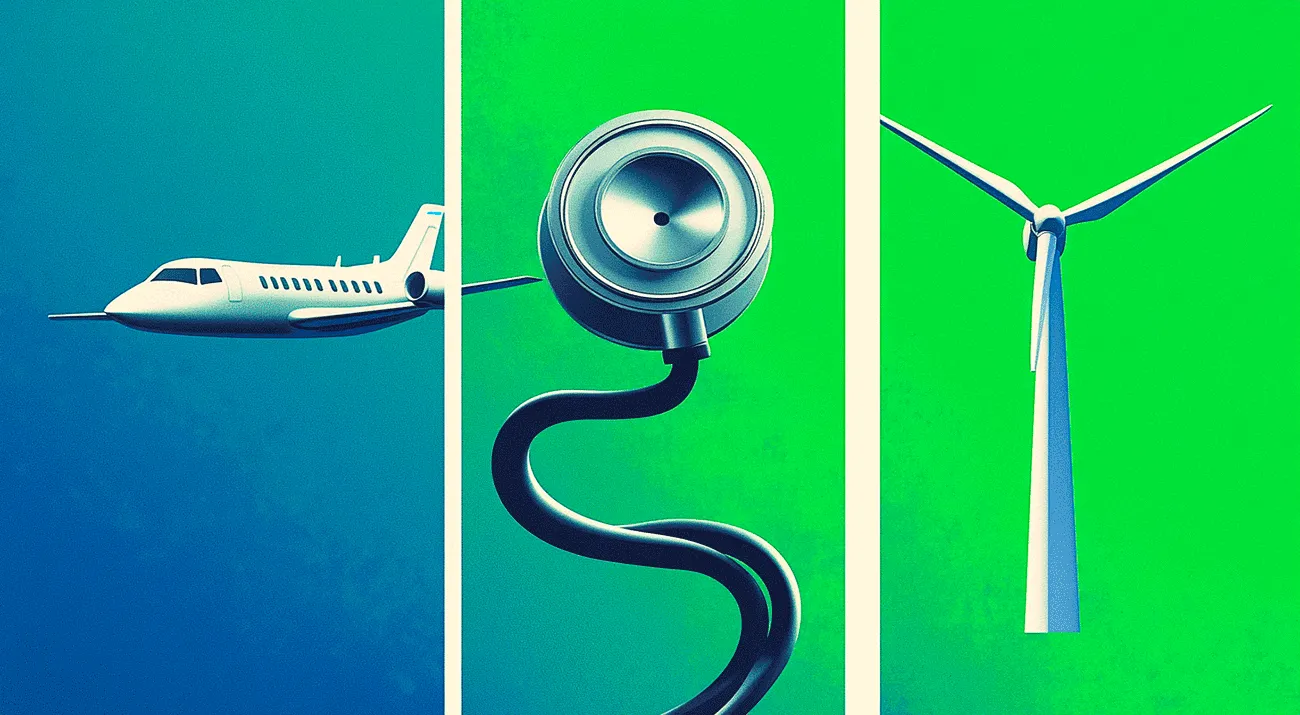
It’s never been more in vogue to do a corporate spinoff — for that, we might have to thank GE.
Several years of declining revenues and disappointing performance led many to believe that GE was doomed. By the end of 2022, the American conglomerate was valued at just $68.8B, falling close to generational lows after years.
Its response? To break up with itself — creating three separately-traded public entities that could have their own balance sheets and be more agile on their own.
Over a year and a half period, GE planned and executed the big move. And with tomorrow marking the one-year anniversary of that effort’s completion, we’re checking to see how the firms fared on their own.
RIP GE (as we knew it): Today, GE’s three separate firms — GE Aerospace, GE HealthCare, and GE Vernova — are worth a combined $334.3B in market cap. That’s nearly 5x higher than the businesses were valued at when they were part of the legacy GE conglomerate, representing a considerable explosion in value. It’s not just a product of the firms overcoming their “conglomerate discount” but also operating more efficiently as standalone businesses.
- Since their corporate breakup, is up 122%, is up 43%, and is up 42% — for comparison, the S&P 500 is up 6.8% over the same period.
- In their latest earnings reports (Q4), the firms’ revenues were up 5.1%, 14%, and 2% — while diluted earnings per share were up 140%, 21%, and 78%.
Interest and Twist
GE wasn’t alone on the spinoff circuit, but its successes have no doubt bolstered the case for corporate actions, a case furthered by research showing that strategic separations outperformed the S&P 500 in their early oughts. In fact, spinoffs surged dramatically in 2024 — and they’re bound to continue if the market keeps rewarding them.
- Furthering that case, several slow-starting 2024 spinoffs have turned a corner — including 3M’s healthcare spinoff Solventum, Cummin’s Atmus Filtration Technologies, and Kellogg’s confusing Kellanova demerger.
- That said, despite the successes, the Invesco S&P Spin-Off ETF is only up about 6.8% over the past year — showing just how much underperformers weigh on the index.
But it’s no matter… because the spinoffs keep coming. In December, FedEx announced that it would carve out its freight division by 2026. By February, industrial giant Honeywell announced a plan that felt like a borderline plagiarism of the GE spinoff, bowing to activist pressure. And how could we forget the US TikTok spinoff, which has been rousing increased interest? Altogether, activist investors and companies are reading the moment — we’ll continue covering the latest from the corporate action world.

