America’s Market Euphoria Is Running on Inflated Earnings and Borrowed Time
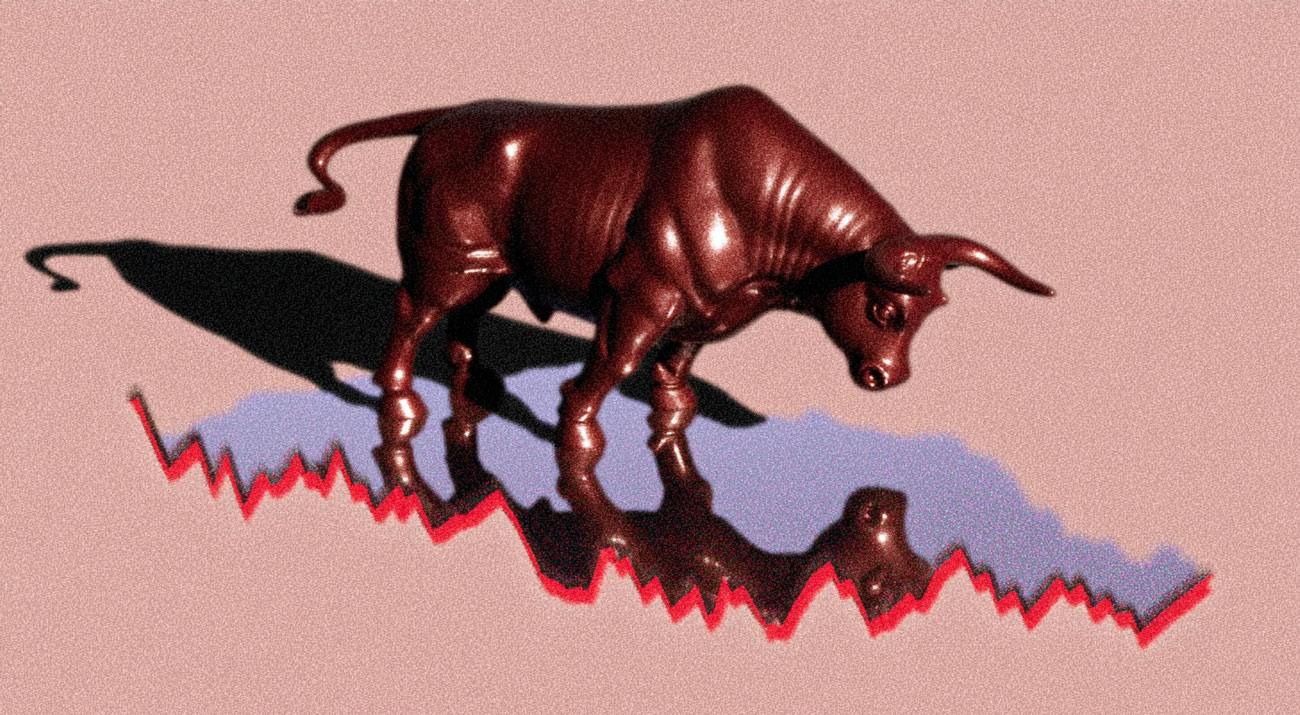
Wall Street is celebrating like it’s a boom year, while Main Street feels stuck in a nightmare. The S&P 500 is hitting fresh all-time highs even as the consumer sentiment index has fallen to its lowest level in 75 years. What makes this setup stand out is that markets are pushing higher in conditions that have historically signaled weakness.
Mechanics of the aftermath: Since last October, when AI hype pushed valuations past their 2020 peak, the setup took an unusual turn. The S&P 500’s forward P/E climbed to near dot-com levels, but prices never really pulled back. Instead, earnings did the work. Estimates surged, bringing valuations down and creating a rare setup where stocks held near highs even as multiples eased. That shift has also pushed the largest AI and tech names to their cheapest PEG ratios since 2013 — a signal bulls point to as proof growth is catching up, driven by two powerful, likely temporary forces:
AI-driven chip demand has sent earnings forecasts soaring, with Micron estimates for 2027 jumping from $19 to $101 per share since October, while the stock only doubled.
- The Iran war boosted energy profits, with forecasts for major oil firms rising about one-third since late February, even as forward P/E ratios dropped from 23.8x to 15.6x.
Where’s There’s Risk, There’s a Rush
Risk-taking is ramping up in ways that blur investing and speculation. Asset managers are racing to launch ETFs targeting 4x and 5x daily returns, while prediction markets now allow bets on five-minute Bitcoin moves around the clock. The frenzy is spilling into single stocks too, with Allbirds jumping 582% in a day after pivoting to “NewBird AI,” echoing dot-com era antics. It’s less about euphoria and more about a mindset shaped by years of quick market rebounds, with no prolonged downturn. That tension is playing out in real time:
- The American Association of Individual Investors logged nine straight weeks of more bears than bulls, while median short interest across Russell 3000 stocks is at a 15-year high.
- Despite 4.3% unemployment and 3.3% inflation, a CBS News poll found 63% of Americans call the economy “bad,” showing sentiment tracks prices people feel, not percentage moves.
Paradoxical times: The dot-com comparison misses the key difference — sentiment is deeply negative today, unlike the optimism that preceded the early 2000 crash. The bigger risk isn’t runaway markets, but profits being boosted by factors that may not last, like AI chip demand and conflict-driven energy gains, which can make valuations appear grounded. If those short-term supports fade, valuations that look fine now could quickly start to look stretched.

