AI Boom Pushes Memory Chip Market Into a Potential Decade-Long “Supercycle”
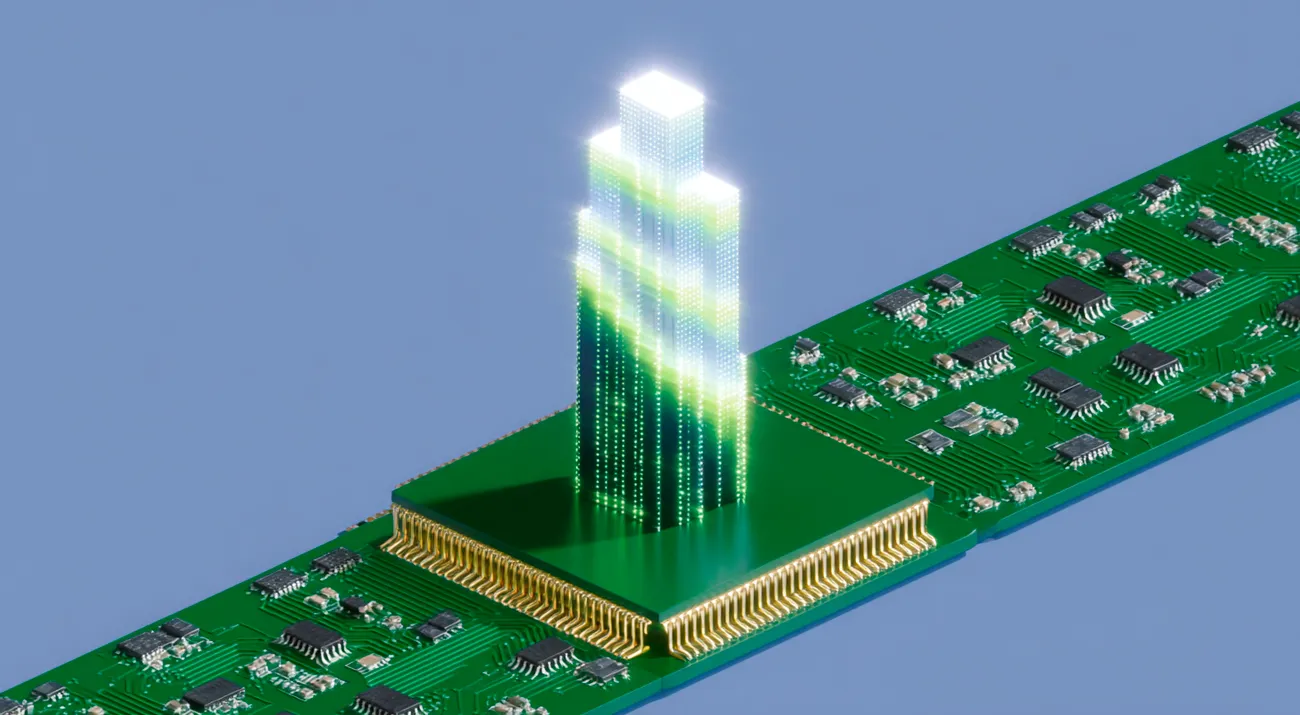
The memory chip market — once plagued by its boom-and-bust cycles — is experiencing what might be its most promising era yet. With AI gobbling up every bit of data storage it can find and enterprise customers racing to upgrade their tech infrastructure, the sector is powering into what many insiders are already calling a decade-long “supercycle.”
Memorize this: After years of volatility, the memory semiconductor industry is finally turning into a profit engine again. Demand has climbed so fast that Samsung Electronics raised prices on two key types of memory used in phones, computers, and servers — hiking DRAM prices by 15-30% and NAND flash prices by 5-10% for Q4. The Korean giant posted record Q3 revenue of 86T won, with operating profit up 31.8% year-over-year.
- UBS forecasts NAND flash prices to keep rising for three straight quarters — by 3%, 5%, and 3%, respectively.
- While most expect a typical 2-3 year cycle, Phison’s CEO warns of a severe NAND shortage lasting up to a decade, as memory makers pulled back investment after repeated losses starting in 2019-2020.
Cache Today, Cash Tomorrow
Even analysts are taking note of the rebound. Morgan Stanley pivoted from its prior bearish stance, now forecasting an “AI supercycle windfall” in its recent report and raising Samsung’s target price by 12%, while also predicting an 8% NAND flash supply shortfall by 2026. And while Korean companies like Samsung and SK Hynix still control more than 60% of global NAND flash and 44% of total memory production, US memory companies aren’t exactly missing out on the action.
- BNP Paribas boosted Micron’s price target by 170% to a Street-high $270 — suggesting another 30% upside after the stock’s 132% surge this year.
- Other American players in the memory supply chain, like Silicon Motion Technology Corp, Pure Storage, and Western Digital, have also rallied strongly on rising demand.
AI’s cortex runs on storage: Unlike previous booms tied to phone or PC upgrades, this one is fueled by a deeper shift in how computers are built — AI inference and training require massive storage infrastructure. Meritz Securities analyst Kim Sun-woo calls it a “structural boom,” where a single AI data center decision can have the impact of millions of smartphone purchases. And with enterprise SSD orders for 2026 delivery already matching full-year 2025 volumes, and companies racing to replace aging hard drives with faster solid-state storage, the current cycle might have enough power to outlast prior cycles.

